Redshirts
Written by: John Scalzi
Published: 2012
My thoughts: This was a book I'd heard a lot about over the years since it was published. Some good, some bad but almost everyone commented on just how nerdy it was. And nerdy it is, it is an incredibly meta joke about Star Trek and the unfortunate role the 'redshirts' play within that series. If you don't have a bit of a history with Star Trek and the preponderance of quick and sudden deaths for newly introduced characters on the show (which series? Take your pick) then I don't think you'll get much joy out of the book. And even being in on the joke as I was, it did feel like the meta jokes took precedence over actual narrative flow and structure at times. Overall I enjoyed the book and had fun reading it, but like Pride and Prejudice and Zombies I did feel a bit like the joke had run its course about 100 pages in.
Storm Front (Dresden Files #1)
Written by: Jim Butcher
Published in: 2000
My thoughts: I actually read this ages ago, but never got around to finishing a review for it. It's a lot of fun, it's about a modern day magician living in Chicago and working as a P.I. Harry Dresden is sarcastic, grumpy and a little bit incompetent, but also clearly was a much better person and magician at an earlier point in his life (we learn a little about this as the book goes on). There's a lot of rules to how magic is used in this particular world and it's governed by a magical community who stamp down pretty heavily on anyone with a history using black magic, as Dresden once did. This makes Dresden's life and career very tricky when a murder is committed and it looks to both the magical and non-magical communities as though Dresden is the prime suspect. I do intend to read some more of these books, apparently they get really good from about book 7. That doesn't exactly sound like a ringing endorsement of the next 6 books I have to get through, but if they're at least at the quality of this first novel I think they'll be interesting enough to take along on holidays or long rides on the train.
Carry On
Written by: Rainbow Rowell
Published: 2015
My Thoughts: I'm a little scared to say (in front of all of you, my fellow RR fans) that I wasn't too excited for Carry On. Fangirl was easily my least favourite of Rainbow's books so I wasn't sure that this book would deliver anything I was after. I was pleasantly surprised. I probably won't head back to reread it like I will Attachments or Eleanor and Park, but I found it funny, heartwarming, compelling and narratively sound (which sounds douche-y, but considering it was essentially Drarry fan-fiction I wasn't sure it would really stand up as a story of its own). I liked this a lot more than the extracts in Fangirl led me to believe I would enjoy it, so my sincerest apologies to Rainbow for daring to doubt her.
Flowers for Algernon
Written by: Daniel Keyes
Published: 1958
My thoughts: Though I hadn't read Flowers for Algernon before last October, I knew the story pretty well and as there were at least 2 shows (It's Always Sunny, The League) last year which spoofed the concept, I figured it was time I read the source material. Flowers is fairly short but it hooked me in from the start. Telling the story of a man with below average intelligence the book is written from his perspective literally, taking an epistolary approach to tell Charlie's story as he undergoes surgery and testing to increase his intelligence. You end up incredibly close to Charlie because of the way it is written and it is a real gut punch to interpret things about his life that he's never been able to recognise because of his intelligence and general innocence. It's a very simple story but the takeaway is huge and immensely emotional.
Showing posts with label science fiction. Show all posts
Thursday, March 17, 2016
mini-reviews: Redshirts, Storm Front, Carry On and Flowers for Algernon
Posted by
Unknown
at
1:54 PM
mini-reviews: Redshirts, Storm Front, Carry On and Flowers for Algernon
2016-03-17T13:54:00+10:00
Unknown
'book review|2016|books|fan fiction|fantasy|magic|meta|mini-review|mini-reviews|rainbow rowell|review|science fiction|
Comments
Labels:
'book review,
2016,
books,
fan fiction,
fantasy,
magic,
meta,
mini-review,
mini-reviews,
rainbow rowell,
review,
science fiction
Wednesday, March 4, 2015
Book Review: Station Eleven by Emily St. John Mandel
Station Eleven
Written by: Emily St. John Mandel
Published: 2014
Synopsis:
Day one: The Georgia Flu explodes over the surface of the earth like a neutron bomb. News reports puts the mortality rate at over 99%.
Week two: Civilisation has crumbled.
Year twenty: A band of actors and musicians called the Travelling Symphony move through their territories performing concerts and Shakespeare to the settlements that have grown up there. Twenty years after the pandemic, life feels relatively safe. But now a new danger looms, and it threatens the hopeful world every survivor has tried to rebuild. (from library copy's blurb)
____________________________________________________________________________________________________
Written by: Emily St. John Mandel
Published: 2014
Synopsis:
Day one: The Georgia Flu explodes over the surface of the earth like a neutron bomb. News reports puts the mortality rate at over 99%.
Week two: Civilisation has crumbled.
Year twenty: A band of actors and musicians called the Travelling Symphony move through their territories performing concerts and Shakespeare to the settlements that have grown up there. Twenty years after the pandemic, life feels relatively safe. But now a new danger looms, and it threatens the hopeful world every survivor has tried to rebuild. (from library copy's blurb)
____________________________________________________________________________________________________
The wren goes to't
If you had asked me what was missing from my literary life I don't know that my answer would have been "a mix of dystopia and Shakespeare with just a smidge of Star Trek" but there you have it, it's exactly what was missing from my life.
Station Eleven is very successful at crafting a story about a world 20 years after a catastrophic medical disaster that both conforms to genre standards and completely leaves them behind. I, personally, love books and films about pandemics that decimate the human population. I love to see how people adjust (or straight up don't), especially considering the world we live in today is SO dependant on technology to do even the simplest of tasks*. I mean even farmers who you'd think would be in a pretty sweet situation would probably suffer since everything from milking stations to combine harvesters are almost entirely mechanically self-reliant. So you usually end up with these fantastic explorations of society falling backwards in terms of education or mechanics but also progressing forward in a cultural sense, for instance, community becomes far more important for survival, and bartering takes over from the traditional monetary system.
And you get tonnes of this good stuff in Station Eleven. The Travelling Symphony makes their way through tiny towns where people have tried to adjust to this new world. Reminders of the old world, Walmarts and airports and highways, of the previous world still linger but they're rendered useless in their normal form so they're transformed into storage spaces or homes for the people who managed to survive. And like folk did pre-cars, trains and planes, they become pretty insular. They might hear news from the next town over, but it takes weeks and only reaches them if someone happens to be moving through. And with this insulation comes, of course, a level of superstition. News travelling from one town to the next over a series of weeks tends to evolve like a game of whispers, something fairly innocuous is slowly warped and shifted until it becomes a warning or something to fear. As a great deal of this novel takes place 20 years after the Georgia Flu annihilated life on Earth, a lot of the characters were either born post-flu or were so young they can barely remember the life they used to have, which only exaggerates this disconnect between the world that was and the world that is. Stories of planes flying through the air and told to children who are amazed and also slightly disbelieving of their parents tales. I just find all of this stuff utterly, utterly fascinating.
But where the book diverges from these more traditional aspects is where I think it truly shines. The book begins and ends on a stage in Canada as a cast perform King Lear. The death of the play's Lear on stage coincides with the beginning of the Georgia Flu but it was a heart attack and not actually the flu which ended his life. Even though this actor, Arthur Leander, dies in the opening pages of the book of a completely unrelated illness, he is pivotal to the book. The direction of the central characters, who haven't all necessarily met, are motivated by their relationship to Leander regardless of how tenuous that link may be. It's like this spider web of causality and influence and it's incredibly hard to explain here but it blew my mind. Seriously, I finished this book over a month ago and it is still blowing my mind how freaking gorgeous and complex the whole damn thing is.
Since I read it over a month ago I am blanking on some of the smaller details that I wish I'd noted down, but this book is really something else. I went into it knowing very little and that may be why it had such an impact on me. The writing is beautiful and yet it never got too flowery or Literary for the post-apocalyptic setting, a balance I think must have been incredibly difficult to maintain. The secondary characters aren't always incredibly fleshed out but because there's an element (or a feeling at the very least) of a play within a book I was able to push past those moments and instead appreciate the characters for what they stood for. There are large chunks of this novel which take place way before the outbreak of the Georgia Flu, most of them relating to Leander's life (which, damn, what a terribly sad story that is), so I wouldn't recommend this one to anyone who wants a straight-up post-apocalyptic tale but seriously everyone else, read it**.
*Obvs this isn't the case everywhere in the world. But since these books typically take place in the Western world I'm going to keep going with this.
** I think just about everyone in the world (blog world anyway) has already read it, but if you're one of the 10 people who haven't then GET ON IT.
Station Eleven is very successful at crafting a story about a world 20 years after a catastrophic medical disaster that both conforms to genre standards and completely leaves them behind. I, personally, love books and films about pandemics that decimate the human population. I love to see how people adjust (or straight up don't), especially considering the world we live in today is SO dependant on technology to do even the simplest of tasks*. I mean even farmers who you'd think would be in a pretty sweet situation would probably suffer since everything from milking stations to combine harvesters are almost entirely mechanically self-reliant. So you usually end up with these fantastic explorations of society falling backwards in terms of education or mechanics but also progressing forward in a cultural sense, for instance, community becomes far more important for survival, and bartering takes over from the traditional monetary system.
And you get tonnes of this good stuff in Station Eleven. The Travelling Symphony makes their way through tiny towns where people have tried to adjust to this new world. Reminders of the old world, Walmarts and airports and highways, of the previous world still linger but they're rendered useless in their normal form so they're transformed into storage spaces or homes for the people who managed to survive. And like folk did pre-cars, trains and planes, they become pretty insular. They might hear news from the next town over, but it takes weeks and only reaches them if someone happens to be moving through. And with this insulation comes, of course, a level of superstition. News travelling from one town to the next over a series of weeks tends to evolve like a game of whispers, something fairly innocuous is slowly warped and shifted until it becomes a warning or something to fear. As a great deal of this novel takes place 20 years after the Georgia Flu annihilated life on Earth, a lot of the characters were either born post-flu or were so young they can barely remember the life they used to have, which only exaggerates this disconnect between the world that was and the world that is. Stories of planes flying through the air and told to children who are amazed and also slightly disbelieving of their parents tales. I just find all of this stuff utterly, utterly fascinating.
But where the book diverges from these more traditional aspects is where I think it truly shines. The book begins and ends on a stage in Canada as a cast perform King Lear. The death of the play's Lear on stage coincides with the beginning of the Georgia Flu but it was a heart attack and not actually the flu which ended his life. Even though this actor, Arthur Leander, dies in the opening pages of the book of a completely unrelated illness, he is pivotal to the book. The direction of the central characters, who haven't all necessarily met, are motivated by their relationship to Leander regardless of how tenuous that link may be. It's like this spider web of causality and influence and it's incredibly hard to explain here but it blew my mind. Seriously, I finished this book over a month ago and it is still blowing my mind how freaking gorgeous and complex the whole damn thing is.
Since I read it over a month ago I am blanking on some of the smaller details that I wish I'd noted down, but this book is really something else. I went into it knowing very little and that may be why it had such an impact on me. The writing is beautiful and yet it never got too flowery or Literary for the post-apocalyptic setting, a balance I think must have been incredibly difficult to maintain. The secondary characters aren't always incredibly fleshed out but because there's an element (or a feeling at the very least) of a play within a book I was able to push past those moments and instead appreciate the characters for what they stood for. There are large chunks of this novel which take place way before the outbreak of the Georgia Flu, most of them relating to Leander's life (which, damn, what a terribly sad story that is), so I wouldn't recommend this one to anyone who wants a straight-up post-apocalyptic tale but seriously everyone else, read it**.
*Obvs this isn't the case everywhere in the world. But since these books typically take place in the Western world I'm going to keep going with this.
** I think just about everyone in the world (blog world anyway) has already read it, but if you're one of the 10 people who haven't then GET ON IT.
Thursday, January 8, 2015
Book review: Outlander: Cross Stitch by Diana Gabaldon
Outlander: Cross Stitch (1)
Written by: Diana Gabaldon
Published: 1991
Synopsis: The year is 1945. Claire Randall, a former combat nurse, is just back from the war and reunited with her husband on a second honeymoon when she walks through a standing stone in one of the ancient circles that dot the British Isles. Suddenly she is a Sassenach—an “outlander”—in a Scotland torn by war and raiding border clans in the year of Our Lord...1743.
Hurled back in time by forces she cannot understand, Claire is catapulted into the intrigues of lairds and spies that may threaten her life, and shatter her heart. For here James Fraser, a gallant young Scots warrior, shows her a love so absolute that Claire becomes a woman torn between fidelity and desire—and between two vastly different men in two irreconcilable lives. (Via Goodreads)
________________________________________________________________________________________________________________
Written by: Diana Gabaldon
Published: 1991
Synopsis: The year is 1945. Claire Randall, a former combat nurse, is just back from the war and reunited with her husband on a second honeymoon when she walks through a standing stone in one of the ancient circles that dot the British Isles. Suddenly she is a Sassenach—an “outlander”—in a Scotland torn by war and raiding border clans in the year of Our Lord...1743.
Hurled back in time by forces she cannot understand, Claire is catapulted into the intrigues of lairds and spies that may threaten her life, and shatter her heart. For here James Fraser, a gallant young Scots warrior, shows her a love so absolute that Claire becomes a woman torn between fidelity and desire—and between two vastly different men in two irreconcilable lives. (Via Goodreads)
________________________________________________________________________________________________________________
A hedgehog? And just how does a hedgehog make love?" he demanded.
I'd like to say there was a valid reason I decided to finally give in and read Outlander. Maybe because I'd heard such great reviews from people like Sarah, or I wanted to read it before I gave the TV show a watch. But honestly, I 100% only read it for the promise of sexy Scottish fellas in kilts. And sexy Scottish fellas in kilts were delivered in droves. Actually, the title of sexy Scot is really reserved for the sexy Scot of the novel - Jamie Fraser. Tall, strong and with hair the colour of fire.
I imagine your interest in this book hinges on whether or not you warm to Jamie as a character because if he isn't on the page doing something, the characters present are talking about him or lusting after him. Honestly, in the context of the book he's the greatest thing since sliced bread and it gets pretty funny to see how far people are willing to go to get close to him. I'm looking directly at you here Laoghaire. He's perhaps the most romanticised person I've encountered in a book since Edward Cullen. And while I enjoy Jamie a whole lot more than Sparkle-butt, everyone's obsession with the outlaw is also kind of baffling. He's treated with a reverence and a fear that I don't think he ever really lives up to - but I guess when your life is filled with murderous outlaws and sadistic Redcoats it's easy for a nice guy to be built up to mythic standards. Also, romance.
Claire is another character that I think you either love or hate. I really love that Galbadon chose the end of WWII as the launching place for the novel because it was a time when women were finding themselves reverted once again to second class citizens in the wake of the returning male population. After helping build bombs and aircraft and serving as nurses on the battlefront, women weren't content with just being secretaries or housewives. Claire herself is struggling to find a hobby now that her career as a nurse is effectively over and this causes even more problems when she finds herself 200 years in the past where women are seen as being fit for even less. If this novel had taken place 20 years earlier or later I don't think Claire would have been nearly as combative as she was when she tried to adjust to 18th century Scottish life. That being said, she does a remarkable job blending in with the Gaelic speaking masses. If I were to find myself in her position, I'm pretty sure I would have been burnt at the stake the second I called Jamie bae or whipped out my smart phone. And if I wasn't I would have died of hunger almost immediately since I know nothing about plants or nursing or life in the Scottish highlands.
The novel is a little long. I think it could have benefited from a heavy edit to get rid of a couple of the barely described sex scenes or slimmed down some of Claire's trips to the garden to pick herbs. I get it, they used a lot of herbs in their medicine back then and Claire knew all their Latin names. I don't care how big her basket is, please take me back to a scene with Geillis (who is totally Stevie Nicks) or Dougal, who I had way too big a crush on. Apparently Dougal in the TV show looks like this:
Which squashes any hope of me bothering with the TV show at all**. I was imagining him more like a Scottish Javier Bardem, which makes sense because this is a ROMANCE.
Length be damned though, this book was fun. I revelled in the castle drama and Claire's temper tantrums. The scenes at Wentworth Prison shifted from horrific to hilarious and even though something like that should be completely jarring, in this book it works. The book is campy and inconsistent with its fantasy, but Gabaldon is also a fantastic writer - which if I'm being honest I wasn't really expecting. I'm not entirely convinced I want to keep going with the series straight away (they're so freaking huge and I'm still recovering from finishing GOT three years ago) but they're now well and truly on my radar.
*I haven't watched the TV show but seriously, this is Jamie? Ugh, I was imagining Scottish Charlie Weasley and this guy is no Charlie Weasley. (maybe it's just this picture but he looks very Theon Greyjoy-y and ewwww).
**I'm sorry Graham McTavish. You were great in Red Dwarf but you are not *my* Dougal.
![]() |
| Pictured: TV depiction of sexiest Scot* does not live up to my imagination |
Claire is another character that I think you either love or hate. I really love that Galbadon chose the end of WWII as the launching place for the novel because it was a time when women were finding themselves reverted once again to second class citizens in the wake of the returning male population. After helping build bombs and aircraft and serving as nurses on the battlefront, women weren't content with just being secretaries or housewives. Claire herself is struggling to find a hobby now that her career as a nurse is effectively over and this causes even more problems when she finds herself 200 years in the past where women are seen as being fit for even less. If this novel had taken place 20 years earlier or later I don't think Claire would have been nearly as combative as she was when she tried to adjust to 18th century Scottish life. That being said, she does a remarkable job blending in with the Gaelic speaking masses. If I were to find myself in her position, I'm pretty sure I would have been burnt at the stake the second I called Jamie bae or whipped out my smart phone. And if I wasn't I would have died of hunger almost immediately since I know nothing about plants or nursing or life in the Scottish highlands.
The novel is a little long. I think it could have benefited from a heavy edit to get rid of a couple of the barely described sex scenes or slimmed down some of Claire's trips to the garden to pick herbs. I get it, they used a lot of herbs in their medicine back then and Claire knew all their Latin names. I don't care how big her basket is, please take me back to a scene with Geillis (who is totally Stevie Nicks) or Dougal, who I had way too big a crush on. Apparently Dougal in the TV show looks like this:
Which squashes any hope of me bothering with the TV show at all**. I was imagining him more like a Scottish Javier Bardem, which makes sense because this is a ROMANCE.
Length be damned though, this book was fun. I revelled in the castle drama and Claire's temper tantrums. The scenes at Wentworth Prison shifted from horrific to hilarious and even though something like that should be completely jarring, in this book it works. The book is campy and inconsistent with its fantasy, but Gabaldon is also a fantastic writer - which if I'm being honest I wasn't really expecting. I'm not entirely convinced I want to keep going with the series straight away (they're so freaking huge and I'm still recovering from finishing GOT three years ago) but they're now well and truly on my radar.
*I haven't watched the TV show but seriously, this is Jamie? Ugh, I was imagining Scottish Charlie Weasley and this guy is no Charlie Weasley. (maybe it's just this picture but he looks very Theon Greyjoy-y and ewwww).
**I'm sorry Graham McTavish. You were great in Red Dwarf but you are not *my* Dougal.
Saturday, January 3, 2015
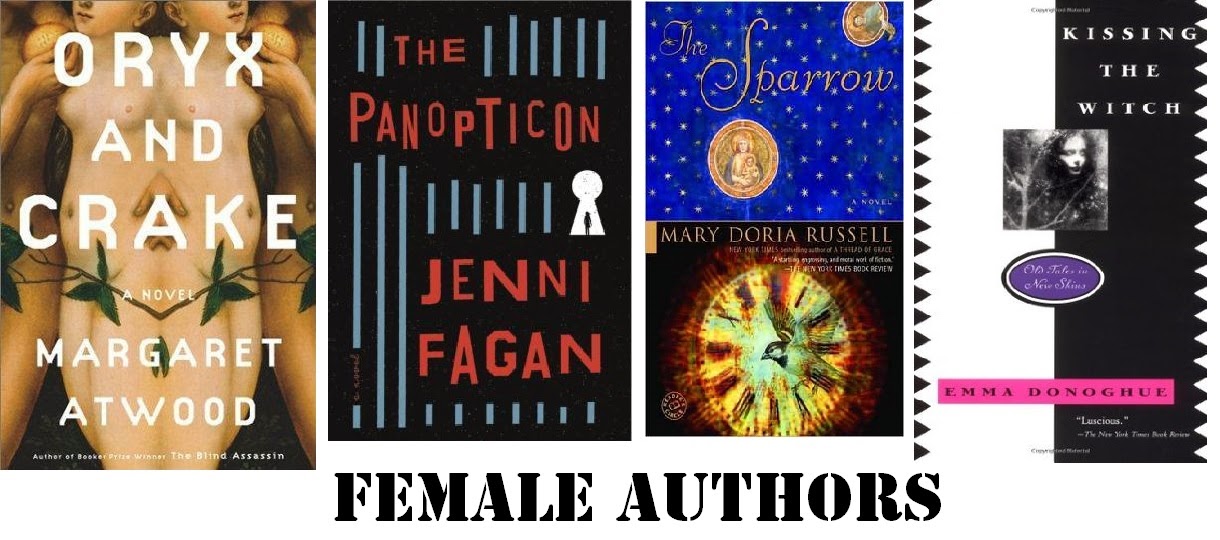
2015 Reading Resolutions - Diversifying my TBR
Okay, remember when I said I didn't have any reading resolutions and that making fixed plans probably wouldn't work out how I wanted them to? Well I decided to throw caution to the wind and write up a post of books that I want to read that will help me diversify my regular reading status quo. I'm trying to make up this list with books I already have in my possession since I really, really need to stop spending so much money on books I don't read for several years after purchase and the rest I'm going to endeavour to get from my library.
My aim isn't necessarily to read all of these books, although I'm hoping that by writing out such a long list I will be "in the mood" for at least one of these books per month. That way if I'm having an especially white/middle class/American/male month, at least I'm getting a little variety in my diet. The idea isn't that these are the only POC/female/non-fiction reads I'm interested in nor are they the only ones I'll read all year. I might end up reading very few of these particular books but still bring up my end of year stats with other books that I discover throughout the year. Basically, I'm hoping that by listing out some diverse reading options here I'll be able to switch something on in my brain that will subconsciously lead to me picking up more of these types of books.
As for the types of books on this list, I'm aiming for more non-fiction, more female writers and more non-American and POC US writers. Ideally those non-American writers won't simply be Australian/English/Canadian authors, but let's not shoot for Pluto when we haven't yet walked on the Moon. And as you'll see from the list, technically some of these books fulfil two or three of the criteria which is just an awesome bonus.
The Anatomy of Motive by John Douglas
The Secret History of Wonder Woman by Jill Lepore
Bad Feminist by Roxanne Gay
House of Psychotic Women: An Autobiographical Topography of Female Neurosis in Horror and Exploitation Films by Kier-La Janisse
Stiff: The Curious Lives of Human Cadavers by Mary Roach
The Supergirls: Fashion, Feminism, Fantasy and the history of comic book heroines by Mike Madrid
Them: Adventures with Extremists by Jon Ronson
As You Wish: Inconceivable Tales from the Making of The Princess Bride by Cary Ewles
Superheroes!: Capes, Cowls, and the Creation of Comic Book Culture by Laurence Maslon, Michael Kantor
Severed: A History of Heads Lost and Heads Found by Frances Larson
Nobody Knows My Name by James Baldwin
Dear Life by Alice Munroe
The Left Hand of Darkness by Ursula Le Guin
The Sparrow by Mary Doria Russell
Kissing the Witch by Emma Donoghue
Oryx and Crake by Margaret Atwood
Mr Fox by Helen Oyeyemi
Bringing up the Bodies by Hilary Mantel
Panopticon by Jenni Fagen
The Night Gwen Stacy Died by Sarah Bruni
Colorless Tsukuru Tazaki and His Years of Pilgrimage by Haruki Murakami
Balzac and the Little Chinese Seamstress by Dai Sijie
In the Skin of a Lion by Michael Odaatje
Under the Skin by Michel Faber
The Returned by Jason Mott
We by Yevgeny Zamytin
Popular Hits of the Showa Era by Ryu Murakami
Battle Royale by Koushun Takami
My aim isn't necessarily to read all of these books, although I'm hoping that by writing out such a long list I will be "in the mood" for at least one of these books per month. That way if I'm having an especially white/middle class/American/male month, at least I'm getting a little variety in my diet. The idea isn't that these are the only POC/female/non-fiction reads I'm interested in nor are they the only ones I'll read all year. I might end up reading very few of these particular books but still bring up my end of year stats with other books that I discover throughout the year. Basically, I'm hoping that by listing out some diverse reading options here I'll be able to switch something on in my brain that will subconsciously lead to me picking up more of these types of books.
As for the types of books on this list, I'm aiming for more non-fiction, more female writers and more non-American and POC US writers. Ideally those non-American writers won't simply be Australian/English/Canadian authors, but let's not shoot for Pluto when we haven't yet walked on the Moon. And as you'll see from the list, technically some of these books fulfil two or three of the criteria which is just an awesome bonus.
The Anatomy of Motive by John Douglas
The Secret History of Wonder Woman by Jill Lepore
Bad Feminist by Roxanne Gay
House of Psychotic Women: An Autobiographical Topography of Female Neurosis in Horror and Exploitation Films by Kier-La Janisse
Stiff: The Curious Lives of Human Cadavers by Mary Roach
The Supergirls: Fashion, Feminism, Fantasy and the history of comic book heroines by Mike Madrid
Them: Adventures with Extremists by Jon Ronson
As You Wish: Inconceivable Tales from the Making of The Princess Bride by Cary Ewles
Superheroes!: Capes, Cowls, and the Creation of Comic Book Culture by Laurence Maslon, Michael Kantor
Severed: A History of Heads Lost and Heads Found by Frances Larson
Nobody Knows My Name by James Baldwin
Dear Life by Alice Munroe
The Left Hand of Darkness by Ursula Le Guin
The Sparrow by Mary Doria Russell
Kissing the Witch by Emma Donoghue
Oryx and Crake by Margaret Atwood
Mr Fox by Helen Oyeyemi
Bringing up the Bodies by Hilary Mantel
Panopticon by Jenni Fagen
The Night Gwen Stacy Died by Sarah Bruni
Colorless Tsukuru Tazaki and His Years of Pilgrimage by Haruki Murakami
Balzac and the Little Chinese Seamstress by Dai Sijie
In the Skin of a Lion by Michael Odaatje
Under the Skin by Michel Faber
The Returned by Jason Mott
We by Yevgeny Zamytin
Popular Hits of the Showa Era by Ryu Murakami
Battle Royale by Koushun Takami
Posted by
Unknown
at
12:32 PM
2015 Reading Resolutions - Diversifying my TBR
2015-01-03T12:32:00+10:00
Unknown
2015|blogging|book resolutions|books|diverse|fantasy|female|historical fiction|Japan|non-fiction|science fiction|superhero|
Comments
Labels:
2015,
blogging,
book resolutions,
books,
diverse,
fantasy,
female,
historical fiction,
Japan,
non-fiction,
science fiction,
superhero
Friday, January 2, 2015
(Audio)book review: The Martian by Andy Weir
The Martian
Written by: Andy Weir
Read by: R.C Bray
Published: 2011
Synopsis: Six days ago, astronaut Mark Watney became one of the first men to walk on the surface of Mars. Now, he's sure he'll be the first man to die there.
It started with the dust storm that holed his suit and nearly killed him, and that forced his crew to leave him behind, sure he was already dead. Now he's stranded millions of miles from the nearest human being, with no way to even signal Earth that he's alive--and even if he could get word out, his food would be gone years before a rescue mission could arrive. Chances are, though, he won't have time to starve to death. The damaged machinery, unforgiving environment, or plain-old "human error" are much more likely to get him first.
But Mark isn't ready to give up yet. Drawing on his ingenuity, his engineering skills--and a relentless, dogged refusal to quit--he steadfastly confronts one seemingly insurmountable obstacle after the next. But will his resourcefulness be enough to overcome the impossible odds against him? (Via Goodreads)
______________________________________________________________________________________________________________
Written by: Andy Weir
Read by: R.C Bray
Published: 2011
Synopsis: Six days ago, astronaut Mark Watney became one of the first men to walk on the surface of Mars. Now, he's sure he'll be the first man to die there.
It started with the dust storm that holed his suit and nearly killed him, and that forced his crew to leave him behind, sure he was already dead. Now he's stranded millions of miles from the nearest human being, with no way to even signal Earth that he's alive--and even if he could get word out, his food would be gone years before a rescue mission could arrive. Chances are, though, he won't have time to starve to death. The damaged machinery, unforgiving environment, or plain-old "human error" are much more likely to get him first.
But Mark isn't ready to give up yet. Drawing on his ingenuity, his engineering skills--and a relentless, dogged refusal to quit--he steadfastly confronts one seemingly insurmountable obstacle after the next. But will his resourcefulness be enough to overcome the impossible odds against him? (Via Goodreads)
______________________________________________________________________________________________________________
Yes, of course duct tape works in a near-vacuum. Duct tape works anywhere. Duct tape is magic and should be worshipped
. It hasn't been an easy road, reading this book. I had seen it around the internet for awhile but it wasn't until glowing reviews popped up on Alley, Meg and Sarah's blogs that I made a conscious decision to see what all the fuss was about. This coincided with me having a credit on Audible and deciding that yes, a book about a guy being stranded on Mars was exactly the kind of book I wanted to listen to on my bus rides and runs. But then the worst happened, I hated the audio reader. HATED him. I got a couple of minutes in and I found his voice so bland and boring that I couldn't believe that he'd be able to convincingly make the audio read as funny as everyone has said the book is.
So I put it aside. I moved onto other physical books and audiobooks and hoped that someone would send me a copy for the ninja bookswap or for my birthday. Or if I could get my act together I'd remember to pick it up from the library after putting my name down on the wait list. None of those things happened, so I didn't get to read it. And then I found myself getting ready for a run without a podcast or audiobook to accompany me. Emily had just mentioned The Martian on her blog and I decided "screw it" I'd give it another try. At the very least the crappiness might be enough to encourage me to run faster so I can get home and turn it off. But this time I didn't hate the reader. I still don't think he was necessarily the best pick for the part, but I pushed through and the awesomeness of the book overwhelmed the mediocrity of the reader*.
The book isn't quite an epistolary novel but I think that was actually the best call Andy Weir could have made. Rather than try and frame everything within log entries, Weir combines this epistolary technique with regular narrated chapters. I think it could have been an interesting experiment to read an entire book as Mark writes the entries into his computer, especially when NASA begins to contact him and struggles to find a method of rescue. But by combining his logs with regular chapters from the perspective of several characters on Earth as well as his ex-crew who are in transit, it becomes less on a "will he/won't he" survival story and more of a scientific investigation. As much as I loved listening to Mark recount his day on Mars, I found it equally fascinating to see his daily achievements (bacteria in the soil is alive! Potatoes are beginning to grow! Still have air!) side by side with NASA's attempts to first communicate with him and then to come up with a viable rescue plan. Because this book is heavy on the science and light on the science fiction, Mark's role was pretty limited - It's not like he could rebuild a space ship from junk on the planet and high tail it back home in time for Christmas. But because the book is so heavily focused on scientific possibility it's even more amazing to see what he does manage to do. I'm pretty sure I would have just given up and curled up into a ball. Maybe that's why I'm not an astronaut (it's definitely why I'm not an astronaut).
I think a great helper in this department was the fact that I had so recently finished Chris Hadfield's book. While I am definitely no expert on the science in this novel, the way it and the astronauts were portrayed seemed to be in the same spirit as Hadfield's very realistic autobiography. This novel is, at times, brutal in depiction of life as an astronaut. If the events that instigated the novel, i.e. the dust storm which led the team to think Mark was dead, had happened on Earth there's very little chance that they would have left him behind even if he was dead. But when you're dealing with a foreign environment and space crafts which are built to carry precise weights and loads, you have to make the hard decisions. Do you bring back the body of your team member or do you have a lighter load which means less chance of mechanical issues on departure? And that's probably my favourite aspect of the novel. Saving Mark isn't as simple as turning around the space craft and heading back. There are so many tiny considerations that need to be discussed and possibilities that need to be explored. While Hollywood makes it seem like there's a rocket and a team of astronauts ready to go at any available moment, this book shows the reality of the situation. It's almost impossible to send a probe with food out immediately, let alone actual people who need to survive for the year or so it'd take to travel to Mars and back. But in direct contrast to this, people outside of this world won't see it this way. They see a man stranded on Mars and they want to know why you haven't saved him yet. Why aren't you turning the ship around or launching a new one? How could you even leave him behind in the first place? While this quandary doesn't really feature too heavily in the novel (and it's mostly framed through a NASA PR employee) it's one of the reasons I'm happy the novel wasn't a standard epistolary told through Mark's logs.
But the book isn't all potato crops and PR drama. Well, it is all potato crops and PR drama, but it's also hilarious. Who would have thought a book about a man stranded on Mars with about a 2% chance of survival would be funny? Mark might be facing death. but he's not about to be a morose bastard. He's hilariously dry about absolutely everything. Toilets, farming, music, survival - you name it and he's made a self-deprecating or droll comment about it. It's the humour at the heart of this novel that makes it stand out from the hundreds of other high concept science fiction novels and makes it approachable for people who wouldn't normally dream of reading a book like this. So if this book doesn't instantly speak to you on a personal level I recommend that you come for the humour and stay to watch fictionalised versions of the brightest people on Earth puzzle over how to save a man a gazillion miles from home.
The book isn't quite an epistolary novel but I think that was actually the best call Andy Weir could have made. Rather than try and frame everything within log entries, Weir combines this epistolary technique with regular narrated chapters. I think it could have been an interesting experiment to read an entire book as Mark writes the entries into his computer, especially when NASA begins to contact him and struggles to find a method of rescue. But by combining his logs with regular chapters from the perspective of several characters on Earth as well as his ex-crew who are in transit, it becomes less on a "will he/won't he" survival story and more of a scientific investigation. As much as I loved listening to Mark recount his day on Mars, I found it equally fascinating to see his daily achievements (bacteria in the soil is alive! Potatoes are beginning to grow! Still have air!) side by side with NASA's attempts to first communicate with him and then to come up with a viable rescue plan. Because this book is heavy on the science and light on the science fiction, Mark's role was pretty limited - It's not like he could rebuild a space ship from junk on the planet and high tail it back home in time for Christmas. But because the book is so heavily focused on scientific possibility it's even more amazing to see what he does manage to do. I'm pretty sure I would have just given up and curled up into a ball. Maybe that's why I'm not an astronaut (it's definitely why I'm not an astronaut).
I think a great helper in this department was the fact that I had so recently finished Chris Hadfield's book. While I am definitely no expert on the science in this novel, the way it and the astronauts were portrayed seemed to be in the same spirit as Hadfield's very realistic autobiography. This novel is, at times, brutal in depiction of life as an astronaut. If the events that instigated the novel, i.e. the dust storm which led the team to think Mark was dead, had happened on Earth there's very little chance that they would have left him behind even if he was dead. But when you're dealing with a foreign environment and space crafts which are built to carry precise weights and loads, you have to make the hard decisions. Do you bring back the body of your team member or do you have a lighter load which means less chance of mechanical issues on departure? And that's probably my favourite aspect of the novel. Saving Mark isn't as simple as turning around the space craft and heading back. There are so many tiny considerations that need to be discussed and possibilities that need to be explored. While Hollywood makes it seem like there's a rocket and a team of astronauts ready to go at any available moment, this book shows the reality of the situation. It's almost impossible to send a probe with food out immediately, let alone actual people who need to survive for the year or so it'd take to travel to Mars and back. But in direct contrast to this, people outside of this world won't see it this way. They see a man stranded on Mars and they want to know why you haven't saved him yet. Why aren't you turning the ship around or launching a new one? How could you even leave him behind in the first place? While this quandary doesn't really feature too heavily in the novel (and it's mostly framed through a NASA PR employee) it's one of the reasons I'm happy the novel wasn't a standard epistolary told through Mark's logs.
But the book isn't all potato crops and PR drama. Well, it is all potato crops and PR drama, but it's also hilarious. Who would have thought a book about a man stranded on Mars with about a 2% chance of survival would be funny? Mark might be facing death. but he's not about to be a morose bastard. He's hilariously dry about absolutely everything. Toilets, farming, music, survival - you name it and he's made a self-deprecating or droll comment about it. It's the humour at the heart of this novel that makes it stand out from the hundreds of other high concept science fiction novels and makes it approachable for people who wouldn't normally dream of reading a book like this. So if this book doesn't instantly speak to you on a personal level I recommend that you come for the humour and stay to watch fictionalised versions of the brightest people on Earth puzzle over how to save a man a gazillion miles from home.
*R.C Bray if you ever google yourself and come across this, I'm sorry. I'm sure you're a great guy and a fantastic reader but you reading this book + me = NOPE.
Posted by
Unknown
at
4:07 PM
(Audio)book review: The Martian by Andy Weir
2015-01-02T16:07:00+10:00
Unknown
2014|audiobook|book review|life on mars|science|science fiction|
Comments
Labels:
2014,
audiobook,
book review,
life on mars,
science,
science fiction
Tuesday, April 29, 2014
TV Trailers: The Leftovers (2014)
Last night HBO released the full-length trailer for Damon Lindelof's new show The Leftovers. Based on a book by Tom Perotta, it deals with the events that take place after 2% of the world's population disappears. It's an interesting concept and a bit of a shift from what you normally see in movies or tv shows which deal with this sort of rapture premise. My only hope is that they don't go for a 7-10 seasons model, but instead follow a more British model and keep it short at around 2-3. A premise like this can only work for so long before devolving into a generic cop/cult/soap drama, so I hope they manage to end it while they're still ahead. God, that's so critical of me - the show hasn't even aired yet and I'm thinking 10 years into the future? Ha.
Posted by
Unknown
at
10:31 AM
TV Trailers: The Leftovers (2014)
2014-04-29T10:31:00+10:00
Unknown
2014|based on a book|cults|mystery|science fiction|television|trailer|
Comments
Labels:
2014,
based on a book,
cults,
mystery,
science fiction,
television,
trailer
Monday, November 4, 2013
Monday Links
*You guys, I NEED these Harry Potter prints in my house asap. Especially the Deathly Hallows one. (Via Seriegalleriet)
*I would very much like to share a glass of wine with Alice Munro and Margaret Atwood. I'm already heading to Canada, so it shouldn't be too hard to make this happen right? (Via Buzzfeed)
*Fancy some writing advice from fantasy and sci-fi writers? Of course you do, and it's only a click away. (Via Flavorwire)
*Halloween might have been last week, but it's always appropriate to read some scary literature, or scary adaptations of well known lit. (Via Mentalfloss)
*Plus-size** Australian model Robyn Lawley wrote about the danger of striving to meet supposed ideals like the thigh gap, and the benefit of being strong and healthy. (Via The Daily Beast)
*Tina Fey has a new sitcom. TINA FEY HAS A NEW SITCOM. (Via Uproxx)
**I really hate the term-plus size, especially considering most so called plus-size models are still smaller than the average lady, but in this case it's kinda a necessary descriptor.
*I would very much like to share a glass of wine with Alice Munro and Margaret Atwood. I'm already heading to Canada, so it shouldn't be too hard to make this happen right? (Via Buzzfeed)
*Fancy some writing advice from fantasy and sci-fi writers? Of course you do, and it's only a click away. (Via Flavorwire)
*Halloween might have been last week, but it's always appropriate to read some scary literature, or scary adaptations of well known lit. (Via Mentalfloss)
*Plus-size** Australian model Robyn Lawley wrote about the danger of striving to meet supposed ideals like the thigh gap, and the benefit of being strong and healthy. (Via The Daily Beast)
*Tina Fey has a new sitcom. TINA FEY HAS A NEW SITCOM. (Via Uproxx)
**I really hate the term-plus size, especially considering most so called plus-size models are still smaller than the average lady, but in this case it's kinda a necessary descriptor.
Posted by
Unknown
at
2:00 PM
Monday Links
2013-11-04T14:00:00+10:00
Unknown
fantasy|Harry Potter|monday links|science fiction|tina fey|
Comments
Labels:
fantasy,
Harry Potter,
monday links,
science fiction,
tina fey
Tuesday, April 9, 2013
Top 10 Tuesday: Favourite books from before blogging
Top 10 Tuesday is hosted by the fancy folk over at The Broke and the Bookish. This week's prompt is: 10 books you loved before you started blogging.
_________________________________________________________________________________________________________________
It's actually kinda hard to work out which books came before blogging because there have been SO MANY since I started this a couple of years ago. But I think I managed to whittle down a list which all came before blogging, but aren't entirely made up of books I read as a kid. Actually, this list has made me realise how badly I want to reread some of these books, and I really should since they're all so wonderful. Next challenge: reread all of the books on this list and write full reviews for them all. Yeah!
1. Harry Potter by J.K Rowling
This was the first series that I desperately hung out waiting for the next installment. When I look back JKR was pretty killer at getting the books out quickly, but for a 14 year old it felt like FOREVER. Lucky for her the books are so amazing they're worth twice the wait.
2. The Dangerous Lives of Alter Boys by Chris Fuhrman
Probably one of my most beloved books, my copy is so tattered and sad but I will never throw it away. It's full of heart, and the characters are brilliant and man, I cry like a newborn EVERY TIME I read it.
3. The Chrestomanci Series by Diana Wynne Jones
Another childhood favourite series. It's a blend of fairytales, wizardry, alternative timelines and a dude with multiple lives. Awesome.
4. The Stand by Stephen King
I read a lot of Stephen King books before this and a bunch after, but The Stand is probably my favourite of the lot. It is epic, but so well crafted and the story never gets away from him. It's HUGE, but it's so great I felt like I read the whole thing in 5 minutes.
5. The Rum Diary by Hunter S. Thompson
I could probably list any of a number of HST's books here, but The Rum Diary is one I always come back to. It's a little less crazy and intense than his usual books, and I just find the story of the American journalist in Cuba to be captivating. Plus HST can write, oh my stars can he write.
6. And the Hippos were Boiled in their Tanks by Jack Kerouac and William S. Burroughs
I loooooove Jack Kerouac, but I also find the stream of conscious writing a little exhausting. And the Hippos is written with William S. Burroughs and it jumps between chapters written by the two. It's a nice way into Kerouac's unique way of writing and viewing life without jumping in the deep end.
7. Let the Right One In by John Ajvide Lindqvist
Just when I thought vampires were dead (thanks Twilight) I found this book and I couldn't put it down. It is the most amazing story of vampires and love/friendship and it beats the crap out of EVERYTHING else in the genre.
8. Four Fires by Bryce Courtenay
I went through a huge Bryce Courtenay phase, and Four Fires was always my favourite. It spans multiple generations in an Irish-Australian family and deals with things like adolescent pregnancy, PTSD and homosexuality in the 1950s-1960s. It's phenomenal.
9. Seven Little Australians by Ethel Turner
This is like the Australian version of Little Women except 1000 times better. When publishers were demanding Australian children's books be English kids in a harsh and unforgiving landscape facing the terrifying natives (yeah, real winners those British publishers) Ethel Turner told them to shove it and wrote a story about the awesomeness that is Australian children. What we get are a rag-tag group of kids who are completely different but all love each other and the land they live on. It's great. Go read it already!
10. The Hitchhiker's Guide to the Galaxy by Douglas Adams
Oh man, this series is so enjoyable. It's almost too enjoyable. No, that's nonsense, there's no such thing and even if there were this wouldn't be it. It's hilarious, bizarre, the characters are delightful....just yes.
Tuesday, March 26, 2013
Book Review: Ready Player One by Ernest Cline (and a fantabulous giveaway)
Ready Player One
Written by: Ernest Cline
Published: 2011
Synopsis:It's the year 2044, and the real world is an ugly place.
Like most of humanity, Wade Watts escapes his grim surroundings by spending his waking hours jacked into the OASIS, a sprawling virtual utopia that lets you be anything you want to be, a place where you can live and play and fall in love on any of ten thousand planets.
And like most of humanity, Wade dreams of being the one to discover the ultimate lottery ticket that lies concealed within this virtual world. For somewhere inside this giant networked playground, OASIS creator James Halliday has hidden a series of fiendish puzzles that will yield massive fortune--and remarkable power--to whoever can unlock them.
A world at stake.
A quest for the ultimate prize.
Are you ready?
Stay tuned for the giving away-iest giveaway at the end of this review.
________________________________________________________________________________________________________
I had never heard even the teeniest inkling of info about this book until Laura mentioned she was reading it and everyone was like "IT IS SO GOOD" and I was like "hmmmm, colour me intrigued". And then I read Laura, Alley and Alice's reviews and I thought " yup, this sounds like the book for me". But then I sort of forgot about it. Not for long mind you, but I was distracted enough that I didn't race onto The Book Depository and buy a copy. If I hadn't headed to my Sydney holiday at around this time it's possible this book would have ended up earning a permanent place on my TBR, but fortunately I happened to stop into the greatest of all bookstores (Kinokuniya) and it was right there. Right by the entrance, in a neat little stack basically daring me to buy it. And I don't let dares pass me by (actually I do, buy-this-book dares are about the only ones I'm brave enough to do) so I snatched that little baby up and took it home. And then uni stuff happened, and Laura warned me about how addictive it is so I decided to keep it as a reward for meeting my huge deadline. That deadline was last Tuesday, and by Tuesday night I was well and truly under the spell of Ernest Cline and the pop-culturaliest book that ever did be. And by 2.30 Thursday morning I had finished it.
And it was good. Oh my god, was it good. It was an extremely FUN read, probably the most fun I've had reading a book in a long time and the first book in even longer that I honestly considered putting down because I wanted it to last while also obsessively turning page after page because I just couldn't wait. And I didn't even peek ahead, which I almost always do. It's just a genuinely enjoyable read full of nerdy quotes and references to obscure (and not so obscure) 80s games, movies, songs, and other junk while somehow managing to never feel too Frankenstein-y. I guess it's probably to do with the writer being a major 80s geek himself, and pouring his love and obsession into his book - but it's still a feat that deserves much praise, because there aren't too many authors who can work in this many references and not feel like you're reading the question cards of an 80s edition of Trivial Pursuit.
So basically this book is a John Hughes coming of age story combined with a Dungeons and Dragons campaign with a little synth-heavy music thrown in for good measure. Wade (known as Parzival) is living a shitty life in an even shittier world. All the things going wrong in the world right now, famine, global warming, war, the economic meltdown, have finally come to a head in the not-to-distant future, and the world has chosen to retreat into a video game. Released in 2012, the OASIS is the ultimate in virtual reality, and in the future school, work, and all free time is spent revelling in a world that couldn't be. The creator of this program, James Halliday, was a sort of video game prodigy and on his deathbed announced his final game- a quest to win the ownership of the OASIS, and all of his fortune. Wade is just one of the many people trying to win that prize, and it's his journey from solving the first clue to the home stretch that we follow in Ready Player One.
OASIS is such a phenomenally awesome (though not new) concept. When you're plugged in you can visit a universe of planets. Some are made to replicate the tv canon of sci fi worlds (Firefly, Star Trek, Star Wars, BSG), while others are designed to mimic the cosy suburban life of Earth as it was. You can battle creatures to raise your level and take quests to find magical items to add to your inventory. You can visit dance clubs which have impossible gravity fields and dance floors in the middle of the air. You can make your avatar just like you or you can make them taller, stronger, beardier. It's basically your average game of Dungeons and Dragons (or similar RPG games) in a vitual space and I TOLD YOU D&D WAS COOL. I can't really blame people for retreating into this bliss, especially when there is no sign-up cost and you can get the virtual reality kit free when you sign up for school. If I was living in a world that was made up of stacks and stacks of mobile homes and all sense of decency and democracy had vanished I'd probably be the first one in there from sun up to sun down. But I also really like that amid Wade living it up virtual style, the implications of living this kind of virtual life are also raised. Aside from the fat, pale nerd kid living in their parent's basement issue, there are the indented workers, people who have raised horrendous debts in the OASIS and to work it off basically live as slaves working for the largest ISP organisation in America. These issues are woven into the refence-laden quest and help move it from Awesome Book to Awesome Book with a Message (sort of).
I'm not going to bother mentioning any of the flaws in this book, first because they're pretty minor and second, this was Ernest Cline's first book - so the awesomeness far outweighs any novice mishaps with style and exposition. But also, I don't really care. When a book is this much fun, and has you reading well past the time you're normally counting Zzzzz's it doesn't really matter if a few plot holes come along, or certain characters are a little questionable (Art3mis, I'm looking at you). There are bits of Messages and Points and what-not, but they aren't really the point. They're the milk with the cocoa-pops. Technically (mostly) good for you, but not why you poured the bowl in the first place.
Printed on my cover is a quote from USA Today which says that this book is "Willy Wonka meets the Matrix". And that is pretty perfect. It's fun, and fast-paced (around the occasional info-meteor) and the stakes are high and it's quirky and technical and very in-the-know. The references reach pretty wide at times, plucking from literature, technology, film and music (mostly 80s but ranging from 60s to 00s) but really, it's very possible that you'd end up feeling like you were reading a different language if you weren't familiar with the main reference points. But even when I hit a reference that I didn't get, I never felt like the book was lording that over me, instead Ernest Cline, much like the wizardly James Halliday wants to share his favourite things, he wants you to learn about them and get equally addicted. Basically this book is the internet. The internet in book form. The internet in book form following the structure of an 80s film. WHAT'S NOT TO LOVE HUH?
________________________________________________________________________________________________________
HEY! YOU THERE! DID THIS SOUND LIKE AN AWESOME BOOK? YES? I KNOW RIGHT?! WANT A COPY? PLUS AN AWESOME ADDITIONAL 80s GIFT? OF COURSE YOU DO, YOU'RE NOT STUPID. I CAN TELL. WELL STOP READING MY STUPID CAPS-YELLING AND LET ME KNOW IN THE COMMENTS. K? NOW! JUST DO IT. SAY YES. SAY ANYTHING. SAVE FERRIS.
________________________________________________________________________________________________________
Written by: Ernest Cline
Published: 2011
Synopsis:It's the year 2044, and the real world is an ugly place.
Like most of humanity, Wade Watts escapes his grim surroundings by spending his waking hours jacked into the OASIS, a sprawling virtual utopia that lets you be anything you want to be, a place where you can live and play and fall in love on any of ten thousand planets.
And like most of humanity, Wade dreams of being the one to discover the ultimate lottery ticket that lies concealed within this virtual world. For somewhere inside this giant networked playground, OASIS creator James Halliday has hidden a series of fiendish puzzles that will yield massive fortune--and remarkable power--to whoever can unlock them.
A world at stake.
A quest for the ultimate prize.
Are you ready?
________________________________________________________________________________________________________
I had never heard even the teeniest inkling of info about this book until Laura mentioned she was reading it and everyone was like "IT IS SO GOOD" and I was like "hmmmm, colour me intrigued". And then I read Laura, Alley and Alice's reviews and I thought " yup, this sounds like the book for me". But then I sort of forgot about it. Not for long mind you, but I was distracted enough that I didn't race onto The Book Depository and buy a copy. If I hadn't headed to my Sydney holiday at around this time it's possible this book would have ended up earning a permanent place on my TBR, but fortunately I happened to stop into the greatest of all bookstores (Kinokuniya) and it was right there. Right by the entrance, in a neat little stack basically daring me to buy it. And I don't let dares pass me by (actually I do, buy-this-book dares are about the only ones I'm brave enough to do) so I snatched that little baby up and took it home. And then uni stuff happened, and Laura warned me about how addictive it is so I decided to keep it as a reward for meeting my huge deadline. That deadline was last Tuesday, and by Tuesday night I was well and truly under the spell of Ernest Cline and the pop-culturaliest book that ever did be. And by 2.30 Thursday morning I had finished it.
And it was good. Oh my god, was it good. It was an extremely FUN read, probably the most fun I've had reading a book in a long time and the first book in even longer that I honestly considered putting down because I wanted it to last while also obsessively turning page after page because I just couldn't wait. And I didn't even peek ahead, which I almost always do. It's just a genuinely enjoyable read full of nerdy quotes and references to obscure (and not so obscure) 80s games, movies, songs, and other junk while somehow managing to never feel too Frankenstein-y. I guess it's probably to do with the writer being a major 80s geek himself, and pouring his love and obsession into his book - but it's still a feat that deserves much praise, because there aren't too many authors who can work in this many references and not feel like you're reading the question cards of an 80s edition of Trivial Pursuit.
So basically this book is a John Hughes coming of age story combined with a Dungeons and Dragons campaign with a little synth-heavy music thrown in for good measure. Wade (known as Parzival) is living a shitty life in an even shittier world. All the things going wrong in the world right now, famine, global warming, war, the economic meltdown, have finally come to a head in the not-to-distant future, and the world has chosen to retreat into a video game. Released in 2012, the OASIS is the ultimate in virtual reality, and in the future school, work, and all free time is spent revelling in a world that couldn't be. The creator of this program, James Halliday, was a sort of video game prodigy and on his deathbed announced his final game- a quest to win the ownership of the OASIS, and all of his fortune. Wade is just one of the many people trying to win that prize, and it's his journey from solving the first clue to the home stretch that we follow in Ready Player One.
OASIS is such a phenomenally awesome (though not new) concept. When you're plugged in you can visit a universe of planets. Some are made to replicate the tv canon of sci fi worlds (Firefly, Star Trek, Star Wars, BSG), while others are designed to mimic the cosy suburban life of Earth as it was. You can battle creatures to raise your level and take quests to find magical items to add to your inventory. You can visit dance clubs which have impossible gravity fields and dance floors in the middle of the air. You can make your avatar just like you or you can make them taller, stronger, beardier. It's basically your average game of Dungeons and Dragons (or similar RPG games) in a vitual space and I TOLD YOU D&D WAS COOL. I can't really blame people for retreating into this bliss, especially when there is no sign-up cost and you can get the virtual reality kit free when you sign up for school. If I was living in a world that was made up of stacks and stacks of mobile homes and all sense of decency and democracy had vanished I'd probably be the first one in there from sun up to sun down. But I also really like that amid Wade living it up virtual style, the implications of living this kind of virtual life are also raised. Aside from the fat, pale nerd kid living in their parent's basement issue, there are the indented workers, people who have raised horrendous debts in the OASIS and to work it off basically live as slaves working for the largest ISP organisation in America. These issues are woven into the refence-laden quest and help move it from Awesome Book to Awesome Book with a Message (sort of).
I'm not going to bother mentioning any of the flaws in this book, first because they're pretty minor and second, this was Ernest Cline's first book - so the awesomeness far outweighs any novice mishaps with style and exposition. But also, I don't really care. When a book is this much fun, and has you reading well past the time you're normally counting Zzzzz's it doesn't really matter if a few plot holes come along, or certain characters are a little questionable (Art3mis, I'm looking at you). There are bits of Messages and Points and what-not, but they aren't really the point. They're the milk with the cocoa-pops. Technically (mostly) good for you, but not why you poured the bowl in the first place.
Printed on my cover is a quote from USA Today which says that this book is "Willy Wonka meets the Matrix". And that is pretty perfect. It's fun, and fast-paced (around the occasional info-meteor) and the stakes are high and it's quirky and technical and very in-the-know. The references reach pretty wide at times, plucking from literature, technology, film and music (mostly 80s but ranging from 60s to 00s) but really, it's very possible that you'd end up feeling like you were reading a different language if you weren't familiar with the main reference points. But even when I hit a reference that I didn't get, I never felt like the book was lording that over me, instead Ernest Cline, much like the wizardly James Halliday wants to share his favourite things, he wants you to learn about them and get equally addicted. Basically this book is the internet. The internet in book form. The internet in book form following the structure of an 80s film. WHAT'S NOT TO LOVE HUH?
________________________________________________________________________________________________________
________________________________________________________________________________________________________
Saturday, June 2, 2012
Author Interview: Michael Drakich, author of The Brotherhood of Piaxia
Hello everyone! Today's interview is with Michael Drakich, author of The Brotherhood of Piaxia, Grave is the Day and Vows Above. It's a little different in format this time. Along with the usual questions, I've added a few either/or questions to start with. I've found these are a pretty interesting way to get to know the author straight off, are they a lover of old physical books or are they firmly within the modern technological age? Are they advocates or self published or traditional publishing? Michael is the guinea pig for this new addition, and I think his answers are perfectly representative of the reader and writer that he is, which is only illuminated further in the longer questions that take place below. But enough about that, read on to get to know Michael Drakich!
_________________________________________________________________________________
Short and Fast:
Ebook or physical book: Ebook
Fantasy or reality: Fantasy
Traditionally or self published: Self published
Novella or epic: Epic
Stand alone or series: Stand alone
Let's get a little deeper:
Your author’s bio on Goodreads says “no awards, no accolades, no writing degrees or diplomas, only a deep rooted love of reading and writing”...Are you a writer full-time or is this something you’re juggling with another job?
MD:As a relatively new author, I am still employed in my thirty-two year career as a Realtor.
What pushed you to start writing your own novels, and what challenges did you find yourself up against?
MD: I have always been an avid reader, but the years of bringing up a family interfered with that love. As my kids became older and parenting requirements changed I found time again to read. I picked up a novel some six and a half years ago by a reputed author. It was a fantasy and part of a very successful series, even spawning its own television series. Having high expectations, I read it through and thought it was terrible. I believed I could do better. On Monday, February 20, 2006, at 5:23:53 PM I sat down at my computer and started writing. It took me ten months to bang out my first novel. When I showed it to a few friends, the lukewarm reception told me what I needed to know. It was crap. From there I joined a local writer’s group. Disappointed in how slow the pace was I joined an online workshop. From there I went to a different workshop, and then onto a third one. Through constant writing, editing, critiquing and discussion, I learned the craft. I began the querying process to agents but to no avail. Then a year and a half ago I landed a traditional publishing contract with a small publisher, a very proud moment. Again, my expectations were more than they should have been. As a result, I have chosen to self publish this latest work so that its success or failure can be laid at the feet of only one person, me.
What I love about that bio is the role your love of reading and writing obviously plays in your life. What are some of your favourite books and authors?
MD: As a youth, my passion ran for science fiction and fantasy. I loved all the old masters, Heinlein, Asimov, and Tolkien. I find my favourites by each, Stranger In A Strange Land, The Foundation series and Lord of the Rings as constant re-reads, each at least five times. In my middle years I began to buy books, not by the author, but by the blurb. If the blurb appealed, then I would chance it. I read some not so good books in those years, but discovered others by authors who since have gone on to great success, for example, Iain Banks. I am a great fan of his writing. The last six years have been dedicated to reading the works of unpublished authors in workshops as we collectively strive to improve our skills. There’s a lot of talent out there. It just needs to be discovered.
What is your writing process?
MD: I've read how new authors set goals of one thousand words a day. Hogwash. I’ve also still had to go to work and earn a living. When I decide on starting a new novel, it usually begins with a concept and I begin. As I go, start to calculate the plot twists and turns. I always leave my WIP up on my screen. As ideas arise, I bullet them at the bottom so that they are always visible and as reminders to incorporate as I go. I try to write a minimum of a paragraph a day, just to keep the project in my mind. At times, I’ll sit and pound out a couple of chapters at once. When the story reaches a turning point, I find myself immersed in its completion.
Your books fall within the fantasy and science fiction genres, what is it about these genres that inspire you to write?
MD: One word, escapism. One can argue that all books offer that, but in my opinion, speculative fiction offers the greatest amount.
Do you plan to keep writing within these genres or would you like to try writing within a different one?
MD: In all honesty, my next book is a thriller. But truth be told, there is a touch of fantasy in it.
Your latest book is The Brotherhood of Piaxia, would you like to tell us anything about it?
MD: Remember how I earlier said my first book was crap? This was it. I had put it aside and gone on a written two other novels in my quest to be an author when I decided to revisit this work. Needless to say, I did an absolute re-write. Along with the help of my superb editor, Kate Richards, (she deserves a plug) I am very pleased with the final product.
Are there any plans to turn it into a series?
MD: Not a series that requires all, no. I like books to stand alone. I’ve read many series over my years that required me to read them all to get closure and many that can be read separately. I think that readers out there should not have to chase down earlier stories to know what’s going on. Saying that, I do have another planned using the same cast and world, but it would not require the reading of this one to be enjoyable.
Reading your blog posts on Goodreads, it’s interesting to see an author navigate their way through the new world of online publishing, digital distribution and book blogs. What are some of the things you've learned and do you have any advice for writers who may be reading this?
MD: If you read them all, then you know the trials facing all new authors. I cannot think of any other advice today than of one of passion. As a new writer, passion will drive you to produce a better and better product. Passion will allow you to accept all criticisms as solid, concrete advice. Passion will lead you to research the industry and rely on yourself and not others. Passion will guide you to your goals.
_________________________________________________________________________________
A big thank you to Michael Drakich for taking the time to answer my questions! To get to know Michael even better, be sure to head over to his Goodreads page where he keeps a small blog.
Michael's book The Brotherhood of Piaxia can be found at: Smashwords, Amazon, Amazon.uk and Barnes and Noble
_________________________________________________________________________________
Short and Fast:
Ebook or physical book: Ebook
Fantasy or reality: Fantasy
Traditionally or self published: Self published
Novella or epic: Epic
Stand alone or series: Stand alone
Let's get a little deeper:
Your author’s bio on Goodreads says “no awards, no accolades, no writing degrees or diplomas, only a deep rooted love of reading and writing”...Are you a writer full-time or is this something you’re juggling with another job?
MD:As a relatively new author, I am still employed in my thirty-two year career as a Realtor.
What pushed you to start writing your own novels, and what challenges did you find yourself up against?
MD: I have always been an avid reader, but the years of bringing up a family interfered with that love. As my kids became older and parenting requirements changed I found time again to read. I picked up a novel some six and a half years ago by a reputed author. It was a fantasy and part of a very successful series, even spawning its own television series. Having high expectations, I read it through and thought it was terrible. I believed I could do better. On Monday, February 20, 2006, at 5:23:53 PM I sat down at my computer and started writing. It took me ten months to bang out my first novel. When I showed it to a few friends, the lukewarm reception told me what I needed to know. It was crap. From there I joined a local writer’s group. Disappointed in how slow the pace was I joined an online workshop. From there I went to a different workshop, and then onto a third one. Through constant writing, editing, critiquing and discussion, I learned the craft. I began the querying process to agents but to no avail. Then a year and a half ago I landed a traditional publishing contract with a small publisher, a very proud moment. Again, my expectations were more than they should have been. As a result, I have chosen to self publish this latest work so that its success or failure can be laid at the feet of only one person, me.
What I love about that bio is the role your love of reading and writing obviously plays in your life. What are some of your favourite books and authors?
MD: As a youth, my passion ran for science fiction and fantasy. I loved all the old masters, Heinlein, Asimov, and Tolkien. I find my favourites by each, Stranger In A Strange Land, The Foundation series and Lord of the Rings as constant re-reads, each at least five times. In my middle years I began to buy books, not by the author, but by the blurb. If the blurb appealed, then I would chance it. I read some not so good books in those years, but discovered others by authors who since have gone on to great success, for example, Iain Banks. I am a great fan of his writing. The last six years have been dedicated to reading the works of unpublished authors in workshops as we collectively strive to improve our skills. There’s a lot of talent out there. It just needs to be discovered.
What is your writing process?
MD: I've read how new authors set goals of one thousand words a day. Hogwash. I’ve also still had to go to work and earn a living. When I decide on starting a new novel, it usually begins with a concept and I begin. As I go, start to calculate the plot twists and turns. I always leave my WIP up on my screen. As ideas arise, I bullet them at the bottom so that they are always visible and as reminders to incorporate as I go. I try to write a minimum of a paragraph a day, just to keep the project in my mind. At times, I’ll sit and pound out a couple of chapters at once. When the story reaches a turning point, I find myself immersed in its completion.
Your books fall within the fantasy and science fiction genres, what is it about these genres that inspire you to write?
MD: One word, escapism. One can argue that all books offer that, but in my opinion, speculative fiction offers the greatest amount.
Do you plan to keep writing within these genres or would you like to try writing within a different one?
MD: In all honesty, my next book is a thriller. But truth be told, there is a touch of fantasy in it.
Your latest book is The Brotherhood of Piaxia, would you like to tell us anything about it?
MD: Remember how I earlier said my first book was crap? This was it. I had put it aside and gone on a written two other novels in my quest to be an author when I decided to revisit this work. Needless to say, I did an absolute re-write. Along with the help of my superb editor, Kate Richards, (she deserves a plug) I am very pleased with the final product.
Are there any plans to turn it into a series?
MD: Not a series that requires all, no. I like books to stand alone. I’ve read many series over my years that required me to read them all to get closure and many that can be read separately. I think that readers out there should not have to chase down earlier stories to know what’s going on. Saying that, I do have another planned using the same cast and world, but it would not require the reading of this one to be enjoyable.
Reading your blog posts on Goodreads, it’s interesting to see an author navigate their way through the new world of online publishing, digital distribution and book blogs. What are some of the things you've learned and do you have any advice for writers who may be reading this?
MD: If you read them all, then you know the trials facing all new authors. I cannot think of any other advice today than of one of passion. As a new writer, passion will drive you to produce a better and better product. Passion will allow you to accept all criticisms as solid, concrete advice. Passion will lead you to research the industry and rely on yourself and not others. Passion will guide you to your goals.
_________________________________________________________________________________
A big thank you to Michael Drakich for taking the time to answer my questions! To get to know Michael even better, be sure to head over to his Goodreads page where he keeps a small blog.
Michael's book The Brotherhood of Piaxia can be found at: Smashwords, Amazon, Amazon.uk and Barnes and Noble
Posted by
Unknown
at
1:50 PM
Author Interview: Michael Drakich, author of The Brotherhood of Piaxia
2012-06-02T13:50:00+10:00
Unknown
author interview|science fiction|
Comments
Labels:
author interview,
science fiction
Tuesday, April 10, 2012
Review: Fahrenheit 451 by Ray Bradbury
Fahrenheit 451
Written by Ray Bradbury
Published: 1950
Synopsis: Guy Montag was a fireman whose job it was to start fires. And he enjoyed his job. He had been a fireman for ten years, and he had never questioned the pleasure of the midnight runs or the joy of watching pages consumed by flames, never questioned anything until he met a seventeen-year-old girl who told him of a past when people were not afraid. Then Guy met a professor who told him of a future in which people could think. And Guy Montag suddenly realized what he had to do...
In the future books do not exist. Or they do, but owning and reading them is illegal and results in having them, and your house, burnt to the ground. The firemen are responsible for the burning, and are completely unaware of their vocation's previous purpose. There are plenty of rumours around, about firemen putting out flames instead of lighting them, or that books are in fact filled with interesting and delightful words, but this futuristic society is apathetic at best, and too busy killing one another, commiting suicide or staring blankly at their wall TVs. Sounds oddly prophetic right?!
Considering it was written over 60 years ago, Fahrenheit 451 hit pretty close to home on it's idea of a future society. America is at war and is detested by everyone else in the world, people fill their homes with TVs that fill an entire wall (or an entire room in lucky homes), and stick headphones (known as ear shells) to hear a constant whir of noise all day long. Also, while books are now illegal, it was actually the people who led to that decision. Political correctness reached crazy heights and everyone began taking offence at every little sentence and began hacking away at books until they were bare and unilluminating. All that remained were the cheap stories that had nothing of substance and became the "families" that people watch day in and day out on their TV screens.
As Fahrenheit 451 tells the story of a country bounded by censorship and devoid of intellectual thought or conversation, Ray Bradbury uses the most beautiful, descriptive language to describe it. It adds such weight to the idea of a world without books and imagination to read a book that employs such a diverse range of literary techniques. Of course, words themselves wouldn't be enough by themselves, as Bradbury himself says in Fahrenheit 451;
So joining the exquisite language is a rich story littered with characters who will capture your hearts or wrath within minutes. It really ticks all the boxes, and I'm not surprised this book has captured the attention of so many readers for so many years. If you haven't yet had the chance to read Fahrenheit 451 I highly recommend you take the time to discover it for yourself. I'm eager to read more of Bradbury now, and see if his other books are as prolific as this one.
Written by Ray Bradbury
Published: 1950
Synopsis: Guy Montag was a fireman whose job it was to start fires. And he enjoyed his job. He had been a fireman for ten years, and he had never questioned the pleasure of the midnight runs or the joy of watching pages consumed by flames, never questioned anything until he met a seventeen-year-old girl who told him of a past when people were not afraid. Then Guy met a professor who told him of a future in which people could think. And Guy Montag suddenly realized what he had to do...
"Nobody listens any more. I can'talk to the walls because they're yelling at me. I can't talk to my wife; she listens to the walls."Wow, there is a lot going on in this book! Within 165 pages Guy Montag transforms from a man who loves his job as fireman, to a man who questions everything going on around him. He meets a young, whimsical girl, an old professor and college educated tramps. He's chased by a robotic hound, lectured at by his sanctimonious chief and witnesses his wife die and be brought back to life (no spoilers there, it happens in the first few pages). His entire world is shaken in this book, and the result is a complex, and rich short dystopian novel.
In the future books do not exist. Or they do, but owning and reading them is illegal and results in having them, and your house, burnt to the ground. The firemen are responsible for the burning, and are completely unaware of their vocation's previous purpose. There are plenty of rumours around, about firemen putting out flames instead of lighting them, or that books are in fact filled with interesting and delightful words, but this futuristic society is apathetic at best, and too busy killing one another, commiting suicide or staring blankly at their wall TVs. Sounds oddly prophetic right?!
Considering it was written over 60 years ago, Fahrenheit 451 hit pretty close to home on it's idea of a future society. America is at war and is detested by everyone else in the world, people fill their homes with TVs that fill an entire wall (or an entire room in lucky homes), and stick headphones (known as ear shells) to hear a constant whir of noise all day long. Also, while books are now illegal, it was actually the people who led to that decision. Political correctness reached crazy heights and everyone began taking offence at every little sentence and began hacking away at books until they were bare and unilluminating. All that remained were the cheap stories that had nothing of substance and became the "families" that people watch day in and day out on their TV screens.
As Fahrenheit 451 tells the story of a country bounded by censorship and devoid of intellectual thought or conversation, Ray Bradbury uses the most beautiful, descriptive language to describe it. It adds such weight to the idea of a world without books and imagination to read a book that employs such a diverse range of literary techniques. Of course, words themselves wouldn't be enough by themselves, as Bradbury himself says in Fahrenheit 451;
"Books were only one type of recepticle where we stored a lot of things we were afraid to forget. There is nothing magical in them at all. The magic is only in what the books say, how they stitched the patches of the universe together into one garment for us"
So joining the exquisite language is a rich story littered with characters who will capture your hearts or wrath within minutes. It really ticks all the boxes, and I'm not surprised this book has captured the attention of so many readers for so many years. If you haven't yet had the chance to read Fahrenheit 451 I highly recommend you take the time to discover it for yourself. I'm eager to read more of Bradbury now, and see if his other books are as prolific as this one.
Tuesday, March 27, 2012
Review: The Invisible Man by H.G Wells
The Invisible Man
by H.G. Wells
Published in: 1897
Synopsis:This masterpiece of science fiction is the fascinating story of Griffin, a scientist who creates a serum to render himself invisible, and his descent into madness that follows.
Before I begin my review I just want to point how awesome this cover art is! I always admire it when I see it in a book store and I'd love to get a print of this to hang in my future library room (haha, like I'm ever going to have a single room to dedicate to all my books!) but unfortunately I haven't managed to get my hands on one of these editions just yet.
But enough fluff about the cover, let's get into the meat of it shall we? The Invisible Man is actually my first H.G Wells read, and I'm so glad I finally got around to reading his work. I didn't go into this with any expectations, because while I've always been aware of who Wells is, he's always been just off my radar. This was probably to my benefit because I came into the book with clear eyes (other than the character's role in The League of Extraordinary Gentlemen) and was impressed with the pacing and level of humour in this novella.
The story begins with Griffin's arrival at a small village inn, where he makes a splash with his weird bulky get-up and face full of bandages. After a couple of days of muffled yells, breaking glass and mysterious late night walks the jig is up, and Griffin's secret is revealed. Under all of his layers and bandages is...nothing. After managing to successfully formulate a process to render him invisible, Griffin is now stuck in that see-through state and it's beginning to take a toll on his mind. After making a dicey escape the invisible scientist/madman stumbles across an old friend, rehashes the events that lead to his transformation, and descends deeper into a murderous insanity.Given the shortness of the novel I don't want to provide too many details, but I will say that the book was chock full of action scenes with the potential to start your heart racing, even considering the lengthy dialogue scenes that take place (it was written in the late 1800s after all).
I really enjoyed the book, but I did find myself having to reread sections from time to time. On occasion the action was moving so fast and there were so many new characters introduced, that when you added "old timey" language and vernacular I was stuck going round and round in circles. However, I was juggling reading this book with reading a tonne of uni textbooks, so I didn't really have time to dedicate to length periods reading and getting used to the language, so it may have just been me.
Overall I found this book an enjoyable read and surprisingly funny (at least in the first quarter). The story did feel rushed at times, and it could have been clearer, but for one of the first science fiction stories it did a great job of combining science with intrigue, action and issues of sanity. My edition comes combined with The Time Machine, and Griffin and his invisible mischievousness has done more than enough to whet my appetite for some more of H.G Wells' science fiction!
by H.G. Wells
Published in: 1897
Synopsis:This masterpiece of science fiction is the fascinating story of Griffin, a scientist who creates a serum to render himself invisible, and his descent into madness that follows.
Before I begin my review I just want to point how awesome this cover art is! I always admire it when I see it in a book store and I'd love to get a print of this to hang in my future library room (haha, like I'm ever going to have a single room to dedicate to all my books!) but unfortunately I haven't managed to get my hands on one of these editions just yet.
But enough fluff about the cover, let's get into the meat of it shall we? The Invisible Man is actually my first H.G Wells read, and I'm so glad I finally got around to reading his work. I didn't go into this with any expectations, because while I've always been aware of who Wells is, he's always been just off my radar. This was probably to my benefit because I came into the book with clear eyes (other than the character's role in The League of Extraordinary Gentlemen) and was impressed with the pacing and level of humour in this novella.
The story begins with Griffin's arrival at a small village inn, where he makes a splash with his weird bulky get-up and face full of bandages. After a couple of days of muffled yells, breaking glass and mysterious late night walks the jig is up, and Griffin's secret is revealed. Under all of his layers and bandages is...nothing. After managing to successfully formulate a process to render him invisible, Griffin is now stuck in that see-through state and it's beginning to take a toll on his mind. After making a dicey escape the invisible scientist/madman stumbles across an old friend, rehashes the events that lead to his transformation, and descends deeper into a murderous insanity.Given the shortness of the novel I don't want to provide too many details, but I will say that the book was chock full of action scenes with the potential to start your heart racing, even considering the lengthy dialogue scenes that take place (it was written in the late 1800s after all).
I really enjoyed the book, but I did find myself having to reread sections from time to time. On occasion the action was moving so fast and there were so many new characters introduced, that when you added "old timey" language and vernacular I was stuck going round and round in circles. However, I was juggling reading this book with reading a tonne of uni textbooks, so I didn't really have time to dedicate to length periods reading and getting used to the language, so it may have just been me.
Overall I found this book an enjoyable read and surprisingly funny (at least in the first quarter). The story did feel rushed at times, and it could have been clearer, but for one of the first science fiction stories it did a great job of combining science with intrigue, action and issues of sanity. My edition comes combined with The Time Machine, and Griffin and his invisible mischievousness has done more than enough to whet my appetite for some more of H.G Wells' science fiction!
Thursday, January 19, 2012
Book review: Zoo City by Lauren Beukes
Zoo City
Written by Lauren Beukes
Published: 2010
Synopsis: Zinzi has a Sloth on her back, a dirty 419 scam habit and a talent for finding lost things. But when a little old lady turns up dead and the cops confiscate her last paycheck, she’s forced to take on her least favourite kind of job – missing persons.
Zoo City is the first read in Ellie's 2012 sci-fi challenge, and I think she picked a brilliant book to start with. I'm not exactly new to the science fiction genre, but this book is the perfect bridge for readers who want to get a taste of sci-fi, but don't want to commit to a fully-fledged Asimov or PKD world. There are subtle changes to the world we live in, which is manifested primarily through the creation of 'zoos' (which I'll explain soon), but otherwise it's a very similar world to the one we live in. There are no science experiments or machines to wrap your mind around, and it doesn't matter if you've never even thought about what it'd take to survive in a post-apocalypse dystopia. If you live with your eyes open to the disparity that exists between people, especially in places like South Africa where the novel is set, then you're more than equipped to read and appreciate this novel.
Zinzi is the protagonist and has a rather chequered past. She's a recovering addict, murdered her brother and was once a journalist who stole money from her editor/boyfriend. Now she's estranged from her parents and lives in one of South Africa's ghettos, known as 'zoo city'. Zinzi, as well as most of the other people in the apartment and neighbourhood, is a zoo, meaning that she has an animal which has 'attached' itself to her since she committed her criminal offence. This is quite similar to the daemons in Philip Pullman's His Dark Materials except these aren't a physical manifestation of one's soul, but are instead, according to popular belief, the manifestation of your guilt. Zinzi's animal is a sloth, and their connection is strong. Like the daemons in Pullman's trilogy, they aren't tied by a physical string, but their separation is unbearable and should the animal be removed completely, or dies, the zoo will be visited by 'the undertow'. In addition to being a physical demonstration of her criminal past, the sloth imbibes Zinzi with a special ability, the ability to find lost things. And it is the search of lost keys, rings, photos and other paraphernalia which pay Zinzi's rent. Well that and writing the template emails for those lousy scammers claiming "you could receive $3 million if..."
It is a fine line between too much and too little when it comes to releasing details about what caused the dystopian or sci-fi aspect/element of a novel, but in this case I found myself wanting a little more. By the end of the novel you have all the answers, but I found myself pulled away from the story trying to work out exactly what a zoo and what the undertow was, especially in the first half of the novel. The inclusion of psychiatric reports and documentary excerpts to fill in the gaps were an interesting and informative way to fill in the gaps of knowledge, I just wish they'd been a little earlier in the book. That said, the zoo element of the book was very interesting. It's pretty much the only difference that exists between this world and the one we actually live in, and it serves as a physical demonstration of the disparity that exists in society, especially amongst people considered to live in the shadows of society. The investigation Zinzi finds herself on really explores this issue, and considering the location is South Africa, I think it makes some poignant statements on the current state of society.
I felt like the story went a little off the rails towards the end, but this was an entertaining book that I really enjoyed reading. If you've been looking for a nice and un-intimidating way into science-fiction then I think you'll find this book the one for you. It's almost a little young adult-y in places, but again, that's just another way of making the book easy to get into. A good start to the challenge and the year!
Written by Lauren Beukes
Published: 2010
Synopsis: Zinzi has a Sloth on her back, a dirty 419 scam habit and a talent for finding lost things. But when a little old lady turns up dead and the cops confiscate her last paycheck, she’s forced to take on her least favourite kind of job – missing persons.
Zoo City is the first read in Ellie's 2012 sci-fi challenge, and I think she picked a brilliant book to start with. I'm not exactly new to the science fiction genre, but this book is the perfect bridge for readers who want to get a taste of sci-fi, but don't want to commit to a fully-fledged Asimov or PKD world. There are subtle changes to the world we live in, which is manifested primarily through the creation of 'zoos' (which I'll explain soon), but otherwise it's a very similar world to the one we live in. There are no science experiments or machines to wrap your mind around, and it doesn't matter if you've never even thought about what it'd take to survive in a post-apocalypse dystopia. If you live with your eyes open to the disparity that exists between people, especially in places like South Africa where the novel is set, then you're more than equipped to read and appreciate this novel.
Zinzi is the protagonist and has a rather chequered past. She's a recovering addict, murdered her brother and was once a journalist who stole money from her editor/boyfriend. Now she's estranged from her parents and lives in one of South Africa's ghettos, known as 'zoo city'. Zinzi, as well as most of the other people in the apartment and neighbourhood, is a zoo, meaning that she has an animal which has 'attached' itself to her since she committed her criminal offence. This is quite similar to the daemons in Philip Pullman's His Dark Materials except these aren't a physical manifestation of one's soul, but are instead, according to popular belief, the manifestation of your guilt. Zinzi's animal is a sloth, and their connection is strong. Like the daemons in Pullman's trilogy, they aren't tied by a physical string, but their separation is unbearable and should the animal be removed completely, or dies, the zoo will be visited by 'the undertow'. In addition to being a physical demonstration of her criminal past, the sloth imbibes Zinzi with a special ability, the ability to find lost things. And it is the search of lost keys, rings, photos and other paraphernalia which pay Zinzi's rent. Well that and writing the template emails for those lousy scammers claiming "you could receive $3 million if..."
It is a fine line between too much and too little when it comes to releasing details about what caused the dystopian or sci-fi aspect/element of a novel, but in this case I found myself wanting a little more. By the end of the novel you have all the answers, but I found myself pulled away from the story trying to work out exactly what a zoo and what the undertow was, especially in the first half of the novel. The inclusion of psychiatric reports and documentary excerpts to fill in the gaps were an interesting and informative way to fill in the gaps of knowledge, I just wish they'd been a little earlier in the book. That said, the zoo element of the book was very interesting. It's pretty much the only difference that exists between this world and the one we actually live in, and it serves as a physical demonstration of the disparity that exists in society, especially amongst people considered to live in the shadows of society. The investigation Zinzi finds herself on really explores this issue, and considering the location is South Africa, I think it makes some poignant statements on the current state of society.
I felt like the story went a little off the rails towards the end, but this was an entertaining book that I really enjoyed reading. If you've been looking for a nice and un-intimidating way into science-fiction then I think you'll find this book the one for you. It's almost a little young adult-y in places, but again, that's just another way of making the book easy to get into. A good start to the challenge and the year!
Saturday, December 31, 2011
film review: I Am Legend
I Am Legend
Directed by: Francis Lawrence
Released: 2007
Starring: Will Smith, Alice Brega
For synopsis please see my book review.
Ok, this isn't going to be a pleasant review, but like the book review, I can't really delve into why it fails so abysmally because that'd destroy the book for potential readers. If I sum it up though, the film missed the point. Completely. Like many Hollywood adaptations of classic (or modern classic) books or films, they were too focused in how awesome Will Smith would look walking down an empty New York street, and not enough in the crux of this story, the inner turmoil that haunts the last man alive and his constant battle to hold onto his sanity, his humanity and his self.
The book isn't an epic tale of a man taking on the disease single-handedly. It's a personal account and it's god damn harrowing. The film focuses too much on making Robert a hero and a good guy and MISSES THE GOD DAMN POINT. Essentially, the film is the glossy Hollywood attempt to sell tickets, and really I don't blame anyone except the writer and the executives who green lit the film. That said, the pacing of the film is actually pretty decent. The first 15 minutes or so do a pretty good job of setting up Robert as the final man alive, and showing New York as a crumbling ghost town that's been overtaken by nature. However it misses that mechanical approach in the book, it's almost gimmicky at times, and Will Smith is far too sane and emotional to truly be a man who has spent three years alone in the world. It also eliminates the humanity of the "dark seekers" as they're known in the film. They're more like zombies now and there isn't the persistent terrorising of Robert that exists in the book. In the book his neighbour Ben and other vampires are the single thing most likely to tear Robert's sanity to shreds, because he can't help think of them as the people they once were and of the humanity they now so sorely lack.
It's those smaller details that really niggle at me as I watch this film. They might be small details but they're important to the complete picture, and if you mess with one, ultimately you mess with all of them. Worst of all though, is the end. I can forgive, to an extent, making Robert a scientist who was involved in the original deadly cure or giving him a dog for a pet, or ramping up the action as he hunts the dark seekers. If you're going to make a blockbuster, you have to please the majority, and I'm fairly sure most people who saw this film had no idea it was based on a book. What I can't forgive though, is the ending. They basically took a big steaming pile of crap and smeared it all over Matheson's memory. It appeals to the lowest common denominator and completely disrespects not only the original, but the story that they had (rather haphazardly) been building to that point. It destroyed the elegance and complexity and humanity of the story and treated the audience like idiots. The rest of the movie is hardly a must-see, but that final half hour is enough to warrant me to advise you all to stay far, far away from this "movie".
In the end I have to ask why the hell they thought this needed to be remade. The book could easily adapt to a moody and complex dystopian tale, but so far Hollywood has forced the story to bend their way in all three adaptations. Why do authors keep accepting the project if they can't keep true to the book? Surely they've read the original book and understand that their project has completely missed the mark. And if it's because Hollywood interferes, then don't make it. It's like the film adaptation of The Golden Compass, if people are pressuring you into removing the heart and soul of the story, then don't make it. Simple.
So, don't watch this. Read the book and if you must watch a film adaptation watch Night of the Living Dead because though it doesn't follow the plot in the slightest, the heart of the story is well and truly present in this classic zombie film, and it's the only film that Matheson himself thought captured his amazing novella successfully.
Review: I Am Legend by Richard Matheson
This review is incredibly difficult to write. Not because it's a bad book (it isn't), or there is an absence of symbolism, plot or substance (there isn't) but because in order to talk about what makes this book REALLY great I'd need to discuss the final 10 pages, which would give away all the details that make reading it worth it. So I'm in a little predicament, what do I include, what do I leave out? What I've decided to do is avoid discussing the plot in this review, but I will be writing an in-depth discussion post about this book for my horror blog with all the spoilers, so if you have read the book or don't care about spoilers head over there sometime in early 2012.
I Am Legend
by Richard Matheson
Published in: 1954
Synopsis: Robert Neville is the last living man on Earth...but he is not alone. Every other man, woman, and child on Earth has become a vampire, and they are all hungry for Neville's blood.
By day, he is the hunter, stalking the sleeping undead through the abandoned ruins of civilization. By night, he barricades himself in his home and prays for dawn.
How long can one man survive in a world of vampires?
This book is phenomenal. It is so short and compact and the storytelling is so distant until WHAM! There are a few books that I love so freaking much that I can barely discuss them because I can't form coherent sentences or discuss the book without using a whole bunch of "ZOMG" "FREAKING AWESOME" "AHFUITFHFSKLDSHGHJ!!" This is definitely one of those books, but I'm going to try really, really hard to keep this short, succinct and helpful in case you're thinking about delving into this masterpiece.
Robert Neville is the flawed character. He is the final human being left in a world overrun by vampires, and is taunted by them every night as he tries to maintain some semblance of regular life. Obviously this is almost impossible, and as a result Neville becomes this distant, cold character who almost completely refrains from showing any real emotion or giving himself the opportunity to ever react to the things he sees each day and night. Everyone he loves is dead or transformed thanks to a medical cure gone wrong, and by the time we meet him, he's hardened and spends everyday ticking off the day's 'to do' list. Because the story follows our final man standing, it begins to resemble Robert Neville...systematic, distant, and methodical. It chops through his day like a scientist proceeds through his methodology, we watch him chop the garlic and string it into garlands, fix the wood nailed across the windows, take his meal out of the freezer and then prepare, cook and eat it. But we also follow him as he systematically makes his way across town and stakes the vampires through their hearts, or throws dead bodies into the tyre pit, or peers out the door when the vampires arrive each night to taunt and tease him.
Distant though the story is, you catch glimpses of the man that's hiding behind this tough exterior. especially as it progresses, gaining momentum and speed. You really get an idea of how hard it is to be the last man alive, and not only difficult but tedious. With only yourself for company, and the weight of the world on your shoulders, it's a slippery slope into insanity. And that's what the beauty of the this book is. It combines the enormity of being the last man on Earth and trying to find a cure (without the benefit of a science or medical education) with the tedium of day to day life and with the constant battle of emotions that threaten to destroy your mind. Ultimately Robert is an incredibly positive character. Even as he's closed off and reluctant to really think about what it is he's doing, he's still there. He's living day by day, doing what needs to be done as it needs to be done, while only allowing him the briefest moment to think about the past, the present and the future, because he knows the danger that lies in giving it to those thoughts. I can't imagine what I'd do if I found out I was the final person alive, but I imagine I'd probably crumble fairly quickly once the enormity of it hit me. He's not perfect, and he's certainly not a warm guy, but he's possibly one of the strongest and most interesting characters I've ever had the pleasure of reading.
I'm not going to discuss any more of the plot because I think that will soon progress into me discussing the things I really shouldn't discuss. So I'm going to conclude by saying that this book is one that will make you contemplate EVERYTHING! The book raises so many issues, from medical experimentation, to personal strength, to the real essence of monstrosity and the 1000s of shades of grey that exist. I Am Legend stuck with me for quite awhile after reading it, it kept swirling questions and thoughts around my head for days and days. Forget everything else, that is the sign of an unbelievable book. It's the result of a talented author crafting an impressive story, with a lasting character in a world that is so believable it practically bleeds through the text on the page. It is phenomenal.
I Am Legend
by Richard Matheson
Published in: 1954
Synopsis: Robert Neville is the last living man on Earth...but he is not alone. Every other man, woman, and child on Earth has become a vampire, and they are all hungry for Neville's blood.
By day, he is the hunter, stalking the sleeping undead through the abandoned ruins of civilization. By night, he barricades himself in his home and prays for dawn.
How long can one man survive in a world of vampires?
This book is phenomenal. It is so short and compact and the storytelling is so distant until WHAM! There are a few books that I love so freaking much that I can barely discuss them because I can't form coherent sentences or discuss the book without using a whole bunch of "ZOMG" "FREAKING AWESOME" "AHFUITFHFSKLDSHGHJ!!" This is definitely one of those books, but I'm going to try really, really hard to keep this short, succinct and helpful in case you're thinking about delving into this masterpiece.
Robert Neville is the flawed character. He is the final human being left in a world overrun by vampires, and is taunted by them every night as he tries to maintain some semblance of regular life. Obviously this is almost impossible, and as a result Neville becomes this distant, cold character who almost completely refrains from showing any real emotion or giving himself the opportunity to ever react to the things he sees each day and night. Everyone he loves is dead or transformed thanks to a medical cure gone wrong, and by the time we meet him, he's hardened and spends everyday ticking off the day's 'to do' list. Because the story follows our final man standing, it begins to resemble Robert Neville...systematic, distant, and methodical. It chops through his day like a scientist proceeds through his methodology, we watch him chop the garlic and string it into garlands, fix the wood nailed across the windows, take his meal out of the freezer and then prepare, cook and eat it. But we also follow him as he systematically makes his way across town and stakes the vampires through their hearts, or throws dead bodies into the tyre pit, or peers out the door when the vampires arrive each night to taunt and tease him.
Distant though the story is, you catch glimpses of the man that's hiding behind this tough exterior. especially as it progresses, gaining momentum and speed. You really get an idea of how hard it is to be the last man alive, and not only difficult but tedious. With only yourself for company, and the weight of the world on your shoulders, it's a slippery slope into insanity. And that's what the beauty of the this book is. It combines the enormity of being the last man on Earth and trying to find a cure (without the benefit of a science or medical education) with the tedium of day to day life and with the constant battle of emotions that threaten to destroy your mind. Ultimately Robert is an incredibly positive character. Even as he's closed off and reluctant to really think about what it is he's doing, he's still there. He's living day by day, doing what needs to be done as it needs to be done, while only allowing him the briefest moment to think about the past, the present and the future, because he knows the danger that lies in giving it to those thoughts. I can't imagine what I'd do if I found out I was the final person alive, but I imagine I'd probably crumble fairly quickly once the enormity of it hit me. He's not perfect, and he's certainly not a warm guy, but he's possibly one of the strongest and most interesting characters I've ever had the pleasure of reading.
I'm not going to discuss any more of the plot because I think that will soon progress into me discussing the things I really shouldn't discuss. So I'm going to conclude by saying that this book is one that will make you contemplate EVERYTHING! The book raises so many issues, from medical experimentation, to personal strength, to the real essence of monstrosity and the 1000s of shades of grey that exist. I Am Legend stuck with me for quite awhile after reading it, it kept swirling questions and thoughts around my head for days and days. Forget everything else, that is the sign of an unbelievable book. It's the result of a talented author crafting an impressive story, with a lasting character in a world that is so believable it practically bleeds through the text on the page. It is phenomenal.
Monday, December 12, 2011
Film Review: Blade Runner
Blade Runner
Released: 1982
Directed by: Ridley Scott
Starring: Harrison Ford
Sean Young
Rutger Hauer
For the synopsis please read my book review.
Blade Runner is the epitome of science fiction, dystopia and cyberpunk cinema. It is considered to be the very best of it's kind, even though the director has re-released the film in three different incarnations! For this challenge I chose to watch the Director's Cut which was released in 1992, and eliminated the voice-over and other cost-cutting methods used to release the original film. I've also seen the Final Cut but I've never actually watched the original cut. I really should, bad though some people say it is, there must have been something about it that attracted such a cult following right?
The film diverges quite extensively from the book, and while I think it waters down much of the humanist and existential discussions that the book created, it does still adhere to the general feel of the book. In fact, Philip K. Dick saw only the first 20 minutes of the film and was quoted as saying, "it was my own interior world. They caught it perfectly." So for those of you who tend to run in horror when you hear a film is based on a book (especially a book as well loved and well regarded as Do Androids Dream of Electric Sheep?) don't fear, though it may cause moments of irritation, it is a fantastic film that is independent enough that it really should be judged on it's own merits.
Like the novel it's based on, Blade Runner takes place in the future (2019 to be exact) and follows protagonist Rick Deckard (Harrison Ford) in his search to locate a group of "replicants" (androids) who jumped ship and are hiding back on Earth. The city in which Rick lives owes a great deal to the early film Metropolis, it's a mish-mash of tall skyscrapers, blimps with large video screens, a giant pyramid structure and lots of small streets crammed with people, rubbish, stalls and steaming sewer grates. Though there are flying cars and bright neon lights, this isn't the future we always imagine, it's dark and dirty and abandoned by everyone except those without the money or health to leave the planet. Down in the streets the world has merged to create a truly multicultural society. Though English is still used, there is also "city-speak," which is a language made up of half a dozen languages from across the globe. And though many people still dress as we dress today, there are the typical future clothing styles that 80s films loved to create, mainly involving lots of see-through plastic, big shoulder pads out of weird acrylic-y stuff and big, BIG hair and make-up.
Visually the film is spectacular. Cyberpunk or "future noir" utilises some of the greatest film devices ever created. In this case there is a heavy prevalence of backlit scenes without a fill light, lots and lots of cigarette smoke (or smoke from other sources), and dramatic shadowing. Though it's a colour film, it has the intensity and substance of an old black and white noir, and the storyline relies heavily on the intensity of it's visual effects to emphasise the anxiety, hopelessness and dystopian nature of the story. Even without the stellar acting and storyline and pacing, I'd happily watch this film (on mute I guess, if it didn't have all the other aspects!) over and over just to immerse myself in the world that's created.
There are hundreds of websites dedicated to discussing the intricacies of the film, and the complexity of the human/android dichotomy that is set up. I won't go into much detail because there are other people making far better statements than I could possibly attempt, and I did tackle a portion of it in the book review I did. This area is the one place where it really diversified from the original text. In the original text PKD was making a statement about sociopathic behaviour, and about the lack of humanity within the "Andys," basically emphasising that even though they were undistinguishable from humans in the visual sense, they lacked the greatest qualities in humanity, and there was no way for them to absorb or learn how to empathise, emote or understand. They were lacking, and humans, even with all their flaws, were fundamentally better. However in Blade Runner, the situation is reversed. Instead it is that the replicants are an oppressed underclass (of sorts) and because of their limited life expectancy (they have a lifespan of 4 years) they lived every minute of their life to the fullest and were forced to rebel if they wanted to experience life for longer. In Blade Runner the humans take their lives for granted, and are far more closed-off and apathetic than their repressed android friends.
So the film does really take a different path than the book, but even though it ends up with an almost polarised view it keeps to the book's central idea of humanity and the struggle against man and machine. It's a stunning film that has really stood the test of time, and proved a marker for many dystopian films that have since been released. If you haven't seen this film yet, well shame on you, but don't worry, if you see it asap I won't hold it against you!
My rating: 4.5/5
Released: 1982
Directed by: Ridley Scott
Starring: Harrison Ford
Sean Young
Rutger Hauer
For the synopsis please read my book review.
Blade Runner is the epitome of science fiction, dystopia and cyberpunk cinema. It is considered to be the very best of it's kind, even though the director has re-released the film in three different incarnations! For this challenge I chose to watch the Director's Cut which was released in 1992, and eliminated the voice-over and other cost-cutting methods used to release the original film. I've also seen the Final Cut but I've never actually watched the original cut. I really should, bad though some people say it is, there must have been something about it that attracted such a cult following right?
The film diverges quite extensively from the book, and while I think it waters down much of the humanist and existential discussions that the book created, it does still adhere to the general feel of the book. In fact, Philip K. Dick saw only the first 20 minutes of the film and was quoted as saying, "it was my own interior world. They caught it perfectly." So for those of you who tend to run in horror when you hear a film is based on a book (especially a book as well loved and well regarded as Do Androids Dream of Electric Sheep?) don't fear, though it may cause moments of irritation, it is a fantastic film that is independent enough that it really should be judged on it's own merits.
Like the novel it's based on, Blade Runner takes place in the future (2019 to be exact) and follows protagonist Rick Deckard (Harrison Ford) in his search to locate a group of "replicants" (androids) who jumped ship and are hiding back on Earth. The city in which Rick lives owes a great deal to the early film Metropolis, it's a mish-mash of tall skyscrapers, blimps with large video screens, a giant pyramid structure and lots of small streets crammed with people, rubbish, stalls and steaming sewer grates. Though there are flying cars and bright neon lights, this isn't the future we always imagine, it's dark and dirty and abandoned by everyone except those without the money or health to leave the planet. Down in the streets the world has merged to create a truly multicultural society. Though English is still used, there is also "city-speak," which is a language made up of half a dozen languages from across the globe. And though many people still dress as we dress today, there are the typical future clothing styles that 80s films loved to create, mainly involving lots of see-through plastic, big shoulder pads out of weird acrylic-y stuff and big, BIG hair and make-up.
Visually the film is spectacular. Cyberpunk or "future noir" utilises some of the greatest film devices ever created. In this case there is a heavy prevalence of backlit scenes without a fill light, lots and lots of cigarette smoke (or smoke from other sources), and dramatic shadowing. Though it's a colour film, it has the intensity and substance of an old black and white noir, and the storyline relies heavily on the intensity of it's visual effects to emphasise the anxiety, hopelessness and dystopian nature of the story. Even without the stellar acting and storyline and pacing, I'd happily watch this film (on mute I guess, if it didn't have all the other aspects!) over and over just to immerse myself in the world that's created.
There are hundreds of websites dedicated to discussing the intricacies of the film, and the complexity of the human/android dichotomy that is set up. I won't go into much detail because there are other people making far better statements than I could possibly attempt, and I did tackle a portion of it in the book review I did. This area is the one place where it really diversified from the original text. In the original text PKD was making a statement about sociopathic behaviour, and about the lack of humanity within the "Andys," basically emphasising that even though they were undistinguishable from humans in the visual sense, they lacked the greatest qualities in humanity, and there was no way for them to absorb or learn how to empathise, emote or understand. They were lacking, and humans, even with all their flaws, were fundamentally better. However in Blade Runner, the situation is reversed. Instead it is that the replicants are an oppressed underclass (of sorts) and because of their limited life expectancy (they have a lifespan of 4 years) they lived every minute of their life to the fullest and were forced to rebel if they wanted to experience life for longer. In Blade Runner the humans take their lives for granted, and are far more closed-off and apathetic than their repressed android friends.
So the film does really take a different path than the book, but even though it ends up with an almost polarised view it keeps to the book's central idea of humanity and the struggle against man and machine. It's a stunning film that has really stood the test of time, and proved a marker for many dystopian films that have since been released. If you haven't seen this film yet, well shame on you, but don't worry, if you see it asap I won't hold it against you!
My rating: 4.5/5
Friday, December 9, 2011
Fanart Friday: Doctor's and their Companions
I'll be honest, more often than not in the new series I haven't liked his companions. Rose was too love-sick for her own good, Martha was just plain obnoxious, Donna was fabulous (and I'm so sad she could be the Doctor Donna for so short a time), Amy is great when she isn't crushing on the Doctor and Rory is simply to die for. However, like them or not, I'm not so stupid that I can't see that without them the Doctor may well be dead, in serious trouble or terribly, terribly lonely. Though he (in all regenerations) spends much of his time fixing their errors and slapping their hands away when they try to touch things, he is also lucky to have them around to bounce ideas off, add an extra hand (or two) and occassionally recognise the simple remedy when his mind is churning looking for complex concepts. So to honour the wonderful men and women who help our two-hearted hero so thoroughly, here is an art gallery dedicated just to them, and the relationships they develop with their Doctor! As always, I highly recommend checking out the rest of the artists' work by clicking through the links!
![]() |
| New Who by Janey-Jane |
![]() |
| Imaginary Friend by BobPsycho |
![]() |
| Amy Pond by Stera |
Posted by
Unknown
at
12:00 PM
Fanart Friday: Doctor's and their Companions
2011-12-09T12:00:00+10:00
Unknown
doctor who|Fanart Friday|science fiction|tv|
Comments
Labels:
doctor who,
Fanart Friday,
science fiction,
tv
Subscribe to:
Posts (Atom)


