Showing posts with label dystopia. Show all posts

Wednesday, March 4, 2015

Book Review: Station Eleven by Emily St. John Mandel

Station Eleven

Written by: Emily St. John Mandel

Published: 2014

Synopsis:
Day one: The Georgia Flu explodes over the surface of the earth like a neutron bomb. News reports puts the mortality rate at over 99%.

Week two: Civilisation has crumbled.

Year twenty: A band of actors and musicians called the Travelling Symphony move through their territories performing concerts and Shakespeare to the settlements that have grown up there. Twenty years after the pandemic, life feels relatively safe. But now a new danger looms, and it threatens the hopeful world every survivor has tried to rebuild. (from library copy's blurb)
____________________________________________________________________________________________________

The wren goes to't

If you had asked me what was missing from my literary life I don't know that my answer would have been "a mix of dystopia and Shakespeare with just a smidge of Star Trek" but there you have it, it's exactly what was missing from my life.

Station Eleven is very successful at crafting a story about a world 20 years after a catastrophic medical disaster that both conforms to genre standards and completely leaves them behind. I, personally, love books and films about pandemics that decimate the human population. I love to see how people adjust (or straight up don't), especially considering the world we live in today is SO dependant on technology to do even the simplest of tasks*. I mean even farmers who you'd think would be in a pretty sweet situation would probably suffer since everything from milking stations to combine harvesters are almost entirely mechanically self-reliant. So you usually end up with these fantastic explorations of society falling backwards in terms of education or mechanics but also progressing forward in a cultural sense, for instance, community becomes far more important for survival, and bartering takes over from the traditional monetary system.

And you get tonnes of this good stuff in Station Eleven. The Travelling Symphony makes their way through tiny towns where people have tried to adjust to this new world. Reminders of the old world, Walmarts and airports and highways, of the previous world still linger but they're rendered useless in their normal form so they're transformed into storage spaces or homes for the people who managed to survive. And like folk did pre-cars, trains and planes, they become pretty insular. They might hear news from the next town over, but it takes weeks and only reaches them if someone happens to be moving through. And with this insulation comes, of course, a level of superstition. News travelling from one town to the next over a series of weeks tends to evolve like a game of whispers, something fairly innocuous is slowly warped and shifted until it becomes a warning or something to fear. As a great deal of this novel takes place 20 years after the Georgia Flu annihilated life on Earth, a lot of the characters were either born post-flu or were so young they can barely remember the life they used to have, which only exaggerates this disconnect between the world that was and the world that is. Stories of planes flying through the air and told to children who are amazed and also slightly disbelieving of their parents tales. I just find all of this stuff utterly, utterly fascinating.

But where the book diverges from these more traditional aspects is where I think it truly shines. The book begins and ends on a stage in Canada as a cast perform King Lear. The death of the play's Lear on stage coincides with the beginning of the Georgia Flu but it was a heart attack and not actually the flu which ended his life. Even though this actor, Arthur Leander, dies in the opening pages of the book of a completely unrelated illness, he is pivotal to the book. The direction of the central characters, who haven't all necessarily met, are motivated by their relationship to Leander regardless of how tenuous that link may be. It's like this spider web of causality and influence and it's incredibly hard to explain here but it blew my mind. Seriously, I finished this book over a month ago and it is still blowing my mind how freaking gorgeous and complex the whole damn thing is.

Since I read it over a month ago I am blanking on some of the smaller details that I wish I'd noted down, but this book is really something else. I went into it knowing very little and that may be why it had such an impact on me. The writing is beautiful and yet it never got too flowery or Literary for the post-apocalyptic setting, a balance I think must have been incredibly difficult to maintain. The secondary characters aren't always incredibly fleshed out but because there's an element (or a feeling at the very least) of a play within a book I was able to push past those moments and instead appreciate the characters for what they stood for. There are large chunks of this novel which take place way before the outbreak of the Georgia Flu, most of them relating to Leander's life (which, damn, what a terribly sad story that is), so I wouldn't recommend this one to anyone who wants a straight-up post-apocalyptic tale but seriously everyone else, read it**.


*Obvs this isn't the case everywhere in the world. But since these books typically take place in the Western world I'm going to keep going with this.

** I think just about everyone in the world (blog world anyway) has already read it, but if you're one of the 10 people who haven't then GET ON IT.

Wednesday, September 24, 2014

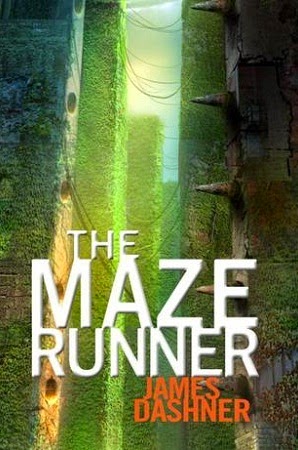
Book Review: The Maze Runner by James Dashner

The Maze Runner

Written by: James Dashner

Published: 2009

Synopsis: When Thomas wakes up in the lift, the only thing he can remember is his name. He’s surrounded by strangers—boys whose memories are also gone.

Nice to meet ya, shank. Welcome to the Glade.

Outside the towering stone walls that surround the Glade is a limitless, ever-changing maze. It’s the only way out—and no one’s ever made it through alive.

Everything is going to change.

Then a girl arrives. The first girl ever. And the message she delivers is terrifying.

Remember. Survive. Run.
___________________________________________________________________________________________________________

“If you ain’t scared… you ain’t human.”

Writing reviews for Young Adult dystopia is hard guys. They're so formulaic that even if they're amazing it's hard to make the review sound like something other than paint-by-numbers. The Maze Runner is yet another in the long line of Young Adult dystopian novels. I wish I could say that it broke the mold and was a completely unique inclusion to the genre, but it's not. That isn't to say that it's not an entirely enjoyable read or that it doesn't do some things differently but there might be big chunks of this review that echo earlier YA reviews I've written.

One of the things I've really enjoyed about this little YA renaissance is the prominence of female characters in the narratives. Are they necessarily three dimensional characters? Eh, that's hard to say. But at least they're there. The Maze Runner is an almost entirely male orientated novel. The protagonist is Thomas, who wakes up in a metal elevator at the start of the novel with no memories except that his name is Thomas. The elevator leads him up into the glade, a large patch of land that's surrounded by immense walls that form a maze. Thomas is thrown head first into a semi-structured society of teenaged boys, not quite Lord of the Flies but there's a feeling that that kind of insanity lingers not too far in their past. After his first day the male-dominated narrative is jarred with the arrival of another newbie which is not only unheard of in the strictly organised Glade but especially so because this newbie is a female. Theresa marks a different direction for the Gladers, not only because her gender represents a shift in dynamics but she literally shows up with a note saying that everything is going to change.

I actually think that the single female in a male dominated environment could have made for a very interesting novel. And it's all there bubbling below the surface, it just doesn't quite make it up. Why does the arrival of a female make such a huge impact? Why haven't there been females before? Is she at risk with all of these testosterone fueled teenage boys? Does she inspire rage or confusion or jealousy? None of this is really addressed, instead she's just an instrument of change. Her gender is ultimately immaterial - apart from the relationship that is (of course) sparked with Thomas. In a way that's kind of fantastic. Hell yeah her being a lady doesn't matter. Except in this environment of course it matters. Some of these boys have been stuck in a maze terrified of being torn apart by monsters for 2 years. Even if they didn't look at her sexually or romantically, her gender would inspire all kinds of other emotions and complications. She could be a reminder of the mothers and sisters they no longer remember, or a painful acknowledgement of a side of their life that's completely shut off from them. And what about from her perspective? This was perhaps my biggest issue with the novel. Sure finding a way out of the maze and the hints at being viewed by some Big Brother force are reminiscent of other YA series, but ultimately the general narrative is a fresh take on a well-mined genre. If this aspect of the novel was better addressed I think I would probably recommend this book more heartily.

What I quite enjoyed was the unfolding mystery of the maze and the action sequences as the book progressed.  It was a little slow to start but once the wheels started to churn it was far more engrossing. Perhaps not engrossing enough to keep me reading on in the series, but engrossing enough that I'm interested in seeing the film this weekend. One thing I'm not looking forward to though is the clunky made-up language used to replace actual swear words. If I actually have to watch an actual person say "you are the shuckiest shuck faced shuck in the world" or "I've been shucked and gone to heaven" with their actual faces I will vomit in the middle of the cinema.


Tuesday, March 5, 2013

Book Review: The Children of Men by P.D. James

The Children of Men

Written by: P.D. James

Published: 1992

Synopsis: The human race has become infertile, and the last generation to be born is now adult. Civilization itself is crumbling as suicide and despair become commonplace. Oxford historian Theodore Faron, apathetic toward a future without a future, spends most of his time reminiscing. Then he is approached by Julian, a bright, attractive woman who wants him to help get her an audience with his cousin, the powerful Warden of England. She and her band of unlikely revolutionaries may just awaken his desire to live . . . and they may also hold the key to survival for the human race.

Challenges: Dystopian for Book'd Out's Eclectic Reader Challenge
_____________________________________________________________________________________________

In place of the challenges I usually do (and fail) each year, I decided to set myself a few goals instead. I wanted to read a more diverse range of books and I wanted to make time to re-read books, something I haven't done much of since starting this blog. The Children of Men was a book I enjoyed a lot the first time around, and when I was looking for a short read to take down to Sydney with me this seemed like the perfect opportunity to see if I liked it as much second time around.

The short answer is yes, oh my god yes I enjoyed this the second time around. In a short book P.D James manages to create a dystopian future that is both horrifying and interesting while also filling it with characters that are at times jarring but always well developed and complex. I hesitate to hold it up against titles like 1984 or Fahrenheit 451 but the future The Children of Men portrays is equally chilling. Our race, no longer able to reproduce, is slowly waiting to die. That in and of itself is fascinating, and a large part of the book is almost a character study of how the protagonist Theo and the people around him choose to handle this truth. How do you work when you know in 20 years 90% of the population will be gone. Why do you keep gardens kept or buildings maintained? Why do you bother with sex and marriage if there can be no children? Why should we be contained by laws if we're all going to die soon anyway, and there will be no one to inherit the mess? Adding to this conceit is the real world potential that James introduces to the narrative. Prior to the mass infertility there had been a noted slump in the amount of children born across Europe. Factor in women choosing career over family, the AIDS epidemic and the worldwide consideration that perhaps a slump would be welcome considering how polluted the world is with our numbers. Perhaps mass infertility will never happen (exactly how it occurred is never explained) but by adding those real world elements it's hard not to stop and think 'what if''.

While I found the world to be amazingly interesting, it was the people that made it most fascinating. There are the Omegas, the last people born before infertility spread across the world. How do you live when your whole life is spent in an unwanted spotlight, a constant reminder that the human race failed and have since given up on living? They're portrayed as surly, mysterious, pretentious, uninterested, beautiful, heart-breaking - the whole gamut of complex and unwanted characteristics, yet retaining a level of sympathy both to us, the readers, and the characters in the book. In a world that hasn't seen a child in 15 years, people have had to turn that attention elsewhere. Some turn to pets, who they baby and coddle and hold birthing parties for. Others, much more darkly effected by their lack of fertility, turn to porcelain dolls as their baby substitutes. They walk their 'children' around in prams and smile brightly as people look over the edge at their little darlings and tickle their fragile china chins. There's something so bleak and desperate in that image, and James manages to paint a ghastly picture of these 'mothers' in a scene that Theo witnesses one morning on his way to work. It's such a brief moment, but it says so much about the world, the psychological state of those left living, and of Theo as he (fails to) react to the situation. It's just one example of how James uses the people in the book to say what needs to be said, a perfect exemplar of the show don't tell rule of story telling.

The Children of Men is fascinating, thrilling and provocative. James has a real skill for crafting a suspenseful and compelling tale that's heavy with implications but not weighty with morality lessons. But above all it's the characters that make this book worth a read, both the secondary characters that appear briefly and the primary characters who dominate the narrative. It's short, sharp and takes a stab at Neighbours which makes it even more worthy of a read. Or a re-read. 


Tuesday, October 30, 2012

Review: The Running Man by Stephen King/ Richard Bachman

The Running Man
Written by: Stephen King (published originally as Richard Bachman)

Published: 1982

Synopsis: The Running Man is set within a dystopian future in which the poor are seen more by the government as worrisome rodents than actual human beings. The protagonist of The Running Man, Ben Richards, is quick to realize this as he watches his daughter, Cathy, grow more sick by the day and tread closer and closer to death. Desperate for money to pay Cathy’s medical bills, Ben enlists himself in a true reality style game show where the objective is to merely stay alive.
________________________________________________________________________________

When the Hunger Games film came out every man and his dog compared it to Battle Royale and The Running Man. Battle Royale I was familar with, but all I knew about The Running Man was that it was one of the books that Stephen King published under his pseudonym and it was supposed to be pretty good. I made a mental note to check the book out sometime, and when I was looking for books to download for China it popped up in my head and I couldn't think of a better book to read on a holiday.

So it turns out Richard Bachman really is Stephen King's grittier alter-ego. Though I found this book a little clumsier than King's regular style, it had a darkness and an anger which I can't really place in another King book that I've had the pleasure of reading. The anger, typically portrayed through the anti-hero Ben Richards as he runs for his life and the lives of his wife and daughter, had a frantic energy that kept the momentum of the book racing forward, building to an impossible height before the final bang at the end. It was faster, harder and more intense than King usually writes, though many of King's stylistic techniques were retained. It makes for an interesting albeit bizarre read, purely to decipher and try to decide whether you would have recognised Bachman as King when it first came out.

Ben Richards also makes for an interesting character. Though he's only 28 years old, he seems much, much older. But I imagine that was sort of the point. In the lower classes in the future you grow up quick. A 7 year old kid he meets while on the run is the same again, if you retain the innocence and naivety of youth you'll never survive. You need to be cynical, headstrong and independent if you want to keep afloat in a world that doesn't care about you anymore. The America of the future is purely a world for the very rich, the poor are only wanted for as long as they can be placated with dope, work in the factories or volunteer for the free-vee games.

Ben doesn't like his lot in life. He hates that his young wife has to turn tricks to keep their baby girl fed, but it seems he doesn't hate it enough to toe the line and follow orders. He despises the free-vee, and the drug-like effect it has on the lower and upper classes alike, yet it's straight to free-vee that he turns when his baby needs medication. Cynicism, anger and pain boil just below his surface, and once his application to the Games begins he can't keep the lid on it anymore, it keeps spilling over and doesn't stop until the book does. It's a venomous and ugly attitude, and it infects the book and, to an extent, the reader. Though you get swept up in the action of the story, the anger and animosity of this story is hard to forget and makes for difficult reading at times.

So the running man... what is it exactly? Like The Hunger Games and Battle Royale, this is a world that enjoys making certain people suffer live on television. However in The Running Man the games are a volunteer program (for cash) and are comprised of countless games, some more harmless than others, though all designed to humiliate and potentially kill all who take part. After a full day of interviews, tests and countless lines, Ben finds himself picked for the Running Man competition - a competition mainly designed to weed out the most angry, anti-authoritarian and dangerous people in society for a hefty reward. Basically you go on the run, and people who spot you can report you for money, kill you for more money, and watch the TV to see the "hunters" track you down and eliminate you in the most TV friendly way possible. For each hour you remain alive, your family receives more money and if you last a certain amount of time you get to return home to your family. That outcome isn't likely though, in fact, thanks to the power of the television studio, you're basically only going to stay alive for as long as they think will get them the best ratings.

Ben goes on a ripper of a spree. Once he realises how dirty the studio plays, doctoring a picture of his wife to make her look like a disgusting drug-addled prostitute for instance, he fights back just as hard. He's ruthless and calculated in his approach, and his creative (and horrifying) tactics make for riveting reading. Along the way he meets a range of different people, some who want to help, others who want nothing to do with him, all who open his eyes to the horrors of the world outside of his own particular bubble. Even for the upper classes it isn't roses and sunshine. While they have it infinitely better, they're also controlled, drugged and kept in the dark.

Because it isn't aimed at young adult readers, this book probes all of the dark nooks and crannies that The Hunger Games simply couldn't. It's a dark (super, super dark), angry, aggressive and captivating book that, though flawed, deserves to be read if you're a fan of the dystopian televised monstrous games trope, or even if you aren't.

Friday, May 4, 2012

Fanart Friday: Cinna from The Hunger Games

Cinna was easily one of my favourite characters in The Hunger Games. He was so understated and sensible, yet still managed to stand out as an individual. He had a great heart, an enviable capacity for understanding but he isn't afraid to show a little attitude when the time calls for it. Without spoiling anything, I wish he'd had a larger role in the books. Then again, perhaps if he'd been a more central character I would have tired of him, or he'd have done something obnoxious that tainted his early presence. Who could ever know? Anyway, here are a series of pictures of this wonderful minor character. Be sure to click through the links and see the rest of the artwork by these phenomenal artists.

THG: Cinna by Minuiko


Cinna by Akanei-Run


Cinna 01 by MirandaFear

Tuesday, April 10, 2012

Review: Fahrenheit 451 by Ray Bradbury

Fahrenheit 451 
Written by Ray Bradbury

Published: 1950

Synopsis: Guy Montag was a fireman whose job it was to start fires. And he enjoyed his job. He had been a fireman for ten years, and he had never questioned the pleasure of the midnight runs or the joy of watching pages consumed by flames, never questioned anything until he met a seventeen-year-old girl who told him of a past when people were not afraid. Then Guy met a professor who told him of a future in which people could think. And Guy Montag suddenly realized what he had to do...


"Nobody listens any more. I can'talk to the walls because they're yelling at me. I can't talk to my wife; she listens to the walls."
Wow, there is a lot going on in this book!  Within 165 pages Guy Montag transforms from a man who loves his job as fireman, to a man who questions everything going on around him. He meets a young, whimsical girl, an old professor and college educated tramps. He's chased by a robotic hound, lectured at by his sanctimonious chief and witnesses his wife die and be brought back to life (no spoilers there, it happens in the first few pages). His entire world is shaken in this book, and the result is a complex, and rich short dystopian novel.

In the future books do not exist. Or they do, but owning and reading them is illegal and results in having them, and your house, burnt to the ground. The firemen are responsible for the burning, and are completely unaware of their vocation's previous purpose. There are plenty of rumours around, about firemen putting out flames instead of lighting them, or that books are in fact filled with interesting and delightful words, but this futuristic society is apathetic at best, and too busy killing one another, commiting suicide or staring blankly at their wall TVs. Sounds oddly prophetic right?!

Considering it was written over 60 years ago, Fahrenheit 451 hit pretty close to home on it's idea of a future society. America is at war and is detested by everyone else in the world, people fill their homes with TVs that fill an entire wall (or an entire room in lucky homes),  and stick headphones (known as ear shells) to hear a constant whir of noise all day long. Also, while books are now illegal, it was actually the people who led to that decision. Political correctness reached crazy heights and everyone began taking offence at every little sentence and began hacking away at books until they were bare and unilluminating. All that remained were the cheap stories that had nothing of substance and became the "families" that people watch day in and day out on their TV screens.

As Fahrenheit 451 tells the story of a country bounded by censorship and devoid of intellectual thought or conversation, Ray Bradbury uses the most beautiful, descriptive language to describe it. It adds such weight to the idea of a world without books and imagination to read a book that employs such a diverse range of literary techniques. Of course, words themselves wouldn't be enough by themselves, as Bradbury himself says in Fahrenheit 451;
"Books were only one type of recepticle where we stored a lot of things we were afraid to forget. There is nothing magical in them at all. The magic is only in what the books say, how they stitched the patches of the universe together into one garment for us"

So joining the exquisite language is a rich story littered with characters who will capture your hearts or wrath within minutes. It really ticks all the boxes, and I'm not surprised this book has captured the attention of so many readers for so many years. If you haven't yet had the chance to read Fahrenheit 451 I highly recommend you take the time to discover it for yourself. I'm eager to read more of Bradbury now, and see if his other books are as prolific as this one.

Saturday, March 31, 2012

Film Review: The Hunger Games (2012)

The Hunger Games 

Directed by: Gary Ross

Starring: Jennifer Lawrence
Josh Hutcherson
Elizabeth Banks
Stanley Tucci

Synopsis: Check out my review of the book for a comprehensive synopsis!

Warning!! This review will discuss the book in detail, so if you haven't read it (or don't want to read it but want to watch the film) and don't want to read any spoilers then back away from the review. You've been warned!!


Now that I've had almost a week to decompress and step back from the "HSDFHS@!! HUNGER GAMES!!!" cloud of excitement, I thought I'd take a chance to review it. As my warning suggests, I'll be discussing the film in relation to the book and all the spoiler-y goodness that happens. So I guess this is less a review, and more a discussion post...but whatever.

First off, I really liked it. I had that moment just as the last ad played when I gripped the seat and thought "crap, what if it sucks?! Maybe I should get out now..." but for the most part I was really happy with the way they adapted the book to the screen. In fact, perhaps it was the film's faithfulness that lead to the few problems I had with it. But I'll get onto that in a minute, first, the goodness!

How amazing was Jennifer Lawrence?! She was so perfect as Katniss. She was moody and cranky and closed off to people she didn't know, but completely open and on the verge of falling apart when she was dealing with someone she loved/respected. The scene with Rue (again, SPOILERS) had me paralysed with emotion, I freaking bawled like a baby. I really liked Elizabeth Banks (how hard was it to pick it as her?!) as Effie, Stanley Tucci was a great Caesar, and Wes Bentley was superb as a more fleshed out Seneca. I thought Lenny Kravitz was a weird pick for Cinna considering how crazy his clothes usually are, but amazingly he managed to pull of the calm, downplayed vibe of Cinna. Overall I guess I could say that I was really impressed with the cast. I was at a slight advantage because I read the books after all of the massive publicity for these films, so I always imagined the characters looking a lot like the actors cast in it, but I still think they worked well to create a cohesive cast that I believed. The only exception would be the guys playing Gale and Peeta. The opening scene between Katniss and Gale was perhaps the most forced conversation in the entire film, and while I think Josh Hutcherson was a decent enough actor (he needs to stop expressing his emotions through an open mouth though) I'm not convinced of him as Peeta...yet. I'll wait until the sequel before I make a final decision about that.

The art direction and costuming was amazing. They truly brought to life the world created by Suzanne Collins, and it was a pleasure to see all the elements I'd read presented so beautifully and accurately. However, while I thought the Capitol costumes were gorgeous, and true to the book, I found them a little too much. This was what I was hinting at above, according to the details in the book the choices in the film were understandable, but in a book you're able to prescribe exactly how crazy it'll be. To me they had all the sugary superficiality of the costumes in the film, but with a much darker undertone. So in my mind, while there was a clear separation between the Capitol and the outer districts, there was a connecting slither of something that made it work. In the film I just felt like the two worlds were too disjointed, and too disconnected. Which lead to the Capitol costumes appearing almost cartoonish, and not in a great way.

While I'm complaining, I'll bring up my other complaint. Though the film was incredibly close to the book, some of the areas they trimmed, especially the pre-games story, meant that the film was lacking the substance that the books had in spades. For instance, the Mockingjay pin has none of the rebellion connotations, so that scene with President Snow at the end just seems weird. And why did Cinna hide in on her jacket? It's just a pin from her sister. Similarly, the emotional tug-a-war with Peeta lost its complexity without Haymitch sending her little hints that she should be pushing the relationship angle. Also, what with her not nearly dying of dehydration? They kept in the line about how 20% of them would die from exposure and hunger/thirst yet never explored that path, leaving the thread open and messy. There were a few other little things like this that, while not a huge deal, may come back to bite them in the ass in the next two (or three if they split the last book) movies because they won't have the foundation they needed. I'm willing to give them the benefit of the doubt, but I've heard from a few people who haven't read the book that they really missed the crux of the story because of these missing elements, and things like the district 11 rebellion scene just seemed out of place because of it.

But my complaints really are minor. It's just like I always came out of the Harry Potter films complaining but inevitably came to love and adore the films in their own right. In all honesty, the film really managed to hit high in every area, acting, costumes, sets, CGI (except those damn dogs), scripting, and I enjoyed the few additions they made, such as the crossbacks to Caesar during the games and the inside look in the game-maker's room (although I could have done without the Seneca and Snow scenes).

It was great to see a YA book handled with some respect, and not melodrama-ed and cartooned up (with my exceptions above). It seems that Suzanne Collins had a real hand in the production of her story, and with her television background I'm fairly positive that the areas I've complained about have been handled by her and she knows what she's doing. At least that's my hope. I'm interested in seeing how they actualise the next two books, and with the success of this first cast I can't wait to see who they choose to play all the additional characters coming in Catching Fire! 

Saturday, March 3, 2012

Review: Mockingjay by Suzanne Collins


Mockingjay (Hunger Games #3)
By Suzanne Collins

Published: 2010

Synopsis: Young Katniss Everdeen has survived the dreaded Hunger Games not once, but twice, but even now she can find no relief. In fact, the dangers seem to be escalating: President Snow has declared an all-out war on Katniss, her family, her friends, and all the oppressed people of District 12.


Warning: This review may contain spoilers from book one and two.


Mockingjay is the third and final book in the Hunger Games series. Once again, I've heard people (my sister and brother included) say that this was one of the weakest links in the series, and while I didn't agree with that regarding book two, I do in this case. I did still find myself racing through it and I definitely enjoyed it, but after I finished I found myself questioning the storyline that Suzanne Collins decided to use.

After the explosive end of book two I expected big things in this book, but instead it ended up weirdly paced and a little unfocused. Katniss, Gale and their families and friends have settled in district 13, the town that was believed to be destroyed until recently. And while they've escaped the tyranny of the Capitol, they're now contained by District 13's strict rules and guidelines. Katniss may have never been free in the true sense of the word, but at least in District 12 she could escape over the fence and run in the forest, swim in the lake and provide for her family. In District 13 everything is strictly monitored, food, work, free time...not to mention everything takes place deep underground, away from the sky and fresh air. Furthermore, while Katniss fought against the adults trying to control and manipulate her actions and future in the previous two books, by book three she has become a mere symbol for what the men and women in charge want, and her opinion is no longer held with much regard.

While I could see what Suzanne Collins wanted to do, I didn't feel like it was played out particularly well. Every now and then the pacing would pick up and it would seem like the action was going to develop to the place where I felt like it should be. For example, the scene where she visits the hospital in District 8, things progressed from a safe TV spot into something way more kick-ass. But then things slowed down to a crawl again. I'd been anticipating the rebellion from the early pages of book one, and half way through the final book barely anything was happening except PR stunts. I found the TV persona aspect overwhelming, I feel like by the third book there should have been less attention paid to Katniss as an individual and more to the actual rebellion. Snippets of news from the other districts weren't enough, when Katniss found herself defending the hospital in Disrict 8 I thought this was the role she'd play from now on, but nooooooooo. She went back to District 13 and walked around corridors and argued with people in small rooms. It seemed like Collins wanted the book to play out like a chess game, with Katniss as one of the pawns, but the approach really bugged me.

My other issue was the love triangle. I was never a big fan of it as anything other than a metaphor for the choice she had to take (rebellion vs Capitol control), and this book just really pushed it too far. I've never really enjoyed Gale as a character (mostly because of the love triange) and his place in this book just added to the slow and monotonous pacing. He never acts like a friend of Katniss, let alone a potential boyfriend, unless he's whining about how little attention she gives him or how much she gives Peeta. Considering Peeta is being held captive by the Capitol you'd think he'd be a little less egocentric but apparently that would be too out of character so he just behaves like an ass. Meanwhile Peeta is (SPOILER AHEAD) being brainwashed and turned into an anti-Katniss robot, and everyone is being so self-centred that none of them can think about anything outside of their own little bubble.

The reality TV elements and love triangle elements of the first two books were amplified far too much in these books so the story stagnated. Why was all the action happening in reports back to the group? Even if Katniss was being contained and controlled by the adults in charge, why wasn't there a main character (Gale perhaps?) the focus of several chapters kicking butt in each district as they overturn Capitol control? Why did the end speed through so quickly? Was Collins out of time, room or ideas?

Grievances aside though, I did really enjoy the book as I read it. These issues niggled at me a little as I read, but it wasn't until I put it down after racing all the way through it that I realised how disappointed I was. It wasn't that it was a bad book (because it wasn't) it's that I felt like there was great potential to create an amazing action/rebellion book that was completely missed. Regardless, the writing was of equal quality to the previous two books, and Collins put in great effort to paint the world so that we, the readers, could imagine every element of it. The story-telling itself was top-notch, it was the story that made the quality lag. I also have to commend Collins for her ability to kill of characters without hesitation! It's far more realistic to see a character you've invested in emotionally injured or killed when they're placed in a dangerous position, than the Hollywood ideal of three people managing to take down an entire army! It was heartbreaking, but it made me respect Collins a great deal more for having the balls to do it.

I know I've made it seem like a complete failure of a book with this review, I want to reiterate that this ISN'T the case. It was just a disappointing third installment FOR ME after two remarkable books. I'd still recommend reading the series at a whole, this book does provide the climax, answers and resolutions that have been building through the entire series. It wasn't the final book I was hoping for, but it was interesting nonetheless, and I certainly was invested in it as I read it.

What did everyone else think about this one?

Tuesday, February 28, 2012

Review: Catching Fire by Suzanne Collins


Catching Fire (The Hunger Games Book 2)
By Suzanne Collins

Published: 2009

Synopsis: Katniss Everdeen and Peeta Mellark won the annual competition described in Hunger Games, but the aftermath leaves these victors with no sense of triumph. Instead, they have become the poster children for a rebellion that they never planned to lead. That new, unwanted status puts them in the bull's-eye for merciless revenge by The Capitol...

WARNING: This review will most likely contain spoilers from book one.


So as I mentioned in my review of The Hunger Games I enjoyed this series, and absolutely devoured it. Now I've heard from other people that they think it lost a little steam after the first book, but perhaps because of the familiarity I felt with the first book, I actually really loved this book, perhaps even more than book one.

After book one I had a basic idea of where the next book would head. But book two went in a completely opposite direction than I had ever thought possible. At first everything seems to be OK, Katniss is living in her old home and still hunting, her family no longer has to worry about food or keeping warm, and life seems to be moving on at a more regular pace. Things are awkward (read: non-existent) with Peeta thanks to her admission on the train at the end of book one, and she has the district tours to struggle through, but really, what's there to complain/worry about? Well it seems everything. It appears that the rebellious actions of Peeta and Katniss in the last games have acted as a war cry for people in the Districts to rally behind, and the president has made it very clear that if Katniss can't convince the districts that she loves Peeta and that she's not for a rebellion, then everyone she loves will...disappear.

In the first Hunger Games Suzanne Collins documented an awful aspect of the Panem dystopian society. Horrific as it is for you and me, it was, by all accounts, fairly standard for their games. 24 children fight to the death, all while people watch, cheer, bet, and get sucked up in the excitement of it all. However, in Catching Fire it deviates from the norm. They're not used to this kind of frenzy, or level of admiration or push for a rebellion, and Peeta and Katniss are punished over and over again for their role in it all.

(SPOILER)
If you had told me that book two would take place, once again, in the Hunger Games arena, I probably would have scrunched up my nose and groaned. But I actually thought the way it was handled, as one of the quarter anniversary twists, and as a way to easily kill off two annoyances, was intriguing and smart. Not only does the president get what he wants, but he firmly demonstrates to the rest of the districts how much power he has, and how stupid it is to act out from what he deems appropriate. It wasn't perfect and I felt like some of the deception and secrets were a little sloppy, but I liked that the games introduced a new group of wiser and less obedient characters and that it acted as a method to inspire more rebellion in the districts.
(END SPOILER)

It was during this book that the love triangle between Gale, Peeta and Katniss was further developed. Personally I found the triangle a little lacking, because Gale truly seemed more like an older brother than a potential lover, but I did enjoy it for a different reason. Gale, to Katniss, has always been a symbol of rebellion. He was the guy who hunted with her illegally and who constantly spoke out against The Capitol. Peeta on the other hand, even if he was a saviour to Katniss early in life, is and will forever be connected to the Hunger Games. In book one he manipulated hundreds and thousands of people by constructing the love interest between him and Katniss, essentially saving their lives, but also acting in a very Capitol way. So the love triangle, to me, is less about which of the two boys is more her type, or more deserving of her love. Instead it's a matter of Katniss choosing the direction of her future, will she comply with the Capitol and be with Peeta, or will she rebel, and perhaps start a better life with Gale?

This book played havoc with my emotions, I was up, down, all over the place! Unlike book one, I had no clear idea where this book was heading, so I was taken on the roller-coaster of emotion and action that Suzanne Collins intended. This book was the perfect book to travel between the youth and naivety of the first book, and the balls to the wall rebellion that will occur in the final instalment. A great follow up.

Saturday, February 18, 2012

Review: The Hunger Games by Suzanne Collins


The Hunger Games 
By Suzanne Collins

Published: 2008

Synopsis: In the ruins of a place once known as North America lies the nation of Panem, a shining Capitol surrounded by twelve outlying districts. The Capitol is harsh and cruel and keeps the districts in line by forcing them all to send one boy and one girl between the ages of twelve and eighteen to participate in the annual Hunger Games, a fight to the death on live TV.


Since I began blogging a year and a half ago it seems that the only book (and series) that people consistently talk and rave about is The Hunger Games. After reading bloggers discuss the characters and the story is millions of blog posts I decided I wanted to read it to, however I've been pretty lazy about it. I guess I was waiting for the series to literally fall in my lap, which amazingly, actually happened! A few weeks ago I spent the weekend up in Cairns with Tom, but the crappy, crappy, CRAPPY weather meant most of our plans were cancelled. Instead I snooped through my 15 year old brother's bookcase and found all three books. Win!

In the future (how far off is never really specified) the world is a dank and desolate place. Katniss, our protagonist, is 16 and a born rebel. Thieving and hunting off Capitol property to feed her family, it's clear to see that she's going to cause trouble for the smooth running Capitol all too soon. Katniss lives with her mother, a healer, and her 12 year old sister Prim, the absolute light of her life. And it's her devotion to Prim that sets her on course for the rest of trilogy. When it comes to draw the names for the district's "tributes" to the games, Prim is selected to represent District 12. Distraught, Katniss takes her place, volunteering for what she believes will be her certain death. Joining her into The Hunger Games is Peeta, the baker's son, who helped Katniss out when she was most in need years earlier.

Now the Hunger Games themselves are where all the fun is, at least for me. A group of school aged kids are locked in an arena and ordered to fight to the death. The last one standing gets to return home and live forever more in the lap of luxury. But why would they hold such a barbaric event? 74 years earlier there had been a rebellion within the districts. They fought for their independence from the Capitol, but after the annihilation of a 13th district they dropped their weapons and surrendered. As punishment two children from each district were taken and forced to fight, and each year since this has been repeated so that the districts forever remember their place.

As time has gone on though, things have developed and changed. The Hunger Games are broadcast across Panem and are treated as though they're the Olympic games, something to be proud of and to celebrate. The residents of the Capitol relish the "sport" and drama of the whole event, so before the fight can begin, each tribute is primped, plucked, waxed, cleaned, painted, and varnished and forced to endure an opening ceremony and series of interviews. Personally, this is when I found things got a little dark...well, as dark as shade on a summer afternoon, really, but darker nonetheless. The Hunger Games spends a great deal of time pulling apart the sickening festival that these games have been made into. When you think about some of the extreme calls for punishment demanded on the internet and news (*ahem* FOX *ahem*) and the fascination we seem to have with reality TV, it's hard not to see the plausibility of something like this. It's a grim future, and a sharp look at where our society is headed.

While the games were a source of great interest for me, they were also a slight disappointment. The concept of the games is almost identical to the Japanese film and book (though I've only seen the film) Battle Royale, and while I'm not suggesting that Suzanne Collins copied the idea, it just eliminated much of the anticipation and uniqueness of the story for me. Similarly, seeing as this is book one in a trilogy, I was aware certain characters couldn't die, at least, not yet.This meant that scenes that I knew were designed to have my heart in my throat, well, they weren't underwhelming, but they didn't have the desired impact either.

Complaints aside, the novel is a cohesive story rich with action, characters and dystopian themes. Being a young adult novel, there are moments that (for me) lack the complexity I desire, however the quality, across board, is high. Behind the awkward love triangle and heavily sign posted exterior, there is a dark and troubling interior that has the necessary bones to create a fantastic series. Questions are raised about independence, duty, authority, duplicity and reality, while statements on class equality, free will and social responsibility are discussed throughout the entire trilogy. This is the kind of book, I think, where you get back what you put in. If you want to examine it for tougher and more bleak truths, there is plenty of grit in there for you. However if you're after an action adventure with a dash of romance, then there's plenty of that within the covers too.

Suzanne Collins deserves a great deal of credit for the series she's created, especially in light of the Twilight style puff-pieces that are so predominant in YA books today. With the film release getting closer and closer, be sure to hunt down a copy to read, because I can only imagine how thrilling the film adaptation could be if it remains similar to the source text.

Thursday, January 19, 2012

Book review: Zoo City by Lauren Beukes

Zoo City 
Written by Lauren Beukes

Published: 2010

Synopsis: Zinzi has a Sloth on her back, a dirty 419 scam habit and a talent for finding lost things. But when a little old lady turns up dead and the cops confiscate her last paycheck, she’s forced to take on her least favourite kind of job – missing persons.

Zoo City is the first read in Ellie's 2012 sci-fi challenge, and I think she picked a brilliant book to start with. I'm not exactly new to the science fiction genre, but this book is the perfect bridge for readers who want to get a taste of sci-fi, but don't want to commit to a fully-fledged Asimov or PKD world. There are subtle changes to the world we live in, which is manifested primarily through the creation of 'zoos' (which I'll explain soon), but otherwise it's a very similar world to the one we live in. There are no science experiments or machines to wrap your mind around, and it doesn't matter if you've never even thought about what it'd take to survive in a post-apocalypse dystopia. If you live with your eyes open to the disparity that exists between people, especially in places like South Africa where the novel is set, then you're more than equipped to read and appreciate this novel.

Zinzi is the protagonist and has a rather chequered past. She's a recovering addict, murdered her brother and was once a journalist who stole money from her editor/boyfriend. Now she's estranged from her parents and lives in one of South Africa's ghettos, known as 'zoo city'. Zinzi, as well as most of the other people in the apartment and neighbourhood, is a zoo, meaning that she has an animal which has 'attached' itself to her since she committed her criminal offence. This is quite similar to the daemons in Philip Pullman's His Dark Materials except these aren't a physical manifestation of one's soul, but are instead, according to popular belief, the manifestation of your guilt. Zinzi's animal is a sloth, and their connection is strong. Like the daemons in Pullman's trilogy, they aren't tied by a physical string, but their separation is unbearable and should the animal be removed completely, or dies, the zoo will be visited by 'the undertow'. In addition to being a physical demonstration of her criminal past, the sloth imbibes Zinzi with a special ability, the ability to find lost things. And it is the search of lost keys, rings, photos and other paraphernalia which pay Zinzi's rent. Well that and writing the template emails for those lousy scammers claiming "you could receive $3 million if..."

It is a fine line between too much and too little when it comes to releasing details about what caused the dystopian or sci-fi aspect/element of a novel, but in this case I found myself wanting a little more. By the end of the novel you have all the answers, but I found myself pulled away from the story trying to work out exactly what a zoo and what the undertow was, especially in the first half of the novel. The inclusion of psychiatric reports and documentary excerpts to fill in the gaps were an interesting and informative way to fill in the gaps of knowledge, I just wish they'd been a little earlier in the book. That said, the zoo element of the book was very interesting. It's pretty much the only difference that exists between this world and the one we actually live in, and it serves as a physical demonstration of the disparity that exists in society, especially amongst people considered to live in the shadows of society. The investigation Zinzi finds herself on really explores this issue, and considering the location is South Africa, I think it makes some poignant statements on the current state of society.

I felt like the story went a little off the rails towards the end, but this was an entertaining book that I really enjoyed reading. If you've been looking for a nice and un-intimidating way into science-fiction then I think you'll find this book the one for you. It's almost a little young adult-y in places, but again, that's just another way of making the book easy to get into. A good start to the challenge and the year!

Saturday, December 31, 2011

film review: I Am Legend


I Am Legend 
Directed by:  Francis Lawrence

Released: 2007

Starring: Will Smith, Alice Brega

For synopsis please see my book review.

Ok, this isn't going to be a pleasant review, but like the book review, I can't really delve into why it fails so abysmally because that'd destroy the book for potential readers. If I sum it up though, the film missed the point. Completely. Like many Hollywood adaptations of classic (or modern classic) books or films, they were too focused in how awesome Will Smith would look walking down an empty New York street, and not enough in the crux of this story, the inner turmoil that haunts the last man alive and his constant battle to hold onto his sanity, his humanity and his self.

The book isn't an epic tale of a man taking on the disease single-handedly. It's a personal account and it's god damn harrowing. The film focuses too much on making Robert a hero and a good guy and MISSES THE GOD DAMN POINT. Essentially, the film is the glossy Hollywood attempt to sell tickets, and really I don't blame anyone except the writer and the executives who green lit the film. That said, the pacing of the film is actually pretty decent. The first 15 minutes or so do a pretty good job of setting up Robert as the final man alive, and showing New York as a crumbling ghost town that's been overtaken by nature. However it misses that mechanical approach in the book, it's almost gimmicky at times, and Will Smith is far too sane and emotional to truly be a man who has spent three years alone in the world. It also eliminates the humanity of the "dark seekers" as they're known in the film. They're more like zombies now and there isn't the persistent terrorising of Robert that exists in the book. In the book his neighbour Ben and other vampires are the single thing most likely to tear Robert's sanity to shreds, because he can't help think of them as the people they once were and of the humanity they now so sorely lack.

It's those smaller details that really niggle at me as I watch this film. They might be small details but they're important to the complete picture, and if you mess with one, ultimately you mess with all of them. Worst of all though, is the end. I can forgive, to an extent, making Robert a scientist who was involved in the original deadly cure or giving him a dog for a pet, or ramping up the action as he hunts the dark seekers. If you're going to make a blockbuster, you have to please the majority, and I'm fairly sure most people who saw this film had no idea it was based on a book. What I can't forgive though, is the ending. They basically took a big steaming pile of crap and smeared it all over Matheson's memory. It appeals to the lowest common denominator and completely disrespects not only the original, but the story that they had (rather haphazardly) been building to that point. It destroyed the elegance and complexity and humanity of the story and treated the audience like idiots. The rest of the movie is hardly a must-see, but that final half hour is enough to warrant me to advise you all to stay far, far away from this "movie".

In the end I have to ask why the hell they thought this needed to be remade. The book could easily adapt to a moody and complex dystopian tale, but so far Hollywood has forced the story to bend their way in all three adaptations. Why do authors keep accepting the project if they can't keep true to the book? Surely they've read the original book and understand that their project has completely missed the mark. And if it's because Hollywood interferes, then don't make it. It's like the film adaptation of The Golden Compass, if people are pressuring you into removing the heart and soul of the story, then don't make it. Simple.

So, don't watch this. Read the book and if you must watch a film adaptation watch Night of the Living Dead  because though it doesn't follow the plot in the slightest, the heart of the story is well and truly present in this classic zombie film, and it's the only film that Matheson himself thought captured his amazing novella successfully.

Monday, December 12, 2011

Film Review: Blade Runner

Blade Runner

Released: 1982

Directed by: Ridley Scott
Starring: Harrison Ford
Sean Young
Rutger Hauer

For the synopsis please read my book review.


Blade Runner is the epitome of science fiction, dystopia and cyberpunk cinema. It is considered to be the very best of it's kind, even though the director has re-released the film in three different incarnations! For this challenge I chose to watch the Director's Cut which was released in 1992, and eliminated the voice-over and other cost-cutting methods used to release the original film. I've also seen the Final Cut but I've never actually watched the original cut. I really should, bad though some people say it is, there must have been something about it that attracted such a cult following right?

The film diverges quite extensively from the book, and while I think it waters down much of the humanist and existential discussions that the book created, it does still adhere to the general feel of the book. In fact, Philip K. Dick saw only the first 20 minutes of the film and was quoted as saying, "it was my own interior world. They caught it perfectly." So for those of you who tend to run in horror when you hear a film is based on a book (especially a book as well loved and well regarded as Do Androids Dream of Electric Sheep?) don't fear, though it may cause moments of irritation, it is a fantastic film that is independent enough that it really should be judged on it's own merits.

Like the novel it's based on, Blade Runner takes place in the future (2019 to be exact) and follows protagonist Rick Deckard (Harrison Ford) in his search to locate a group of "replicants" (androids) who jumped ship and are hiding back on Earth. The city in which Rick lives owes a great deal to the early film Metropolis, it's a mish-mash of tall skyscrapers, blimps with large video screens, a giant pyramid structure and lots of small streets crammed with people, rubbish, stalls and steaming sewer grates. Though there are flying cars and bright neon lights, this isn't the future we always imagine, it's dark and dirty and abandoned by everyone except those without the money or health to leave the planet. Down in the streets the world has merged to create a truly multicultural society. Though English is still used, there is also "city-speak," which is a language made up of half a dozen languages from across the globe. And though many people still dress as we dress today, there are the typical future clothing styles that 80s films loved to create, mainly involving lots of see-through plastic, big shoulder pads out of weird acrylic-y stuff and big, BIG hair and make-up.

Visually the film is spectacular. Cyberpunk or "future noir" utilises some of the greatest film devices ever created. In this case there is a heavy prevalence of backlit scenes without a fill light, lots and lots of cigarette smoke (or smoke from other sources), and dramatic shadowing. Though it's a colour film, it has the intensity and substance of an old black and white noir, and the storyline relies heavily on the intensity of it's visual effects to emphasise the anxiety, hopelessness and dystopian nature of the story. Even without the stellar acting and storyline and pacing, I'd happily watch this film (on mute I guess, if it didn't have all the other aspects!) over and over just to immerse myself in the world that's created.

There are hundreds of websites dedicated to discussing the intricacies of the film, and the complexity of the human/android dichotomy that is set up. I won't go into much detail because there are other people making far better statements than I could possibly attempt, and I did tackle a portion of it in the book review I did. This area is the one place where it really diversified from the original text. In the original text PKD was making a statement about sociopathic behaviour, and about the lack of humanity within the "Andys," basically emphasising that even though they were undistinguishable from humans in the visual sense, they lacked the greatest qualities in humanity, and there was no way for them to absorb or learn how to empathise, emote or understand. They were lacking, and humans, even with all their flaws, were fundamentally better. However in Blade Runner, the situation is reversed. Instead it is that the replicants are an oppressed underclass (of sorts) and because of their limited life expectancy (they have a lifespan of 4 years) they lived every minute of their life to the fullest and were forced to rebel if they wanted to experience life for longer. In Blade Runner the humans take their lives for granted, and are far more closed-off and apathetic than their repressed android friends.

So the film does really take a different path than the book, but even though it ends up with an almost polarised view it keeps to the book's central idea of humanity and the struggle against man and machine. It's a stunning film that has really stood the test of time, and proved a marker for many dystopian films that have since been released. If you haven't seen this film yet, well shame on you, but don't worry, if you see it asap I won't hold it against you!

My rating: 4.5/5

Thursday, August 18, 2011

Review: Kingdom Come by J.G Ballard

Kingdom Come
by J.G. Ballard

Published: 2006

Synopsis (via The Ballardian): Richard Pearson, a 42-year-old advertising executive is driving from central London to Brooklands, a town near the M25 on the western edge of the city. A few weeks earlier Richard’s father, a retired airline pilot, was fatally wounded during a shooting incident in the Metro-Centre – a vast shopping mall and sports complex, in the centre of Brooklands – when a deranged mental patient opened fire on a crowd of shoppers. It soon becomes clear to Richard that there was more to the incident than meets the eye. He senses that people are covering up what really happened. His suspicions are confirmed when the local mental patient arrested by police is released. Pillars of the community, among them Dr Julia Goodwin a young doctor who treated his father after the shooting, testify that the patient was with them and could not have committed the crime. Richard resolves to track down the real killer.


My god this novel packs a punch! I picked up my copy of this at a book sale because the $3 price tag was one I couldn't balk at and I've always heard such great things about Ballard, even though I've rarely picked up any of his books. All the reviews I've read of this book suggest it's vintage Ballard but since I can't vouch for that I'm going to do my best to explain why this book left me with my mouth hanging open days later.

As the synopsis describes Richard has headed back to the scene of his father's death in order to try and get some answers. I was actually a little confused at the start, when you join Richard he's struggling to find his way around the labyrinth of roads that tangle around the Heathrow suburbs and I felt as though the book had actually started two chapters earlier and somehow my edition was missing those crucial introductory pages. I was jarred by Richard's character, his motivation, the death of his father, the bizarre restaurant that he stops at, the old couple making out on the street. It was like I was one step behind or I was missing that final piece of the jigsaw that would allow me to see the picture clearly. It became pretty obvious that this is what Ballard wants you to feel. He wants you to be uncomfortable and confused and reading closely because what happens next will require your full attention.

The England he sets his story in, the suburbs surrounding the major highways and Heathrow airport are on the fringe of 'normal' society. They're the suburbs that you drive right by without giving a second glance or thought. Though they're relatively close to the action of London they're left to their own devices and left out of the major activity. They're near enough to the action and hubbub of London that they need stimulation but too far away to attain it with ease. Basically they're bored. They're bored and they have nothing better to do than go shopping or to the sports club to watch the latest soccer/rugby/hockey game.

They don't realise it but the people of Brooklands are spiraling out of control. The sports events have become a front for the "St Georgers," men and women wearing the St George cross, and going on rampages through the street terrorising anyone of ethnic or class difference. When Richard arrives at Brooklands he sees an Indian shop owner bar up his windows when someone in a St George shirt walks past, he sees a group of muslims escorted out of their mosque by the police as men and women with shopping bags around their wrists scream abuse and hurl rocks and punches in their direction. The air in Brooklands is tense and the only respite seems to be the astronomically large shopping centre that glows invitingly no matter where you are. But is it respite?

One review comment on the cover of my edition described this book as a dystopian novel. I'd have to disagree...sort of. In my mind this is event that leads to the dystopia. This is the build up of frustration, anger, hatred, stupidity and violence that ends society as we know it and plunges the world into a right load of shit. I haven't read too many books where I think "yep, this is what the world will look like when the world is on the precipice of the apocalypse". This book absolutely nailed it. The boredom, the rampant consumerism and the dangerous advertisements and inappropriate leaders/false idols. This is our world today dialled up a couple of notches.

The thing that sparked my interest was how real yet unreal this book was. It was almost like walking through a fun-house looking at yourself in all those crazy mirrors. You can recognise yourself but you're...different. The Metro Centre sounds like so many shopping centres I've walked through. The bright lights, soothing music, plastic shiny things adorning the walls and floors and ceilings. But then you take a closer look and you see the animatronic bears that are the shopping centres mascots. Nothing too strange about that, but then you notice the pots of honey and get well cards laid out in front of them to wish them well after the shooting that recently took place and claimed Richard's dad's life. You notice the slightly crazed fervour that the PR rep speaks with when he gives Richard a tour of the centre. You realise that people always seem to be either going to or from the shopping centre regardless of what time of day or night it happens to be.

Similarly the crowds at the sports games are recognisable, and not. You recognise the atmosphere that permeates the air post-game when the crowds move through the streets towards home, cars or buses. You recognise the team shirts, the singing the beer cans in hand. Then you notice the Pakistani family cowering behind a wall waiting for the crowd to pass, or the fact that the crowd doesn't actually seem to be heading home but pushing towards an area of town that's marked by broken windows, overturned cars and ominously dark houses.

The book manages to create this real build of unease as Richard spends more time in the town and realises it isn't quite the quaint suburban town he thought it was. Everyone seems to have hidden agendas and switch from trustworthy to questionable at best. The quest to get to the bottom of Richard's father's dead gains more importance then drops then gains more prominence. There is this faint whiff of absurdism, hilarity on the verge or hysteria throughout the novel. It's intoxicating and you find yourself swept up in it from time to time.

The book has three parts and covers the space of several months and like the start sometimes seems to black out chunks of information. It's such a weird book because in some ways it's like any murder mystery but in so many other ways it is anything but. All I can really say is that J.G. Ballard is amazing and has completely won my heart and mind with this book. I am a convert to the J.G Ballard way of life! His writing style is easy to read but holds landmines of truth and commentary just ready to explode out at you.

This book makes you feel ashamed for your consumerist behaviour but it never preaches. Instead it opens your eyes to the dangers of rampant advertising and unrestricted consumerism and the disgusting nature of sports hooliganism. It connects the two is such a complex and yet simple manner that it astounds and revolts. A must-read for anyone who wants a dystopian novel with a twist, a sci-fi a little closer to home and a mystery that's impossible to crack even though you know the answer from the start.

My rating: 4/5

Thursday, August 11, 2011

About as soothing as a punch in the face: An interview with J.G Ballard

I've just finished reading J.G. Ballard's Kingdom Come and was amazed at the relevancy of this book in regards to the devastating riots happening in the UK. Kingdom Come follows Richard Pearson into the motorway town of Brooklands after the murder of his father. On the surface the town seems like your typical sleepy, idyllic English town but it soon becomes clear to Pearson that bubbling below the surface is a dangerous yearning to attack, riot and leap willingly into madness. The book looks at issues of boredom, suburbia, consumerism, class, race and football (soccer) hooliganism in an explosive environment. I'll get a review up next week but in the meantime I thought I'd share the interview* which was featured at the back of my edition of the novel. In it Ballard answers questions on the English people and English society in ways that parallels the current global discussion on the cause/reason for the riots.

Kingdom Come, with its cast of marauding hooligans and morality-free 'pillars of the community', dwells on the dark and dangerous side of human nature. Is this sensitivity to the depth our behaviours can plumb attributable to any particular experience you've endured, do you think?

Ballard:Yes. I think a number of experiences, particularly during my childhood in the Far East during the Second World War, encouraged me to regard the human race as potentially quite dangerous. People brought up in the comfortable suburbs of Western Europe and North America tend to think that human beings are at heart governed by a kind of enlightened self-interest; that they are thoughtful and humane above all. I'm not sure if that is true. If you look at the behaviour of, say, the warring factions in Iraq at the moment with their endless suicides bombings and terrible carnage, or the civil war in the former Yugoslavia, where the most incredible brutality and ethnic cleansing took place, or if you go back to the Second World War in Europe, where tens of millions died in the most brutal way, I'm not convinced that human beings can be trusted beyond a certain point. I think they are quite capable in the right, or rather the wrong, circumstances of behaving irrationally. That's certainly my experience.

People think that the events in Kingdom Come are a bit extreme. But they actually aren't. For example, about two years ago there were riots in an IKEA store near the North Circular road in London. People abandoned their cars and were fighting over sofas; there was a huge riot in which people were hurt. Football hooliganism has been a terrible stain on the national character, and it could come back. Nothing I describe is all that extreme.

It's interesting that you mention the IKEA riots when discussing Kingdom Come because in the British media they weren't reported in a serious way at all.

Ballard: I think it's because we have a sort of Passport in Pimlico view of social behaviours in this country. It's an Ealing-comedy, Dad's Army view of the world: we laugh, but forget that in the real world there is a war going on too, as it were. We like to think of England as a big brown teapot with a nice tea cosy over it but actually we should remember that there isn't always tea in the pot. Sometimes it's something a little stronger.

There's a line in Kingdom Come which says: "Like English life as a whole, nothing in Brooklands can be taken at face value." Was that your experience of English life, when you moved here in 1946?

Ballard: I think the English are great actors, there's no doubt about it, and we're all performing roles whether we're aware of it or not. We don't have the sort of frankness and openness of the Australians, or Americans or Canadians. In England there's a very complex social landscape dominated by the class system, which still seems to be very strong. Here people tend not to say what they think. It's always because we're a crowded island. We behave like people on a crowded aircraft or, if you like, a crowded lifeboat: we put on a face that is designed to lower the temperature, allowing everything to carry on without too much discomfort. The trouble is that this hides the underlying truth about what we feel. Look at how the English are notorious for their pleases and thank yous: when we go into a shop we please and thank you to such an extent that visitors are amazed. After all, you're paying fot the think: you don't need to say thank you. But what the pleases and thank yous actually do is hide an underlying aggression and unease. They are all to do with our desire to paper over the cracks-and there are a lot of cracks.

Kingdom Come seems to have anticipated the recent resurgence of film noir. Is there something in the air at the moment?

Ballard: I think it taps into the same thing. In Kingdom Come Pearson believes that you've got to dip a toe into the waters of psychopathology to provide the kind of high-tension excitement that people need, because everyone in the consumer world is very bored. This is the thing about suburbia: there's enormous boredom, and we've reached the stage where people need something a little frightening, a little deviant, to take notice. It's not enough these days to say this detergent washes whiter; you've got to put a spin on it of some kind. Yes, I think there's something in the air. Compare, say, TV programmes like Inspector Morse, which had a gentleman detective sipping his pint and listening to Mozart as he solved a crossword puzzle, and something like CSI, where you're looking at a corpse on an autopsy table, and ribcages are being opened like suitcases. It's dangerous because I think violence and madness have a huge appeal, and it'll move into the area of politics sooner or later too. We've already seen it, in fact, with the rise of the Nazis.

Your own narrator in Kingdom Come is described as 'beyond psychiatric help'.

Ballard:Yes, although that particular reference is actually a joke at my expense. When I submitted the manuscript of my novel Crash to Jonathan Cape in 1972 the reader was the wife of a psychiatrist and she recommended the book be rejected, saying that I was 'beyond psychiatric help'. I of course took it as the greatest compliment - total artistic success!

Does Kingdom Come match the dictionary definition of a 'Ballardian' novel? Is it concerned with 'dystopian modernity, bleak man-made landscapes and the psychological effects of technological, social or environmental developments'?

Ballard: It's certainly not a bleak novel. It has the bright glitter of big shopping malls, and is quite upbeat in tone, so I don't think one should that dictionary definition too literally. Having said that, if you do believe that England is all cricket grounds and villages and cycling to evensong then you're going to find Kingdom Come about as soothing as a punch in the face.

You're noted as being a writer who's interested in the landscape and how it evolves.

Ballard: I think that's true. Many people have complained that old town centres are being abandoned because huge retail parks are opening on the outskirts of towns. The whole social landscape of England is changing tremendously, and particularly, I think, around the big motorways. Not that the people who work in newspapers and television ever visit these areas. They come back from their cottages in the West Country and they look down for the M4 at places like Staines and Slough and Houslow and they give a shudder and drive on! But it is happening.

Lastly, I have to ask about your own shopping habits. 

Ballard: I hate shopping! It drives me mad. I do as little of it as possible. A big retail park is my idea of hell. Every so often I need to buy a new washing machine and it leads me into a nervous breakdown.


*The interview takes place between Ballard and Sarah O'Reilly and was featured in the 2007 Harper Perennial edition of the novel, Kingdom Come.

LinkWithin

Related Posts Plugin for WordPress, Blogger...