Super Freakonomics
Written by: Steven D. Levitt and Stephen J. Dubner
Published: 2009
My thoughts: If you've watched Orange is the New Black you'll remember the scene where Big Boo comforts Pennsatucky about the children she aborted by citing a study which linked the Wade V Roe case on abortion with the drop in crime 20 years later. I first heard about that link when I caught a snippet of the Freakonomics documentary and after rewatching it with Tom last year I decided I should read the actual book. We don't own the first Freakonomics book, but for some reason we do read the second (which was probably for the best since I hadn't heard of any of the studies/stories that were in this one). The book really is fascinating and super-consumable - I finished it in one afternoon only breaking to run over to Tom and tell him about the latest chapter. I found the "why suicide bombers should buy life insurance" pretty problematic because it seemed like it was essentially just racial profiling with the fancy guise of economic patterning thrown over the top, but the other stories - especially the creative approaches to global cooling - were all creative, funny and fascinating.
Under the Banner of Heaven
Written by: Jon Krakauer
Published: 2003
My thoughts: I'm conflicted with how I feel about this book. On the one hand I really love the way Krakauer writes, he has drawn me into so many stories that I don't know I would necessarily find interesting or engaging otherwise. And when he writes about the Lafferty brothers, two brothers who killed their other brother's wife and child because of a 'calling from god', I felt that same sort of pull in his writing. However amidst the story of the Laffertys Krakauer sets out to tell the history of the Mormon church and explain why there are so many fundamentalist splinter groups. This is where I struggled. I am sure there are people who will find this interesting but the history sections, whether it was the content or Krakauer's writing I don't know, just bored me. That said, I am glad I read this book. I have never really known much about the Mormon faith and the short and turbulent history Krakauer paints really lays the ground for the extremist fundamental Mormon groups that spring up every so often. It also gives a side of American history that I don't often hear, and it's amazing to think how lawless* the US was until recently. So read it? I really don't know if it was that Krakauer was tackling too big a project for a book this length and his writing suffered or if the subject just wasn't enough to engage me. If you've read it, I'd love to hear what you thought.
*In the sense that there wasn't a great deal of unification or concrete army/police forces which led to a lot of chaos,
Showing posts with label non-fiction. Show all posts
Wednesday, May 18, 2016
Non-fiction mini-reviews: Super Freakonomics and Under the Banner of Heaven
Posted by
Unknown
at
2:41 PM
Non-fiction mini-reviews: Super Freakonomics and Under the Banner of Heaven
2016-05-18T14:41:00+10:00
Unknown
2015|2016|book review|books|Jon Krakauer|mini-review|mini-reviews|non-fiction|reviews|
Comments
Labels:
2015,
2016,
book review,
books,
Jon Krakauer,
mini-review,
mini-reviews,
non-fiction,
reviews
Tuesday, April 26, 2016
(audio)book review: The Disaster Artist: My Life Inside The Room, the Greatest Bad Movie Ever Made by Greg Sestero
The Disaster Artist: My Life Inside The Room, the Greatest Bad Movie Ever Made
Written and read by: Greg Sestero
Published: 2013
Synopsis: The Disaster Artist is Greg Sestero's laugh-out-loud funny account of how Tommy Wiseau defied every law of artistry, business, and friendship to make "the Citizen Kane of bad movies" (Entertainment Weekly), which is now an international phenomenon, with Wiseau himself beloved as an oddball celebrity. Written with award-winning journalist Tom Bissell, The Disaster Artist is an inspiring tour de force, an open-hearted portrait of an enigmatic man who will improbably capture your heart. (Via Goodreads)
_________________________________________________________________________________________________________
Soon after that The Room was screened at a little cinema here in Brisbane and we were both hooked. I 100% do not recommend watching this film by yourself or even with a couple of friends. It's a pile of absolute garbage, but as a cinema experience it's amazing fun. There are all sorts of rituals and games that the audience perform through the screening, which aside from being fun to participate in have the added bonus of distracting from the nonsense onscreen.
When I heard that Greg Sestero (the cheating best friend Mark in the trailer) had written a book about his experience making the film I knew I had to read it. It took me several years but here I am, I have now officially read the book and know the story behind "the greatest bad movie ever made". Or rather, I have listened to the book. If you only take away two things from this review, be sure that they are to only watch The Room in a cinema with a huge group of people (and probably a significant amount of alcohol - I recommend scotchka) and listen to this book so that you can experience the beauty that is Sestero's Tommy Wiseau impression.
I don't think this book will offer much to people unfamiliar with the phenomenon that is The Room. The hook of the book is a privileged look inside what must have been an unbearable filming process and the man responsible for it. Tommy Wiseau is notoriously cagey about his past and it fuels the mythos that has developed around him and his film. This book further pushes this mythos, detailing all of the secrecy Wiseau maintained during their friendship while also peeling back a few of the layers. But even when something is revealed it's so crazy a story that it's hard to know if there is any truth there at all.
What is to be known for sure is that the movie must have been horrible to work on. Sestero detailed the lengthy shooting of The Room in painful detail ... painful because it resulted in 2 people taking trips to the hospital and multiple mutinies where large numbers of the crew walked off the set at once. The book alternates between a chapter on the production of The Room and the early days of the friendship that began in a San Franciscan acting class. The early portions of their relationship serve to make a clear foundation for how the production could be such a mess, but it also provides a really intimate look into the permanent state of self-doubt and fear that comes with being a young actor. I may have read the book for the eccentric Tommy Wiseau, but it really lead to a real appreciation for Greg Sestero.
So if you've seen the film and was attracted to that mess like a moth to the flame then definitely give the book a read/listen. Or if you've seen the film and hated it then maaaybe borrow it from the library and see if you can enjoy the schadenfreude. And if you haven't seen the film, then why are you reading this review? Go find a public screening, laugh at the absurdity and cry at the fact that they're now all probably richer off this terrible movie than any of us could wish to be. Then give the book a read.
Written and read by: Greg Sestero
Published: 2013
Synopsis: The Disaster Artist is Greg Sestero's laugh-out-loud funny account of how Tommy Wiseau defied every law of artistry, business, and friendship to make "the Citizen Kane of bad movies" (Entertainment Weekly), which is now an international phenomenon, with Wiseau himself beloved as an oddball celebrity. Written with award-winning journalist Tom Bissell, The Disaster Artist is an inspiring tour de force, an open-hearted portrait of an enigmatic man who will improbably capture your heart. (Via Goodreads)
_________________________________________________________________________________________________________
“The only casting directors who’d be willing to call Tommy in on the basis of this headshot were the ones curious about what it was like to be murdered.”
Many moons ago, Tom sent me a link to a youtube video which neatly smooshed together some of a film's "best moments". The movie was The Room and the descriptor "best" is ... controversial at best. It is not a good movie, but it is a movie so bad that it's hilarious.
When I heard that Greg Sestero (the cheating best friend Mark in the trailer) had written a book about his experience making the film I knew I had to read it. It took me several years but here I am, I have now officially read the book and know the story behind "the greatest bad movie ever made". Or rather, I have listened to the book. If you only take away two things from this review, be sure that they are to only watch The Room in a cinema with a huge group of people (and probably a significant amount of alcohol - I recommend scotchka) and listen to this book so that you can experience the beauty that is Sestero's Tommy Wiseau impression.
I don't think this book will offer much to people unfamiliar with the phenomenon that is The Room. The hook of the book is a privileged look inside what must have been an unbearable filming process and the man responsible for it. Tommy Wiseau is notoriously cagey about his past and it fuels the mythos that has developed around him and his film. This book further pushes this mythos, detailing all of the secrecy Wiseau maintained during their friendship while also peeling back a few of the layers. But even when something is revealed it's so crazy a story that it's hard to know if there is any truth there at all.
What is to be known for sure is that the movie must have been horrible to work on. Sestero detailed the lengthy shooting of The Room in painful detail ... painful because it resulted in 2 people taking trips to the hospital and multiple mutinies where large numbers of the crew walked off the set at once. The book alternates between a chapter on the production of The Room and the early days of the friendship that began in a San Franciscan acting class. The early portions of their relationship serve to make a clear foundation for how the production could be such a mess, but it also provides a really intimate look into the permanent state of self-doubt and fear that comes with being a young actor. I may have read the book for the eccentric Tommy Wiseau, but it really lead to a real appreciation for Greg Sestero.
So if you've seen the film and was attracted to that mess like a moth to the flame then definitely give the book a read/listen. Or if you've seen the film and hated it then maaaybe borrow it from the library and see if you can enjoy the schadenfreude. And if you haven't seen the film, then why are you reading this review? Go find a public screening, laugh at the absurdity and cry at the fact that they're now all probably richer off this terrible movie than any of us could wish to be. Then give the book a read.
Posted by
Unknown
at
6:31 PM
(audio)book review: The Disaster Artist: My Life Inside The Room, the Greatest Bad Movie Ever Made by Greg Sestero
2016-04-26T18:31:00+10:00
Unknown
audiobook|bad movies|book review|books|film|non-fiction|The Room|
Comments
Labels:
audiobook,
bad movies,
book review,
books,
film,
non-fiction,
The Room
Monday, August 31, 2015
Book Review: Queens of Noise by Evelyn McDonnell
Queens of Noise: The Real Story of The Runaways
Written by: Evelyn McDonnell
Published: 2013
Synopsis: In four years the teenage members of the Runaways did what no other group of female rock musicians before them could: they released four albums for a major label and toured the world. The Runaways busted down doors for every girl band that followed. Joan Jett, Sandy West, Cherrie Currie, lead guitarist Lita Ford, and bassists Jackie Fox and Vicky Blue were pre-punk bandits, fostering revolution girl style decades before that became a riot grrrl catchphrase.
The story of the Runaways has never been told in its entirety. Drawing on interviews with most of this seminal rock band’s former members as well as controversial manager Kim Fowley, Queens of Noise will look beyond the lurid voyeuristic appeal of a sex-drugs-rock ’n’ roll saga to give the band its place in musical, feminist, and cultural history. (Via Goodreads)
____________________________________________________________________________________________________________
I have well and truly dropped the blogger ball this month. I have been extremely busy with uni work and life stuff, but it's sad to see so few posts up on my blog! So here is a quick review to add another post to my meager blog offerings.
Where to start? I came across this book when Jackie Fox (first bassist of the Runaways) made headlines the other month accusing their manager of raping her while she was in the band. I had long been a fan of the music of The Runaways, but outside of knowing that they were teenagers and hugely influential on future female bands I really didn't know much about their formation or the scandals that followed them pretty much from the start. Jackie Fox's statement, and the subsequent fallout from her other bandmates, led me on a wikipedia binge which ended with a visit to Goodreads. The main reason I decided on Queens of Noise over one of the autobiographies is that I hoped it'd be a broader look at the band, rather than prescribing to a certain person's memories and perspectives. Given how many fights and court cases this band has fought since the 1970s, I just don't know how much weight those autobiographies can be given.
Unfortunately that wasn't what I got. Generally speaking, I didn't get any insights in this book that I couldn't find on wikipedia or fan websites. It covered the highs and lows of the band, but it didn't really introduce any new perspectives or stories. McDonnell may have been backed against a wall, so to speak, because it seems from the interviews included in the book that she didn't really get access to all of the band and the ones willing to talk were the ones who have always been willing to talk. In terms of this complaint, if you haven't really read anything about this band then I don't think the content will be a problem. It's comprehensive and it covers a lot, from their lives before the band to their careers afterwards. If you have, like me, done some internet searches on the band then don't expect too much from this book.
Another issue I had was the quality of the writing. McDonnell has had a lengthy career as a journalist but when I started reading this I turned to my mum and said "this reads like someone's Masters thesis". Low and behold, that's exactly what this book was. I've read a lot of book which have begun as a Masters or PhD thesis, but the successful transitions are the ones which eliminate the unnecessary academic framework. McDonnell frames the formation of the band around academic discussion on Los Angeles in the 1970s in terms of "four ecologies"*. It's quite interesting stuff but it's introduced early in the book and then never really adds any real context or depth to the girls' stories. Does it really help for a music fan to know that certain girls grew up in "autopia" or "surfurbia"? This broad academic framework has a very specific purpose in academia, but this isn't a book advertised to music academics, it's a book for fans of the Runaways. And considering how often McDonnell refers to the biopic starring Kristen Stewart and Dakota Fanning, it's clearly a book created for young new fans of the band who want to know more about the real life women who inspired the film.
But outside of the academic framework at the start of the book, the writing is pretty sub-par.There is a lot of groan-worthy, overly descriptive language typical of a feature article:
But perhaps the biggest straw for me is the sympathy McDowell has for Fowley, the man who Jackie Fox accused of raping her. Throughout the book there are interviews with crew, journalists and musicians who say that Fowley was a creep and aggressive and abusive towards the girls. While I don't think it was McDowell's responsibility to address all of the rumours, especially when there was conflicting stories or a lack of evidence, but she follows so many of these moments of criticism with some really gross explanations for why Fowley isn't so bad. I.e. it was the 1970s and tonnes of men had sex with underage girls. Heck, Roman Polanksi "got busted" for having sex with an underage girl**. Or modern society has a different definition for what constitutes predatory behaviour. Or he was a freak, and was an easy target because of this. It just comes across as so apologetic, especially since she failed to be objective throughout the book, like she'd met him and liked him and didn't want to face the idea that he wasn't the charming and weird guy in a salmon coloured suit she envisioned.
So at the end of the day this book just didn't deliver what I was hoping for. It'd be fine for a complete Runaways novice or younger reader as it reads pretty well in spite of my issues with style and it does cover the details about the formation of the band, career highlights and band fights. It does paint some interesting pictures of the 1970s L.A music scene, but these are too few and far between for my liking. A resounding meh, from start to finish.
*It's based in architectual and cultural studies stuff.
**This upset me the most. She didn't address that he was arrested and found guilty of raping a child before fleeing the country. She simply mentioned he was "busted". ugggggghhhh
Written by: Evelyn McDonnell
Published: 2013
Synopsis: In four years the teenage members of the Runaways did what no other group of female rock musicians before them could: they released four albums for a major label and toured the world. The Runaways busted down doors for every girl band that followed. Joan Jett, Sandy West, Cherrie Currie, lead guitarist Lita Ford, and bassists Jackie Fox and Vicky Blue were pre-punk bandits, fostering revolution girl style decades before that became a riot grrrl catchphrase.
The story of the Runaways has never been told in its entirety. Drawing on interviews with most of this seminal rock band’s former members as well as controversial manager Kim Fowley, Queens of Noise will look beyond the lurid voyeuristic appeal of a sex-drugs-rock ’n’ roll saga to give the band its place in musical, feminist, and cultural history. (Via Goodreads)
____________________________________________________________________________________________________________
I have well and truly dropped the blogger ball this month. I have been extremely busy with uni work and life stuff, but it's sad to see so few posts up on my blog! So here is a quick review to add another post to my meager blog offerings.
Where to start? I came across this book when Jackie Fox (first bassist of the Runaways) made headlines the other month accusing their manager of raping her while she was in the band. I had long been a fan of the music of The Runaways, but outside of knowing that they were teenagers and hugely influential on future female bands I really didn't know much about their formation or the scandals that followed them pretty much from the start. Jackie Fox's statement, and the subsequent fallout from her other bandmates, led me on a wikipedia binge which ended with a visit to Goodreads. The main reason I decided on Queens of Noise over one of the autobiographies is that I hoped it'd be a broader look at the band, rather than prescribing to a certain person's memories and perspectives. Given how many fights and court cases this band has fought since the 1970s, I just don't know how much weight those autobiographies can be given.
Unfortunately that wasn't what I got. Generally speaking, I didn't get any insights in this book that I couldn't find on wikipedia or fan websites. It covered the highs and lows of the band, but it didn't really introduce any new perspectives or stories. McDonnell may have been backed against a wall, so to speak, because it seems from the interviews included in the book that she didn't really get access to all of the band and the ones willing to talk were the ones who have always been willing to talk. In terms of this complaint, if you haven't really read anything about this band then I don't think the content will be a problem. It's comprehensive and it covers a lot, from their lives before the band to their careers afterwards. If you have, like me, done some internet searches on the band then don't expect too much from this book.
Another issue I had was the quality of the writing. McDonnell has had a lengthy career as a journalist but when I started reading this I turned to my mum and said "this reads like someone's Masters thesis". Low and behold, that's exactly what this book was. I've read a lot of book which have begun as a Masters or PhD thesis, but the successful transitions are the ones which eliminate the unnecessary academic framework. McDonnell frames the formation of the band around academic discussion on Los Angeles in the 1970s in terms of "four ecologies"*. It's quite interesting stuff but it's introduced early in the book and then never really adds any real context or depth to the girls' stories. Does it really help for a music fan to know that certain girls grew up in "autopia" or "surfurbia"? This broad academic framework has a very specific purpose in academia, but this isn't a book advertised to music academics, it's a book for fans of the Runaways. And considering how often McDonnell refers to the biopic starring Kristen Stewart and Dakota Fanning, it's clearly a book created for young new fans of the band who want to know more about the real life women who inspired the film.
But outside of the academic framework at the start of the book, the writing is pretty sub-par.There is a lot of groan-worthy, overly descriptive language typical of a feature article:
"Laying down the chinka-chinka guitar rhythms of the band's dirty rock sound, Joan Jett is already Joan Jett: a cute but dark-eyed tomboy in a custom, red catsuit - gymnast meets race-car driver - and, of course, boots. She has outlined her Cleopatra eyes in dark liner and sings with the sexy bravado of one who was once painfully shy"This is sandwiched between McDonnell's most overused stylistic choices, 'to' comparisons:
"To this day, he speaks a sort of tourette's jive that's a crucial link in the lineage from the Beats to Jack Bruce to Tom Waits to Wildman Fisher to David lee Roth to Perry Farrell"What does this mean? What exactly is she comparing? The way they speak? Were they all influenced by Kim Fowley (who this quite is about) and how he spoke? Was he influenced by them? To comparisons are fine in moderation, but they are incredibly overused in this book. It just ends up reading as lady and as though she's wanting to prove her credentials, "look at all these things I know! Seven degrees of musical Kevin Bacon!" The final straw, for me, is that McDowell doesn't view this story objectively. Her person opinions on events that occurred and people that were involved came through so strongly. When discussing a somewhat controversial interview that music manager Danny Sugarman conducted with the Runaways McDonnell writes:
"Sugarman was a shitty writer and drug addict who thought he was a rock star and died married to Fawn Hall of Iran-Contra infamy"Look, his article was garbage and lewd but there's a way to say that without bringing your own personal opinions on the guy into the story. And what does it matter if he was a drug addict - so was just about everyone in the Runaways!
But perhaps the biggest straw for me is the sympathy McDowell has for Fowley, the man who Jackie Fox accused of raping her. Throughout the book there are interviews with crew, journalists and musicians who say that Fowley was a creep and aggressive and abusive towards the girls. While I don't think it was McDowell's responsibility to address all of the rumours, especially when there was conflicting stories or a lack of evidence, but she follows so many of these moments of criticism with some really gross explanations for why Fowley isn't so bad. I.e. it was the 1970s and tonnes of men had sex with underage girls. Heck, Roman Polanksi "got busted" for having sex with an underage girl**. Or modern society has a different definition for what constitutes predatory behaviour. Or he was a freak, and was an easy target because of this. It just comes across as so apologetic, especially since she failed to be objective throughout the book, like she'd met him and liked him and didn't want to face the idea that he wasn't the charming and weird guy in a salmon coloured suit she envisioned.
So at the end of the day this book just didn't deliver what I was hoping for. It'd be fine for a complete Runaways novice or younger reader as it reads pretty well in spite of my issues with style and it does cover the details about the formation of the band, career highlights and band fights. It does paint some interesting pictures of the 1970s L.A music scene, but these are too few and far between for my liking. A resounding meh, from start to finish.
*It's based in architectual and cultural studies stuff.
**This upset me the most. She didn't address that he was arrested and found guilty of raping a child before fleeing the country. She simply mentioned he was "busted". ugggggghhhh
Posted by
Unknown
at
1:00 PM
Book Review: Queens of Noise by Evelyn McDonnell
2015-08-31T13:00:00+10:00
Unknown
1970s|2015|biography|book review|books|feminism|music|non-fiction|rock n roll|shrugtastic|
Comments
Labels:
1970s,
2015,
biography,
book review,
books,
feminism,
music,
non-fiction,
rock n roll,
shrugtastic
Tuesday, June 16, 2015
Book Review: Into Thin Air by Jon Krakauer
Into Thin Air
Written by: Jon Krakauer
Published: 1997
Synopsis: On May 9th 1996, five expeditions launched an assault on the summit of Mount Everest. The conditions seemed perfect. Twenty-four hours later one climber had died and 23 other men and women were caught in a desperate struggle for their lives as they battled against a ferocious storm that threatened to tear them from the mountain. In all, eight climbers died that day in the worst tragedy Everest has ever seen.
Jon Krakauer, an accomplished climber, joined a commercial expedition run by guides for paying clients, many of whom had little or no climbing experience. In Into Thin Air he gives a thorough and chilling account of the ill-fated climb and reveals the complex web of decisions and circumstances that left a group of amateurs fighting for their lives in the thin air and sub-zero cold above 26,000 feet - a place climbers call 'The Death Zone'. Into Thin Air reveals the harsh realities of mountaineering and echoes with frantic calls of climbers lost high on the mountain and way beyond help. (Via Goodreads)
____________________________________________________________________________________________________________
A handful of years ago I read Jon Krakauer's Into the Wild, and shortly after the film adaptation came out. Both caught me at a point in my life where I was first experiencing life as an adult and trying to work out what kind of future I wanted to lead. Christopher McCandless' decision to strip himself of material possessions and trip through the wilderness spoke to me on a very deep level, but the book captured all the very real, and frankly terrifying, consequences that can accompany that sort of lifestyle if you don't actually plan things out. I earmarked Jon Krakauer as an author to read more of but for whatever reason, 19 year old me never followed up with his books.
A couple of months ago I actually saw a review for his book Missoula: Rape and the Justice System in a College Town and earmarked that as a book to request from my library. I haven't gotten around to that yet, but it rekindled my Krakauer interest for the first time in years. And then I saw the trailer for the upcoming film Everest which is based on this book.
The trailer reminded me of that outdoor wonderlust I experienced when I first read Into the Wild, and once again there seemed that there was an intense mother-nature-is-not-your-friend theme running through it. I bought it immediately, and once I started reading I could not stop.
I finished this book with a heavy heart. I actually can't remember a time a book made me feel this weary. I cried and felt numb for a good few hours after I put the book down. It was one of the most emotionally exhaustive experiences I've ever gone through that wasn't actually something that was happening to me.
Here's the thing though, I wasn't emotional because of the loss of life during this Everest climb. Well, I was but that wasn't really what made me feel so damn tired. It was the whole story of Everest. The fanaticism, the commercialism, the risks, the waste and the lack of humanity that people climbing Everest seem to have.
There is a point early into their climb where Jon remarks on a bundle he sees in the snow along the path. It's the dead body of someone who died making the climb a couple of decades before him. That just seemed so emblematic of how dehumanising this endeavour is. A person died to climb a mountain, not because they needed to for survival but because they wanted to be able to add their name to the list of people who had. And when they died, they get left by their peers like the trash and the old oxygen tanks. "The slopes of Everest are littered with corpses" writes Krakauer at one point, and he isn't exaggerating. One in four climbers have died trying to reach the summit of Everest, and yet it's become a tourist attraction that people with barely any climbing experience pay tens of thousands to do. It's just. so. stupid.
At another point, Krakauer writes:
And I get it, I really do. I can completely understand the draw of wanting to climb Everest. But the toxicity that surrounds mountains like Everest is everything I hate about humanity. People charging $65,000 to guide you up to the top of the mountain, but not making sure their charges are at a particular level of climbing skill or athleticism. It's so greedy, and when the death toll is so high, it's just a really ugly sight. It makes me think of Gollum and the ring in Lord of the Rings. Reaching the summit is everything, and if that means you leave a person dying on the side of the mountain, like some Japanese climbers did in 1996, then that's what you do. I can't even imagine how terrifying it is to die alone on the side of a stark and baron mountain after watching two people leave you where you lay, because giving you their oxygen means that they wouldn't be able to make the trip up to the top. How can a person actually do that? And I can't imagine how heartbreaking it is to have a loved one die on Everest, and have their body sit where they died until someone pushes it down a ravine or covers it with rocks. It's just so utterly lonely an image.
While the book itself is primarily about the horrific storm that hit in 1996 and cost 8 people their lives, it's also broadly about the curse of Everest. Krakauer weaves in stories about the climbing history of Everest and the famous stories of men and women both succeeding and failing to reach the summit over the last 100 years. He was originally employed to climb Everest to write an article about the commercialism of the many guided tours going up the mountain each season. But at the end of the day, this commercialism both is and isn't the cause of the wanton loss of life. People were dying well before climbers got the clever idea of leading packs of people up the mountain for $30,000. But the people dying were typically people who had mountaineering experience and who knew the risks of climbing a mountain as high as Everest. As the trailer above points out, once you hit a certain point your body is literally dying. Nowadays, people climbing the mountain are often people who have the money to. They may have some climbing experience, but they're ultimately paying for their guide to get them to the top no matter what. And this is where things turn ugly. When they start their preliminary climb, Krakauer notes that many people in his group have only rudimentary climbing skills and had only climbed one mountain (and not one on the scale of Everest) in the year earlier. They were all in good shape, but as he explains, climbing a mountain isn't about being in shape. It's about the instincts you need to have to problem solve and anticipate the numerous issues you're faced when scaling a wall of ice and snow. When you then toss in the issues of sleep deprivation, sore and wasted muscles, injuries and the brain fuzziness that comes from being withheld necessary oxygen, the issues caused by this lack of experience are vastly intensified. How can you trust being tied to someone who hasn't climbed a mountain before? Or who hasn't experienced oxygen deprivation?
The book is a fascinating look at both mountain climbing as a career or hobby and the magical draw of mountains. It's so ruthless and competitive and heartless, but it's also this amazing depiction of human endurance and determination. It's horrifying because there are so many examples in the book of how dehumanising this experience is, but it's compounded by the fact that at the back of my mind a little part of me gets it, and i'm disgusted by that. You finish the book feeling the weight of every decision, good and bad, that was made on that mountain. This book might sound like it has a very small base of people it'd appeal to but I came away from it feeling like my eyes had been opened to a whole new view of humanity. Because Krakauer was both a climber with relatively decent experience but also one of the novices joining a guided tour I've discussed above, he offers a very unique perspective into this world. He understands climbing and he understood his limitations and that he probably shouldn't have been there, but as a climber he was also under the spell of the mountain and the desperate need to conquer something that has foiled so many. It's both hard to watch, and hard to look away.
Written by: Jon Krakauer
Published: 1997
Synopsis: On May 9th 1996, five expeditions launched an assault on the summit of Mount Everest. The conditions seemed perfect. Twenty-four hours later one climber had died and 23 other men and women were caught in a desperate struggle for their lives as they battled against a ferocious storm that threatened to tear them from the mountain. In all, eight climbers died that day in the worst tragedy Everest has ever seen.
Jon Krakauer, an accomplished climber, joined a commercial expedition run by guides for paying clients, many of whom had little or no climbing experience. In Into Thin Air he gives a thorough and chilling account of the ill-fated climb and reveals the complex web of decisions and circumstances that left a group of amateurs fighting for their lives in the thin air and sub-zero cold above 26,000 feet - a place climbers call 'The Death Zone'. Into Thin Air reveals the harsh realities of mountaineering and echoes with frantic calls of climbers lost high on the mountain and way beyond help. (Via Goodreads)
____________________________________________________________________________________________________________
“With enough determination, any bloody idiot can get up this hill ... The trick is to get back down alive.”
A couple of months ago I actually saw a review for his book Missoula: Rape and the Justice System in a College Town and earmarked that as a book to request from my library. I haven't gotten around to that yet, but it rekindled my Krakauer interest for the first time in years. And then I saw the trailer for the upcoming film Everest which is based on this book.
The trailer reminded me of that outdoor wonderlust I experienced when I first read Into the Wild, and once again there seemed that there was an intense mother-nature-is-not-your-friend theme running through it. I bought it immediately, and once I started reading I could not stop.
I finished this book with a heavy heart. I actually can't remember a time a book made me feel this weary. I cried and felt numb for a good few hours after I put the book down. It was one of the most emotionally exhaustive experiences I've ever gone through that wasn't actually something that was happening to me.
Here's the thing though, I wasn't emotional because of the loss of life during this Everest climb. Well, I was but that wasn't really what made me feel so damn tired. It was the whole story of Everest. The fanaticism, the commercialism, the risks, the waste and the lack of humanity that people climbing Everest seem to have.
There is a point early into their climb where Jon remarks on a bundle he sees in the snow along the path. It's the dead body of someone who died making the climb a couple of decades before him. That just seemed so emblematic of how dehumanising this endeavour is. A person died to climb a mountain, not because they needed to for survival but because they wanted to be able to add their name to the list of people who had. And when they died, they get left by their peers like the trash and the old oxygen tanks. "The slopes of Everest are littered with corpses" writes Krakauer at one point, and he isn't exaggerating. One in four climbers have died trying to reach the summit of Everest, and yet it's become a tourist attraction that people with barely any climbing experience pay tens of thousands to do. It's just. so. stupid.
At another point, Krakauer writes:
“It was titillating to brush up against the enigma of mortality, to steal a glimpse across its forbidden frontier. Climbing was a magnificient activity, I firmly believed, not in spite of the inherent perils, but precisely because of them.”
And I get it, I really do. I can completely understand the draw of wanting to climb Everest. But the toxicity that surrounds mountains like Everest is everything I hate about humanity. People charging $65,000 to guide you up to the top of the mountain, but not making sure their charges are at a particular level of climbing skill or athleticism. It's so greedy, and when the death toll is so high, it's just a really ugly sight. It makes me think of Gollum and the ring in Lord of the Rings. Reaching the summit is everything, and if that means you leave a person dying on the side of the mountain, like some Japanese climbers did in 1996, then that's what you do. I can't even imagine how terrifying it is to die alone on the side of a stark and baron mountain after watching two people leave you where you lay, because giving you their oxygen means that they wouldn't be able to make the trip up to the top. How can a person actually do that? And I can't imagine how heartbreaking it is to have a loved one die on Everest, and have their body sit where they died until someone pushes it down a ravine or covers it with rocks. It's just so utterly lonely an image.
While the book itself is primarily about the horrific storm that hit in 1996 and cost 8 people their lives, it's also broadly about the curse of Everest. Krakauer weaves in stories about the climbing history of Everest and the famous stories of men and women both succeeding and failing to reach the summit over the last 100 years. He was originally employed to climb Everest to write an article about the commercialism of the many guided tours going up the mountain each season. But at the end of the day, this commercialism both is and isn't the cause of the wanton loss of life. People were dying well before climbers got the clever idea of leading packs of people up the mountain for $30,000. But the people dying were typically people who had mountaineering experience and who knew the risks of climbing a mountain as high as Everest. As the trailer above points out, once you hit a certain point your body is literally dying. Nowadays, people climbing the mountain are often people who have the money to. They may have some climbing experience, but they're ultimately paying for their guide to get them to the top no matter what. And this is where things turn ugly. When they start their preliminary climb, Krakauer notes that many people in his group have only rudimentary climbing skills and had only climbed one mountain (and not one on the scale of Everest) in the year earlier. They were all in good shape, but as he explains, climbing a mountain isn't about being in shape. It's about the instincts you need to have to problem solve and anticipate the numerous issues you're faced when scaling a wall of ice and snow. When you then toss in the issues of sleep deprivation, sore and wasted muscles, injuries and the brain fuzziness that comes from being withheld necessary oxygen, the issues caused by this lack of experience are vastly intensified. How can you trust being tied to someone who hasn't climbed a mountain before? Or who hasn't experienced oxygen deprivation?
"This forms the nub of a dilemma that every Everest climber eventually comes up against: in order to succeed you must be exceedingly driven, but if you're too driven you're likely to die"
The book is a fascinating look at both mountain climbing as a career or hobby and the magical draw of mountains. It's so ruthless and competitive and heartless, but it's also this amazing depiction of human endurance and determination. It's horrifying because there are so many examples in the book of how dehumanising this experience is, but it's compounded by the fact that at the back of my mind a little part of me gets it, and i'm disgusted by that. You finish the book feeling the weight of every decision, good and bad, that was made on that mountain. This book might sound like it has a very small base of people it'd appeal to but I came away from it feeling like my eyes had been opened to a whole new view of humanity. Because Krakauer was both a climber with relatively decent experience but also one of the novices joining a guided tour I've discussed above, he offers a very unique perspective into this world. He understands climbing and he understood his limitations and that he probably shouldn't have been there, but as a climber he was also under the spell of the mountain and the desperate need to conquer something that has foiled so many. It's both hard to watch, and hard to look away.
Monday, February 23, 2015
(Audio)book review: The Supergirls: Fashion, Feminism, Fantasy and the History of Comic Book Heroines by Mike Madrid
The Supergirls; Fashion, Feminism, Fantasy and the History of Comic Book Heroines
Written by: Mike Madrid
Read by: Colby Elliott
Published: 2009
Synopsis: A much-needed alternative history of American comic book superheroines—from Wonder Woman to Supergirl and beyond—where they fit in popular culture and why, and what these crime-fighting females say about the role of women in American society from their creation to now, and into the future. The Supergirls is an entertaining and informative look at these modern-day icons, exploring how superheroines fare in American comics, and what it means for the culture when they do everything the superhero does, but in thongs and high heels.
Has Wonder Woman hit the comic book glass ceiling? Is that the one opposition that even her Amazonian strength can’t defeat?
____________________________________________________________________________________________________________________
What do you do when you're a book reader who has gotten into comics but are too lazy to read the years and years of back issues? You read a bunch of non-fiction books about said comics instead. And since just about everyone can already recite the history of many, many, many male heroes you obviously leapfrog over those non-fiction books and instead set your sights on the ones that are about the ladies and that dastardly F word (dare I say it?), feminism. Females don't get an easy ride in comics. They get an even rawer deal when it comes to female fans. It seems like whenever a fight breaks out between comic fans online there's a female superhero at the centre of it, and it's typically male fans (self-proclaimed REAL fans) versus female/feminist readers. Take for instance the Milo Manara Spider-Woman variant cover controversy. It got to the point where it was near impossible to explain your dislike for that cover without "real" fans shutting you down for pushing the *ahem* feminazi agenda.
The over sexualisation of female characters is a huge issue for a lot of female readers. The Hawkeye Initiative is a brilliant art project that exemplified just how sexualised female heroes are compared to their male colleagues. Not only are women posed to best flaunt their breasts and ass, but their costumes, complete with boob and stomach windows, knee high stiletto boots and g-strings, are impractical and bordering on the absolutely absurd. But it's amazing to see how much we've internalised this type of characterisation of females, because it's often only when a male is replicated in those poses and costumes that the absurdity is actually evident.
Which is where Mike Madrid's book comes in. It's primarily a historical account of female heroes in comics but as the subheading suggests it also explores feminism and fashion as it relates to this history. I saw a few complaints on Goodreads which suggested that the focus on fashion was at the expense of a feminist examination of female superheroes but that's not how I experienced the book at all. When Madrid describes the changes in Wonder Woman's costume, whether that's the longer hems during the 1950s when the comics code authority came in or the elimination of just about all of her clothes sans g-string and bodice during the 1990s, he does so in the context of the particular era. He isn't describing the g-string to be salacious but because the fact that the costume incorporated a g-string instead of a skirt or pair of pants is intimately tied to the sexual politics of comics at the time. The g-string wasn't just a random choice of the artist drawing Wonder Woman at the time, it was a requisite for female heroes during the "babe" era as Madrid describes it. Or at another point in the book Madrid points out that after J-Lo wore her scandalous Gammys dress every article questioned whether she could actually sit or walk in it while nowhere near that amount of attention has been paid to the accidents waiting to happen that so many female heroes are costumed in while they attempt to save the world and wrangle the bad guys. I did listen to this as an audiobook though, so perhaps the reader's inflection and tone made it clear that Madrid wasn't salivating over the ladies but critiquing a very important component of the character, while that distinction isn't quite as obvious in the text.
This book is fascinating and frustrating. Fascinating because it's interesting to see how the real world impacted the comics world, especially when it came to the female characters. When WWII hit and women were needed in the workforce, super-heroines suddenly became a lot stronger and were all about helping with the war efforts. But when the war ended and the men came home, the female heroes were also relegated to smaller roles and positions as side kicks again much like the women who were forced to become secretaries and housewives again. Even Wonder Woman, everyone's go to feminist superhero icon was relegated to being the freaking secretary of the early Justice League even though she was stronger and more powerful than most of the men! However it's frustrating to see how secondary women have always been in comics. It wasn't that I was surprised by this really, even today female characters are left off of merchandise and relegated to support positions, but I hadn't ever really considered how rarely female heroes were written for women. With the exception of Wonder Woman, a great number of female heroes began as female sidekicks to their male characters. They were occasionally included to draw in female readers in the 1940s and 1950s, but they were essentially a sexy way to hook young boys into keeping up their subscriptions to Superman or Batman. Or, in the case of Batwoman, they were included to dispel rumours of a homosexual relationship brewing between Batman and Robin. It's really no wonder then that female characters are still considered secondary to many male (and female to be honest) readers with origins like that.
Even though this book is about female heroes Madrid often used the dominant male heroes of the era to anchor his discussion of the females. While I felt like he occasionally spent too much on these parts, I actually think the book succeeded best when it was comparing the female characters with the male. A prime example of this was when he talked about the female iterations of popular male characters. Not only were the women always called 'girl' or 'miss' in their titles, automatically infantilising them and setting them up as secondary to the men, but their powers were often weighted towards female attributes. Case in point: Mary Marvel is Captain Marvel's twin but where he had a military title and powers like speed and stamina, she had the power of grace. A similar strong point of comparison was made early in the book where Madrid highlights the fact that while male heroes were heroes because they believed in justice, their female sidekicks were heroes because they were in love with the heroes. Talk about setting the females up to fade away into obscurity.
So if you are a fan of females and superheroes this book is made for you. It's not perfect and it does seem to skew heavily towards the first half of the 20th century (the 70s/80s/90s seem to race past) but if this is a subject that interests you I think it's probably a great book to read in collaboration with a number of other books on the subject. And at the very least it's a book full of delicious trivia and historical facts with a nice frosting of feminism which I know I always enjoy.
Written by: Mike Madrid
Read by: Colby Elliott
Published: 2009
Synopsis: A much-needed alternative history of American comic book superheroines—from Wonder Woman to Supergirl and beyond—where they fit in popular culture and why, and what these crime-fighting females say about the role of women in American society from their creation to now, and into the future. The Supergirls is an entertaining and informative look at these modern-day icons, exploring how superheroines fare in American comics, and what it means for the culture when they do everything the superhero does, but in thongs and high heels.
Has Wonder Woman hit the comic book glass ceiling? Is that the one opposition that even her Amazonian strength can’t defeat?
____________________________________________________________________________________________________________________
What do you do when you're a book reader who has gotten into comics but are too lazy to read the years and years of back issues? You read a bunch of non-fiction books about said comics instead. And since just about everyone can already recite the history of many, many, many male heroes you obviously leapfrog over those non-fiction books and instead set your sights on the ones that are about the ladies and that dastardly F word (dare I say it?), feminism. Females don't get an easy ride in comics. They get an even rawer deal when it comes to female fans. It seems like whenever a fight breaks out between comic fans online there's a female superhero at the centre of it, and it's typically male fans (self-proclaimed REAL fans) versus female/feminist readers. Take for instance the Milo Manara Spider-Woman variant cover controversy. It got to the point where it was near impossible to explain your dislike for that cover without "real" fans shutting you down for pushing the *ahem* feminazi agenda.
The over sexualisation of female characters is a huge issue for a lot of female readers. The Hawkeye Initiative is a brilliant art project that exemplified just how sexualised female heroes are compared to their male colleagues. Not only are women posed to best flaunt their breasts and ass, but their costumes, complete with boob and stomach windows, knee high stiletto boots and g-strings, are impractical and bordering on the absolutely absurd. But it's amazing to see how much we've internalised this type of characterisation of females, because it's often only when a male is replicated in those poses and costumes that the absurdity is actually evident.
Which is where Mike Madrid's book comes in. It's primarily a historical account of female heroes in comics but as the subheading suggests it also explores feminism and fashion as it relates to this history. I saw a few complaints on Goodreads which suggested that the focus on fashion was at the expense of a feminist examination of female superheroes but that's not how I experienced the book at all. When Madrid describes the changes in Wonder Woman's costume, whether that's the longer hems during the 1950s when the comics code authority came in or the elimination of just about all of her clothes sans g-string and bodice during the 1990s, he does so in the context of the particular era. He isn't describing the g-string to be salacious but because the fact that the costume incorporated a g-string instead of a skirt or pair of pants is intimately tied to the sexual politics of comics at the time. The g-string wasn't just a random choice of the artist drawing Wonder Woman at the time, it was a requisite for female heroes during the "babe" era as Madrid describes it. Or at another point in the book Madrid points out that after J-Lo wore her scandalous Gammys dress every article questioned whether she could actually sit or walk in it while nowhere near that amount of attention has been paid to the accidents waiting to happen that so many female heroes are costumed in while they attempt to save the world and wrangle the bad guys. I did listen to this as an audiobook though, so perhaps the reader's inflection and tone made it clear that Madrid wasn't salivating over the ladies but critiquing a very important component of the character, while that distinction isn't quite as obvious in the text.
This book is fascinating and frustrating. Fascinating because it's interesting to see how the real world impacted the comics world, especially when it came to the female characters. When WWII hit and women were needed in the workforce, super-heroines suddenly became a lot stronger and were all about helping with the war efforts. But when the war ended and the men came home, the female heroes were also relegated to smaller roles and positions as side kicks again much like the women who were forced to become secretaries and housewives again. Even Wonder Woman, everyone's go to feminist superhero icon was relegated to being the freaking secretary of the early Justice League even though she was stronger and more powerful than most of the men! However it's frustrating to see how secondary women have always been in comics. It wasn't that I was surprised by this really, even today female characters are left off of merchandise and relegated to support positions, but I hadn't ever really considered how rarely female heroes were written for women. With the exception of Wonder Woman, a great number of female heroes began as female sidekicks to their male characters. They were occasionally included to draw in female readers in the 1940s and 1950s, but they were essentially a sexy way to hook young boys into keeping up their subscriptions to Superman or Batman. Or, in the case of Batwoman, they were included to dispel rumours of a homosexual relationship brewing between Batman and Robin. It's really no wonder then that female characters are still considered secondary to many male (and female to be honest) readers with origins like that.
Even though this book is about female heroes Madrid often used the dominant male heroes of the era to anchor his discussion of the females. While I felt like he occasionally spent too much on these parts, I actually think the book succeeded best when it was comparing the female characters with the male. A prime example of this was when he talked about the female iterations of popular male characters. Not only were the women always called 'girl' or 'miss' in their titles, automatically infantilising them and setting them up as secondary to the men, but their powers were often weighted towards female attributes. Case in point: Mary Marvel is Captain Marvel's twin but where he had a military title and powers like speed and stamina, she had the power of grace. A similar strong point of comparison was made early in the book where Madrid highlights the fact that while male heroes were heroes because they believed in justice, their female sidekicks were heroes because they were in love with the heroes. Talk about setting the females up to fade away into obscurity.
So if you are a fan of females and superheroes this book is made for you. It's not perfect and it does seem to skew heavily towards the first half of the 20th century (the 70s/80s/90s seem to race past) but if this is a subject that interests you I think it's probably a great book to read in collaboration with a number of other books on the subject. And at the very least it's a book full of delicious trivia and historical facts with a nice frosting of feminism which I know I always enjoy.
Posted by
Unknown
at
12:07 PM
(Audio)book review: The Supergirls: Fashion, Feminism, Fantasy and the History of Comic Book Heroines by Mike Madrid
2015-02-23T12:07:00+10:00
Unknown
2015|audiobook|book review|books|feminism|for the ladies|non-fiction|review|suck it fake geek boys|superhero|
Comments
Labels:
2015,
audiobook,
book review,
books,
feminism,
for the ladies,
non-fiction,
review,
suck it fake geek boys,
superhero
Sunday, February 1, 2015
January in review
Happy first month of 2015!
BOOKS:
What I Read:
Books:
*Station Eleven by Emily St John Mandel
*Will Grayson, Will Grayson by John Green and David Levithan (my review)
*Stiff: The Curious Lives of Human Cadavers by Mary Roach (my review)
*A Tale for Time Being by Ruth Ozeki
Comics:
*Saga (2) by Brian K. Vaughan and Fiona Staples
*Saga (3) by Brian K. Vaughan and Fiona Staples
*Fatale: The Devil's Business by Ed Brubaker and Sean Philips (my review)
*Fables (9) by Bill Willingham and Mark Buckingham
*Princess Ugg (1) by Ted Naifeh, Warren Wucinich
Stats:
Books:
40% male / 60% female
80% American / 20% International
80%white/ 20%POC
25% ebook / 50% audiobook / 25% physical
75% fiction / 25% non-fiction
Comics:
**A quick note on stats. I've decided that this year I'm going to include artists in the stats as long as it's a single artist attached to the volume. The comics that tend to cycle through a series of artists within a volume will be left out completely because ugh, too complicated.**
80% male / 20% female
80% American / 20% International
80%white/ 20%POC
20% ebook / 80% physical
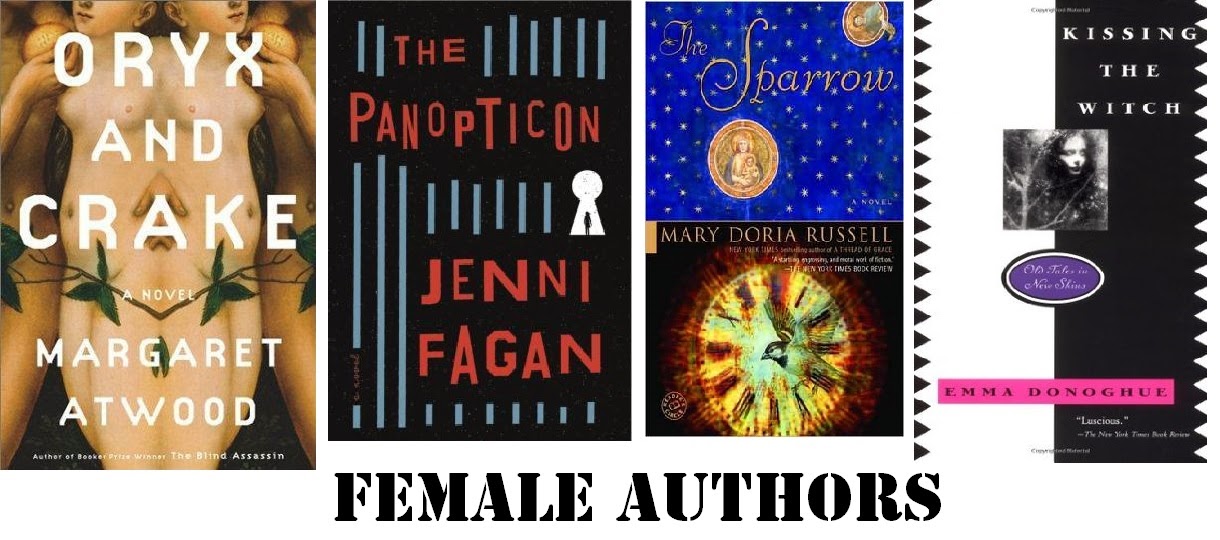
I decided to separate my comics from my books in 2015 because while I'm trying to diversify my reading, I'm not really trying as much when it comes to comics. And since comics are still such a male and American dominated field it's really throwing out my stats and that's just not helpful. I'm feeling pretty good about my efforts to up my diversity though. I still need to work on the non-white/non-American angle, but I'm happy to see so many ladies up above. Also great? That I really loved all of my January reads, except Will Grayson, Will Grayson which was fine but not as shiny and great as the other three. I've almost finished Jason Mott's The Returned, and after that I think I might read The Sparrow by Mary Doria Russel. Feb will be a HUGE month for me uni-wise, I start teaching and I finally submit my PhD to the faculty, so I think aiming for finishing more than two books is probably incredibly unrealistic, so let's just go with those for the time being.
FILMS:
What I saw:
*Birdman - directed by Alejandro González Iñárritu, starring Michael Keaton, Emma Stone, Naomi Watts
*Taken 3 - directed by Olivier Megaton, starring Liam Neeson, Forest Whitaker, Famke Janssen
*Into the Woods - directed by Rob Marshall, starring Anna Kendrick, Meryl Streep, James Corden, Emily Blunt
2015 doesn't hold a lot of excitement for me, movie wise. I'm looking forward to the new Mad Max and Star Wars, but I'm going through a little superhero fatigue, so I'm not as excited for Avengers or Antman as I would have been 2 years ago. Birdman was one of the films I was excited for (ugh Australia and our eternal wait for movies) and it really delivered. I thought Michael Keaton was amazing and Alejandro González Iñárritu is an amazing director. I loved how the use of a single tracking shot translated the chaos of a play backstage, as well as the dysfunctional nature of most of the characters. I'm really pulling for them to win at least a couple of the Oscars, regardless of how pointless the Oscars have actually become. Into the Woods was alright, I thought the performances and staging were pretty good, but cutting Repunzel's story took a lot of the thematic edge out of the film. And while I loved Meryl Streep, I think Bernadette Peters will always be my witch.
LIFE:
Like I mentioned above, I'm getting ready to submit to the faculty. After I present at the end of February they'll provide me with some feedback to implement before my proper submission in May. Here's hoping they like what I've done and done tear it to shreds. To give myself a reason to keep living, I started learning German using the Duolingo app. I'd really wanted to pick up Japanese again, but they don't offer it unfortunately. If you've been thinking of trying to learn a language, or are even travelling overseas and want to pick up some basics it's pretty fantastic. It's free to use and I really like the way it teaches. I feel like I've picked up more in 2 weeks than I did in my first four years of Japanese in school.
BOOKS:
What I Read:
Books:
*Station Eleven by Emily St John Mandel
*Will Grayson, Will Grayson by John Green and David Levithan (my review)
*Stiff: The Curious Lives of Human Cadavers by Mary Roach (my review)
*A Tale for Time Being by Ruth Ozeki
Comics:
*Saga (2) by Brian K. Vaughan and Fiona Staples
*Saga (3) by Brian K. Vaughan and Fiona Staples
*Fatale: The Devil's Business by Ed Brubaker and Sean Philips (my review)
*Fables (9) by Bill Willingham and Mark Buckingham
*Princess Ugg (1) by Ted Naifeh, Warren Wucinich
Stats:
Books:
40% male / 60% female
80% American / 20% International
80%white/ 20%POC
25% ebook / 50% audiobook / 25% physical
75% fiction / 25% non-fiction
Comics:
**A quick note on stats. I've decided that this year I'm going to include artists in the stats as long as it's a single artist attached to the volume. The comics that tend to cycle through a series of artists within a volume will be left out completely because ugh, too complicated.**
80% male / 20% female
80% American / 20% International
80%white/ 20%POC
20% ebook / 80% physical
I decided to separate my comics from my books in 2015 because while I'm trying to diversify my reading, I'm not really trying as much when it comes to comics. And since comics are still such a male and American dominated field it's really throwing out my stats and that's just not helpful. I'm feeling pretty good about my efforts to up my diversity though. I still need to work on the non-white/non-American angle, but I'm happy to see so many ladies up above. Also great? That I really loved all of my January reads, except Will Grayson, Will Grayson which was fine but not as shiny and great as the other three. I've almost finished Jason Mott's The Returned, and after that I think I might read The Sparrow by Mary Doria Russel. Feb will be a HUGE month for me uni-wise, I start teaching and I finally submit my PhD to the faculty, so I think aiming for finishing more than two books is probably incredibly unrealistic, so let's just go with those for the time being.
FILMS:
What I saw:
*Birdman - directed by Alejandro González Iñárritu, starring Michael Keaton, Emma Stone, Naomi Watts
*Taken 3 - directed by Olivier Megaton, starring Liam Neeson, Forest Whitaker, Famke Janssen
*Into the Woods - directed by Rob Marshall, starring Anna Kendrick, Meryl Streep, James Corden, Emily Blunt
2015 doesn't hold a lot of excitement for me, movie wise. I'm looking forward to the new Mad Max and Star Wars, but I'm going through a little superhero fatigue, so I'm not as excited for Avengers or Antman as I would have been 2 years ago. Birdman was one of the films I was excited for (ugh Australia and our eternal wait for movies) and it really delivered. I thought Michael Keaton was amazing and Alejandro González Iñárritu is an amazing director. I loved how the use of a single tracking shot translated the chaos of a play backstage, as well as the dysfunctional nature of most of the characters. I'm really pulling for them to win at least a couple of the Oscars, regardless of how pointless the Oscars have actually become. Into the Woods was alright, I thought the performances and staging were pretty good, but cutting Repunzel's story took a lot of the thematic edge out of the film. And while I loved Meryl Streep, I think Bernadette Peters will always be my witch.
LIFE:
Like I mentioned above, I'm getting ready to submit to the faculty. After I present at the end of February they'll provide me with some feedback to implement before my proper submission in May. Here's hoping they like what I've done and done tear it to shreds. To give myself a reason to keep living, I started learning German using the Duolingo app. I'd really wanted to pick up Japanese again, but they don't offer it unfortunately. If you've been thinking of trying to learn a language, or are even travelling overseas and want to pick up some basics it's pretty fantastic. It's free to use and I really like the way it teaches. I feel like I've picked up more in 2 weeks than I did in my first four years of Japanese in school.
Posted by
Unknown
at
2:09 PM
January in review
2015-02-01T14:09:00+10:00
Unknown
2015|books|ed brubaker|films|graphic novel|month in review|non-fiction|
Comments
Labels:
2015,
books,
ed brubaker,
films,
graphic novel,
month in review,
non-fiction
Thursday, January 29, 2015
(Audio)book review: Stiff: The Curious Lives of Human Cadavers by Mary Roach
Stiff: The Curious Lives of Human Cadavers
Written by: Mary Roach
Published: 2003
Synopsis: Stiff is an oddly compelling, often hilarious exploration of the strange lives of our bodies postmortem. For two thousand years, cadavers some willingly, some unwittingly have been involved in science's boldest strides and weirdest undertakings. In this fascinating account, Mary Roach visits the good deeds of cadavers over the centuries and tells the engrossing story of our bodies when we are no longer with them (Via Goodreads)
______________________________________________________________________________________________________
When I decided I wanted to try and read more non-fiction in 2015* I knew that Mary Roach would be among the first few authors I read. Her popular science books Gulp: Adventures of the Alimentary Canal, Bonk: The Curious Coupling of Science and Sex and Packing for Mars: The Curious Science of Life in the Void have made the blogger rounds over the years and I've always made note to read her eventually. I ended up decided to start my Roach voyage with Stiff for a specific reason, death fascinates and terrifies me in equal measure.
As a non-religious lady I have no illusions that I will be reincarnated after death or find myself in a fluffy or fiery post-life environment but I find it absolutely inconceivable to imagine not being conscious. That's what scares me about death, the idea of not being me anymore. This was something that weighed heavily on me as a kid, I used to get worked up about the idea of dying so i tried to get past it by learning about death. This is a big reason why I'm a horror fan and more likely than not why I chose zombies as my area of research. They are, after all, a physical example of life without consciousness.
I might be more comfortable with the idea of death now but when faced with the reality of it I revert back to that childhood panic. In biology class I always loved dissecting hearts and eyeballs but put a full frog in me and I couldn't do it any more, the abstract suddenly became all too real. When I was 14 my mum sat me and my sisters down to have a discussion about organ donation and whether we wanted to "opt in or out". On the one hand of course I wanted to donate my organs to help someone else live, but to donate my organs means I'm dead and that wasn't a concept I was in any way ready to handle. I also have this irrational fear of being cremated and my ashes being separated between two locations. It's ridiculous because I don't believe that I'll be conscious (whether spiritually or physically) to be aware of this separation but I also have this weird need to be kept together after death. It's this whole big thing basically.
That's where this book comes in, this wonderfully, terrifying book that wraps up all of my fears and concerns in a handy 303 pages. The book not only looks at the various uses for cadavers but the common fears and concerns about death and our physical existence after it. One of the earliest chapters I found most interesting was to do with cadavers in medical schools. I knew cadavers were used for anatomy lessons but I didn't know that students often used the same cadaver for an entire year. The idea of the students bonding with their cadaver and eventually holding memorial services for them was actually really beautiful. Roach quotes one student at one of these memorials:
Being a pop science book written by a journalist, this book is very accessible for non-science buffs. Having a body and knowing that they are things that exist is about as much prior knowledge as you need to have. It's funny and engaging and while I guess for people who are against donating or experimenting on cadavers the lighter tone might appear disrespectful and cavalier, I felt like she gave the appropriate gravitas when the situation called for it. A warning though, there are so pretty graphic descriptions of both human and animal dissection and experimentation so if things of this ilk are likely to turn your stomach I would maybe consider giving it a miss, or at least be prepared to skip ahead.
*Non-PhD related non-fiction because I already read a metric tonne of that stuff.
**for example. I didn't take notes while I listened to this chapter so i can't remember exact titles but ugh, so much gross.
Written by: Mary Roach
Published: 2003
Synopsis: Stiff is an oddly compelling, often hilarious exploration of the strange lives of our bodies postmortem. For two thousand years, cadavers some willingly, some unwittingly have been involved in science's boldest strides and weirdest undertakings. In this fascinating account, Mary Roach visits the good deeds of cadavers over the centuries and tells the engrossing story of our bodies when we are no longer with them (Via Goodreads)
______________________________________________________________________________________________________
“Death. It doesn't have to be boring.”
When I decided I wanted to try and read more non-fiction in 2015* I knew that Mary Roach would be among the first few authors I read. Her popular science books Gulp: Adventures of the Alimentary Canal, Bonk: The Curious Coupling of Science and Sex and Packing for Mars: The Curious Science of Life in the Void have made the blogger rounds over the years and I've always made note to read her eventually. I ended up decided to start my Roach voyage with Stiff for a specific reason, death fascinates and terrifies me in equal measure.
As a non-religious lady I have no illusions that I will be reincarnated after death or find myself in a fluffy or fiery post-life environment but I find it absolutely inconceivable to imagine not being conscious. That's what scares me about death, the idea of not being me anymore. This was something that weighed heavily on me as a kid, I used to get worked up about the idea of dying so i tried to get past it by learning about death. This is a big reason why I'm a horror fan and more likely than not why I chose zombies as my area of research. They are, after all, a physical example of life without consciousness.
I might be more comfortable with the idea of death now but when faced with the reality of it I revert back to that childhood panic. In biology class I always loved dissecting hearts and eyeballs but put a full frog in me and I couldn't do it any more, the abstract suddenly became all too real. When I was 14 my mum sat me and my sisters down to have a discussion about organ donation and whether we wanted to "opt in or out". On the one hand of course I wanted to donate my organs to help someone else live, but to donate my organs means I'm dead and that wasn't a concept I was in any way ready to handle. I also have this irrational fear of being cremated and my ashes being separated between two locations. It's ridiculous because I don't believe that I'll be conscious (whether spiritually or physically) to be aware of this separation but I also have this weird need to be kept together after death. It's this whole big thing basically.
That's where this book comes in, this wonderfully, terrifying book that wraps up all of my fears and concerns in a handy 303 pages. The book not only looks at the various uses for cadavers but the common fears and concerns about death and our physical existence after it. One of the earliest chapters I found most interesting was to do with cadavers in medical schools. I knew cadavers were used for anatomy lessons but I didn't know that students often used the same cadaver for an entire year. The idea of the students bonding with their cadaver and eventually holding memorial services for them was actually really beautiful. Roach quotes one student at one of these memorials:
“One young woman's tribute describes unwrapping her cadaver's hands and being brought up short by the realization that the nails were painted pink. "The pictures in the anatomy atlas did not show nail polish", she wrote. "Did you choose the color? Did you think that I would see it? I wanted to tell you about the inside of your hands. I want you to know you are always there when I see patients. When I palpate an abdomen, yours are the organs I imagine. When I listen to a heart, I recall holding your heart.”Death is a deeply personal thing and it's nice to know that even though a certain amount of distance is often needed for people who work frequently with cadavers, people who donate their bodies are still respected and their gift is appreciated. Because as the book demonstrates, if science hadn't had access to cadavers we probably wouldn't have half of the medical and societal advances that we do today. And at the end of the day I kind of think that was what this book was about. Yes it was about giving a historical account of the role of cadavers in science and related fields, but it's also about normalising death and giving people the information they need to consider donating themselves to science. We've all benefited so much from the cadavers that came before us that it's almost selfish to keep our bodies complete and whole only to be buried and left to rot.
“It is astounding to me, and achingly sad, that with eighty thousand people on the waiting list for donated hearts and livers and kidneys, with sixteen a day dying there on that list, that more then half of the people in the position H's family was in will say no, will choose to burn those organs or let them rot. We abide the surgeon's scalpel to save our own lives, out loved ones' lives, but not to save a stranger's life. H has no heart, but heartless is the last thing you'd call her.”There are of course religious and health reasons why someone wouldn't want to donate organs or their body to science and the book doesn't throw any judgement on people who make that decision. It's more aimed at the families who choose to opt out because the idea of splitting their husband or father or brother into pieces is too painful, even though the deceased person checked yes. It's about showing all the different ways that donations of limbs or organs help make life safer and better for future generations. It's about taking that frog and turning it back into the separate pieces so that you can once again see the big picture. As Roach says:
"It's the reason we say "pork" and "beef" instead of "pig" and "cow."But it's not all a PSA about donating bodies, I promise. There are gory and insane chapters about head transplants and cannibalism. Listening to the awful human concoctions people across the world (so much urine and feces) used to treat illnesses makes me so happy I live in the 21st century. I am glad that if I go to the doctor with a sore throat or painful back I don't have to worry about the phrase essence of gallbladder** popping up. And while more bodies could always be donated to science, at least we don't have med students paying their entry into school with dead bodies anymore.
Being a pop science book written by a journalist, this book is very accessible for non-science buffs. Having a body and knowing that they are things that exist is about as much prior knowledge as you need to have. It's funny and engaging and while I guess for people who are against donating or experimenting on cadavers the lighter tone might appear disrespectful and cavalier, I felt like she gave the appropriate gravitas when the situation called for it. A warning though, there are so pretty graphic descriptions of both human and animal dissection and experimentation so if things of this ilk are likely to turn your stomach I would maybe consider giving it a miss, or at least be prepared to skip ahead.
*Non-PhD related non-fiction because I already read a metric tonne of that stuff.
**for example. I didn't take notes while I listened to this chapter so i can't remember exact titles but ugh, so much gross.
Posted by
Unknown
at
2:09 PM
(Audio)book review: Stiff: The Curious Lives of Human Cadavers by Mary Roach
2015-01-29T14:09:00+10:00
Unknown
2015|audiobook|book review|books|death|female author|macabre|non-fiction|
Comments
Labels:
2015,
audiobook,
book review,
books,
death,
female author,
macabre,
non-fiction
Thursday, January 22, 2015
Graphic Novel Mini-Review #29
Fatale: The Devil's Business (2)
Written by: Ed Brubaker; illustrated by: Sean Phillips
Published: 2013
My Thoughts: Ah Brubaker, you've done it again. Volume 2 of Fatale takes place in the late 1970s so it isn't quite as noir-ish as the first volume, nor is it quite as mysterious. This volume gives us a much closer look at Jo, our ageless captivating fatale, although she's still as much of a closed book as she was in volume 1. She finds herself caught in a seedy situation when an actor and his ex (now dealer) sneak into her backyard after running away from a crime scene. It turns out that Jo has a past connection to the Mason-esque cult church that the two are running from and as the volume continues it gets messier and murkier and hints at Jo's mysterious past. I loved having a bit more of her perspective this volume even if there is still so much to learn before the series ends. Just as she entrances every man she comes into contact with, I found myself captivated in the sadness that surrounds her. Where has she been? What has she seen? The art beautifully compliments the mood of the comic, although there are times where secondary characters are hard to distinguish from one another.
My Friend Dahmer
Written and Illustrated by: Derf Backderf
Published: 2012
My Thoughts: I think this might be the first non-comic series comic I've read in awhile. Tom's brother bought it for us for Christmas and I eagerly read through a couple of days later. The subject of the comic is fascinating for a couple of reasons. First and most obviously, it's a look at Jeffrey Dahmer before he was the Jeffrey Dahmer who murdered and raped and ate people. Second, it's fascinating in its complete dullness. Dahmer is a strange guy, for sure, but what high school didn't have the guy who put on weird voices or seemed to be dealing with his own hidden demons? As much as Backderf exclaims over his disbelief that no teachers ever took Dahmer aside or spoke to his parents, I'm not sure there was ever enough, judging off this comic, to really write home about. While Backderf paints a sad tale of a boy who grew up without much love or attention in a tiny town of few distractions and old-fashioned morals which made it difficult to come out as gay, what really hit me was that Dahmer could have been so many people I knew growing up. I knew people who smoked too much pot and drank themselves into comas every weekend. I saw people walk around our high school campus without ever really seeming to fit in or even wanting to. I knew people who struggled with coming out as gay, who battled with their parents or who were hurt by their parents disapproval or oblivion. This comic really hit home that anyone could be a serial killer. Most people won't be, but it's not like they're walking around with a giant sign reading "danger danger, future murderer" while slaughtering kittens in front of you. The book does get a little armchair psychologist-y at times and I think Backderf could have benefited from a little more inward examination but he's done a great deal of work to combine his personal anecdotes from high school with evidence that has since come out about Dahmer's first dalliances with animal mutilation, sexual identity and his first murder. It's sensational without being sensationalist.
Hawkeye: L.A Woman (3)
Written by: Matt Fraction; Illustrated by: Annie Wu, Javier Pulido
Published: 2014
My Thoughts: L.A. Woman is the collection of Hawkeye issues that focus on the lady Hawkeye, Kate Bishop. After being well and truly fed up with Clint/Hawkeye's self-destructive bullshit she decides to make her way to L.A to start fresh and a P.I. Kate felt a little less together in this collection than the previous two and I can't work out if it's just because she doesn't have the human wreck known as Clint Barton to be compared to or if she's actually more of a disaster in these pages. There definitely does seem to be a great deal more of the "she's grown up rich and hasn't ever really had to consider paying for accommodation or food or life" stuff than I think I remember from volumes 1 or 2. These were problems I battled with while reading the volume, but I also fell pretty hard for her almost instantly. Maybe her messy life is a condescending way to make a female superhero appeal more to general readers, but she also felt a bit like a grown up Veronica Mars or Buffy the Vampire Slayer (what with the ass-kicking) which is always okay in my books. David Aja is off art duty this volume, and while I missed his stunning art I quite enjoyed Wu's take on the character. There was a lot more experimentation in terms of the different art styles, and I found the switches into the almost-chibi anime style a nice representation of Kate's arrested development. I am also totally on board for an Elliot Gould look-alike and stories that poke fun at the Hollywood persuit for eternal youth any day of the week.
Written by: Ed Brubaker; illustrated by: Sean Phillips
Published: 2013
My Thoughts: Ah Brubaker, you've done it again. Volume 2 of Fatale takes place in the late 1970s so it isn't quite as noir-ish as the first volume, nor is it quite as mysterious. This volume gives us a much closer look at Jo, our ageless captivating fatale, although she's still as much of a closed book as she was in volume 1. She finds herself caught in a seedy situation when an actor and his ex (now dealer) sneak into her backyard after running away from a crime scene. It turns out that Jo has a past connection to the Mason-esque cult church that the two are running from and as the volume continues it gets messier and murkier and hints at Jo's mysterious past. I loved having a bit more of her perspective this volume even if there is still so much to learn before the series ends. Just as she entrances every man she comes into contact with, I found myself captivated in the sadness that surrounds her. Where has she been? What has she seen? The art beautifully compliments the mood of the comic, although there are times where secondary characters are hard to distinguish from one another.
My Friend Dahmer
Written and Illustrated by: Derf Backderf
Published: 2012
My Thoughts: I think this might be the first non-comic series comic I've read in awhile. Tom's brother bought it for us for Christmas and I eagerly read through a couple of days later. The subject of the comic is fascinating for a couple of reasons. First and most obviously, it's a look at Jeffrey Dahmer before he was the Jeffrey Dahmer who murdered and raped and ate people. Second, it's fascinating in its complete dullness. Dahmer is a strange guy, for sure, but what high school didn't have the guy who put on weird voices or seemed to be dealing with his own hidden demons? As much as Backderf exclaims over his disbelief that no teachers ever took Dahmer aside or spoke to his parents, I'm not sure there was ever enough, judging off this comic, to really write home about. While Backderf paints a sad tale of a boy who grew up without much love or attention in a tiny town of few distractions and old-fashioned morals which made it difficult to come out as gay, what really hit me was that Dahmer could have been so many people I knew growing up. I knew people who smoked too much pot and drank themselves into comas every weekend. I saw people walk around our high school campus without ever really seeming to fit in or even wanting to. I knew people who struggled with coming out as gay, who battled with their parents or who were hurt by their parents disapproval or oblivion. This comic really hit home that anyone could be a serial killer. Most people won't be, but it's not like they're walking around with a giant sign reading "danger danger, future murderer" while slaughtering kittens in front of you. The book does get a little armchair psychologist-y at times and I think Backderf could have benefited from a little more inward examination but he's done a great deal of work to combine his personal anecdotes from high school with evidence that has since come out about Dahmer's first dalliances with animal mutilation, sexual identity and his first murder. It's sensational without being sensationalist.
Hawkeye: L.A Woman (3)
Written by: Matt Fraction; Illustrated by: Annie Wu, Javier Pulido
Published: 2014
My Thoughts: L.A. Woman is the collection of Hawkeye issues that focus on the lady Hawkeye, Kate Bishop. After being well and truly fed up with Clint/Hawkeye's self-destructive bullshit she decides to make her way to L.A to start fresh and a P.I. Kate felt a little less together in this collection than the previous two and I can't work out if it's just because she doesn't have the human wreck known as Clint Barton to be compared to or if she's actually more of a disaster in these pages. There definitely does seem to be a great deal more of the "she's grown up rich and hasn't ever really had to consider paying for accommodation or food or life" stuff than I think I remember from volumes 1 or 2. These were problems I battled with while reading the volume, but I also fell pretty hard for her almost instantly. Maybe her messy life is a condescending way to make a female superhero appeal more to general readers, but she also felt a bit like a grown up Veronica Mars or Buffy the Vampire Slayer (what with the ass-kicking) which is always okay in my books. David Aja is off art duty this volume, and while I missed his stunning art I quite enjoyed Wu's take on the character. There was a lot more experimentation in terms of the different art styles, and I found the switches into the almost-chibi anime style a nice representation of Kate's arrested development. I am also totally on board for an Elliot Gould look-alike and stories that poke fun at the Hollywood persuit for eternal youth any day of the week.
Posted by
Unknown
at
2:00 PM
Graphic Novel Mini-Review #29
2015-01-22T14:00:00+10:00
Unknown
2014|comics|ed brubaker|fatale|fiction|graphic novel|hawkeye|Jeffrey Dahmer|marvel|memoir|mini-review|mini-reviews|non-fiction|serial killer|
Comments
Labels:
2014,
comics,
ed brubaker,
fatale,
fiction,
graphic novel,
hawkeye,
Jeffrey Dahmer,
marvel,
memoir,
mini-review,
mini-reviews,
non-fiction,
serial killer
Saturday, January 3, 2015
2015 Reading Resolutions - Diversifying my TBR
Okay, remember when I said I didn't have any reading resolutions and that making fixed plans probably wouldn't work out how I wanted them to? Well I decided to throw caution to the wind and write up a post of books that I want to read that will help me diversify my regular reading status quo. I'm trying to make up this list with books I already have in my possession since I really, really need to stop spending so much money on books I don't read for several years after purchase and the rest I'm going to endeavour to get from my library.
My aim isn't necessarily to read all of these books, although I'm hoping that by writing out such a long list I will be "in the mood" for at least one of these books per month. That way if I'm having an especially white/middle class/American/male month, at least I'm getting a little variety in my diet. The idea isn't that these are the only POC/female/non-fiction reads I'm interested in nor are they the only ones I'll read all year. I might end up reading very few of these particular books but still bring up my end of year stats with other books that I discover throughout the year. Basically, I'm hoping that by listing out some diverse reading options here I'll be able to switch something on in my brain that will subconsciously lead to me picking up more of these types of books.
As for the types of books on this list, I'm aiming for more non-fiction, more female writers and more non-American and POC US writers. Ideally those non-American writers won't simply be Australian/English/Canadian authors, but let's not shoot for Pluto when we haven't yet walked on the Moon. And as you'll see from the list, technically some of these books fulfil two or three of the criteria which is just an awesome bonus.
The Anatomy of Motive by John Douglas
The Secret History of Wonder Woman by Jill Lepore
Bad Feminist by Roxanne Gay
House of Psychotic Women: An Autobiographical Topography of Female Neurosis in Horror and Exploitation Films by Kier-La Janisse
Stiff: The Curious Lives of Human Cadavers by Mary Roach
The Supergirls: Fashion, Feminism, Fantasy and the history of comic book heroines by Mike Madrid
Them: Adventures with Extremists by Jon Ronson
As You Wish: Inconceivable Tales from the Making of The Princess Bride by Cary Ewles
Superheroes!: Capes, Cowls, and the Creation of Comic Book Culture by Laurence Maslon, Michael Kantor
Severed: A History of Heads Lost and Heads Found by Frances Larson
Nobody Knows My Name by James Baldwin
Dear Life by Alice Munroe
The Left Hand of Darkness by Ursula Le Guin
The Sparrow by Mary Doria Russell
Kissing the Witch by Emma Donoghue
Oryx and Crake by Margaret Atwood
Mr Fox by Helen Oyeyemi
Bringing up the Bodies by Hilary Mantel
Panopticon by Jenni Fagen
The Night Gwen Stacy Died by Sarah Bruni
Colorless Tsukuru Tazaki and His Years of Pilgrimage by Haruki Murakami
Balzac and the Little Chinese Seamstress by Dai Sijie
In the Skin of a Lion by Michael Odaatje
Under the Skin by Michel Faber
The Returned by Jason Mott
We by Yevgeny Zamytin
Popular Hits of the Showa Era by Ryu Murakami
Battle Royale by Koushun Takami
My aim isn't necessarily to read all of these books, although I'm hoping that by writing out such a long list I will be "in the mood" for at least one of these books per month. That way if I'm having an especially white/middle class/American/male month, at least I'm getting a little variety in my diet. The idea isn't that these are the only POC/female/non-fiction reads I'm interested in nor are they the only ones I'll read all year. I might end up reading very few of these particular books but still bring up my end of year stats with other books that I discover throughout the year. Basically, I'm hoping that by listing out some diverse reading options here I'll be able to switch something on in my brain that will subconsciously lead to me picking up more of these types of books.
As for the types of books on this list, I'm aiming for more non-fiction, more female writers and more non-American and POC US writers. Ideally those non-American writers won't simply be Australian/English/Canadian authors, but let's not shoot for Pluto when we haven't yet walked on the Moon. And as you'll see from the list, technically some of these books fulfil two or three of the criteria which is just an awesome bonus.
The Anatomy of Motive by John Douglas
The Secret History of Wonder Woman by Jill Lepore
Bad Feminist by Roxanne Gay
House of Psychotic Women: An Autobiographical Topography of Female Neurosis in Horror and Exploitation Films by Kier-La Janisse
Stiff: The Curious Lives of Human Cadavers by Mary Roach
The Supergirls: Fashion, Feminism, Fantasy and the history of comic book heroines by Mike Madrid
Them: Adventures with Extremists by Jon Ronson
As You Wish: Inconceivable Tales from the Making of The Princess Bride by Cary Ewles
Superheroes!: Capes, Cowls, and the Creation of Comic Book Culture by Laurence Maslon, Michael Kantor
Severed: A History of Heads Lost and Heads Found by Frances Larson
Nobody Knows My Name by James Baldwin
Dear Life by Alice Munroe
The Left Hand of Darkness by Ursula Le Guin
The Sparrow by Mary Doria Russell
Kissing the Witch by Emma Donoghue
Oryx and Crake by Margaret Atwood
Mr Fox by Helen Oyeyemi
Bringing up the Bodies by Hilary Mantel
Panopticon by Jenni Fagen
The Night Gwen Stacy Died by Sarah Bruni
Colorless Tsukuru Tazaki and His Years of Pilgrimage by Haruki Murakami
Balzac and the Little Chinese Seamstress by Dai Sijie
In the Skin of a Lion by Michael Odaatje
Under the Skin by Michel Faber
The Returned by Jason Mott
We by Yevgeny Zamytin
Popular Hits of the Showa Era by Ryu Murakami
Battle Royale by Koushun Takami
Posted by
Unknown
at
12:32 PM
2015 Reading Resolutions - Diversifying my TBR
2015-01-03T12:32:00+10:00
Unknown
2015|blogging|book resolutions|books|diverse|fantasy|female|historical fiction|Japan|non-fiction|science fiction|superhero|
Comments
Labels:
2015,
blogging,
book resolutions,
books,
diverse,
fantasy,
female,
historical fiction,
Japan,
non-fiction,
science fiction,
superhero
Thursday, November 20, 2014
(Audio)book review: An Astronaut's Guide to Life on Earth by Chris Hadfield
An Astronaut's Guide to Life on Earth
Written and read by: Chris Hadfield
Published: 2013
Synopsis: Colonel Chris Hadfield has spent decades training as an astronaut and has logged nearly 4000 hours in space. During this time he has broken into a Space Station with a Swiss army knife, disposed of a live snake while piloting a plane, and been temporarily blinded while clinging to the exterior of an orbiting spacecraft. The secret to Col. Hadfield's success-and survival-is an unconventional philosophy he learned at NASA: prepare for the worst-and enjoy every moment of it.
In An Astronaut's Guide to Life on Earth, Col. Hadfield takes readers deep into his years of training and space exploration to show how to make the impossible possible. Through eye-opening, entertaining stories filled with the adrenaline of launch, the mesmerizing wonder of spacewalks, and the measured, calm responses mandated by crises, he explains how conventional wisdom can get in the way of achievement-and happiness. His own extraordinary education in space has taught him some counterintuitive lessons: don't visualize success, do care what others think, and always sweat the small stuff.
You might never be able to build a robot, pilot a spacecraft, make a music video or perform basic surgery in zero gravity like Col. Hadfield. But his vivid and refreshing insights will teach you how to think like an astronaut, and will change, completely, the way you view life on Earth-especially your own.
___________________________________________________________________________________________________________
Written and read by: Chris Hadfield
Published: 2013
Synopsis: Colonel Chris Hadfield has spent decades training as an astronaut and has logged nearly 4000 hours in space. During this time he has broken into a Space Station with a Swiss army knife, disposed of a live snake while piloting a plane, and been temporarily blinded while clinging to the exterior of an orbiting spacecraft. The secret to Col. Hadfield's success-and survival-is an unconventional philosophy he learned at NASA: prepare for the worst-and enjoy every moment of it.
In An Astronaut's Guide to Life on Earth, Col. Hadfield takes readers deep into his years of training and space exploration to show how to make the impossible possible. Through eye-opening, entertaining stories filled with the adrenaline of launch, the mesmerizing wonder of spacewalks, and the measured, calm responses mandated by crises, he explains how conventional wisdom can get in the way of achievement-and happiness. His own extraordinary education in space has taught him some counterintuitive lessons: don't visualize success, do care what others think, and always sweat the small stuff.
You might never be able to build a robot, pilot a spacecraft, make a music video or perform basic surgery in zero gravity like Col. Hadfield. But his vivid and refreshing insights will teach you how to think like an astronaut, and will change, completely, the way you view life on Earth-especially your own.
___________________________________________________________________________________________________________
“If you start thinking that only your biggest and shiniest moments count, you're setting yourself up to feel like a failure most of the time.”
Maybe it's corny, but I truly feel like there isn't anything truly outside my grasp. Obviously it's highly unlikely that I'm about to become prime minister or the next Angelina Jolie, but I can get in the ballpark (or at least in the carpark next door to the ballpark). I could get involved in local politics or try my hand at community theatre. I can take tours of studios and Government House and at least get a good idea of what it would be like to fill those shoes. But space is an entirely different kettle of fish. I could visit NASA and take astronomy classes and visit every space exhibit at every museum on the planet and it won't come close to life in space. It's utterly unachievable unless you dedicate your life to becoming an astronaut, and as much as I'd love to look down on Earth from space that was never a career for me.
Which I think is the main reason Chris Hadfield has become such an internet success. He brings space to the masses, whether by crying into a camera to show us how tears work in zero gravity or by writing a book that gives an incredibly thorough look at the business of being an astronaut. He's such a genial guy that it's hard not to get swept up in his excitement when he talks about smiling so hard at his first launch that his face ached or empathise when he recounts how hard it is to be the family of an astronaut. A great deal of this book is about confronting people's stereotypes of this particular career. Like how much money it costs to launch people into space and what it actually achieves. While Hadfield is clearly passionate, he also doesn't completely let go of his objectivity, especially when it comes to money.
And while I'm sure some people would consider that a negative, I think it's a huge positive. Working for NASA, whether as an astronaut or in some other role, is a totally achievable job. Yes it's a competitive field, but you don't have to be Superman to be hired. And I think that's a fantastic lesson to impart on kids. Astronaut is so often the job kids say they want, but it's also considered this entirely mythical position for only a special few chosen people. Hadfield brings the profession back down to Earth. Yes you need to work hard. Yes you need to be passionate. Yes you need to be intelligent. But the things most worth doing are the things you have to work for.
Hadfield manages to combine personal anecdotes about college and marriage and parenthood with stories about life on the ISS and working in Cape Canaveral and a motivation self-help book. While I loved learning about life in space and the career path that led to it, it was Hadfield's mentality that I think I'll take away from this book. There's a reason this book is called "an astronaut's guide to life on earth," while some of the advice may be a little intense for life as a retail clerk or banker, the general attitude and lesson that the advice aims to impart can benefit anyone.
Which I think is the main reason Chris Hadfield has become such an internet success. He brings space to the masses, whether by crying into a camera to show us how tears work in zero gravity or by writing a book that gives an incredibly thorough look at the business of being an astronaut. He's such a genial guy that it's hard not to get swept up in his excitement when he talks about smiling so hard at his first launch that his face ached or empathise when he recounts how hard it is to be the family of an astronaut. A great deal of this book is about confronting people's stereotypes of this particular career. Like how much money it costs to launch people into space and what it actually achieves. While Hadfield is clearly passionate, he also doesn't completely let go of his objectivity, especially when it comes to money.
“Many people object to “wasting money in space” yet have no idea how much is actually spent on space exploration. The CSA’s budget, for instance, is less than the amount Canadians spend on Halloween candy every year, and most of it goes toward things like developing telecommunications satellites and radar systems to provide data for weather and air quality forecasts, environmental monitoring and climate change studies. Similarly, NASA’s budget is not spent in space but right here on Earth, where it’s invested in American businesses and universities, and where it also pays dividends, creating new jobs, new technologies and even whole new industries.”Not only are there misconceptions about what astronauts do, but I think there is a large gap between who actually becomes an astronaut and who Hollywood leads us to believe is right for the job. Because of its exclusivity, astronauts have always seemed sort of larger than life. They're space cowboys, explorers in a new frontier. Even though I know they have to be incredibly intelligent, I always imagine them as kind of jock-y. Macho and tough and tall. Visual cues that I think probably have a lot to do with the people hired to play astronauts in the not-even-close-to-realistic sci-fi movies. So I found it fascinating that Chris Hadfield sounds like any guy I'd see walking down the street. You mean he doesn't faintly glow and hover off the ground? Or have muscles as insane as The Rock? Not only that but Hadfield manages to make being an astronaut sound...dull. And I don't mean that the book or Hadfield's narration is dull - I was captivated from start to finish, but life as an astronaut is nothing like the movies. Being an astronaut actually rarely involves going into space. And whether or not you do, it's ruled by rules and safety checks and infinitesimal tiny details. It sounds so repetitive and ordinary.
And while I'm sure some people would consider that a negative, I think it's a huge positive. Working for NASA, whether as an astronaut or in some other role, is a totally achievable job. Yes it's a competitive field, but you don't have to be Superman to be hired. And I think that's a fantastic lesson to impart on kids. Astronaut is so often the job kids say they want, but it's also considered this entirely mythical position for only a special few chosen people. Hadfield brings the profession back down to Earth. Yes you need to work hard. Yes you need to be passionate. Yes you need to be intelligent. But the things most worth doing are the things you have to work for.
Hadfield manages to combine personal anecdotes about college and marriage and parenthood with stories about life on the ISS and working in Cape Canaveral and a motivation self-help book. While I loved learning about life in space and the career path that led to it, it was Hadfield's mentality that I think I'll take away from this book. There's a reason this book is called "an astronaut's guide to life on earth," while some of the advice may be a little intense for life as a retail clerk or banker, the general attitude and lesson that the advice aims to impart can benefit anyone.
“In any new situation, whether it involves an elevator or a rocket ship, you will almost certainly be viewed in one of three ways. As a minus one: actively harmful, someone who creates problems. Or as a zero: your impact is neutral and doesn't tip the balance one way or the other. Or you'll be seen as a plus one: someone who actively adds value. Everyone wants to be a plus one, of course. But proclaiming your plus-oneness at the outset almost guarantees you'll be perceived as a minus one, regardless of the skills you bring to the table or how you actually perform.”Each chapter, or there about, centres around these kernels of advice. From "sweat the small stuff" to "aim to the a zero", Hadfield discusses how these have helped be a better astronaut, a better husband and a better father. Perhaps most importantly though, he describes his failures, both personal and professional, and how he moved past them. Combine all of this advice with an amazing career and a really, really nice guy and you've got a really great read on your hands.
Posted by
Unknown
at
12:36 PM
(Audio)book review: An Astronaut's Guide to Life on Earth by Chris Hadfield
2014-11-20T12:36:00+10:00
Unknown
2014|audiobook|autobiography|book review|non-fiction|review|space|
Comments
Labels:
2014,
audiobook,
autobiography,
book review,
non-fiction,
review,
space
Thursday, February 13, 2014
Book Review: Moranthology by Caitlin Moran
Written by: Caitlin Moran
Published: 2012
Synopsis:‘In How To Be a Woman, I was limited to a single topic: women. Their hair, their shoes and their crushes on Aslan from The Lion, The Witch & The Wardrobe (which I KNOW to be universal).
‘However! In my new book Moranthology – as the title suggests – I am set free to tackle THE REST OF THE WORLD: Ghostbusters, Twitter, caffeine, panic attacks, Michael Jackson’s memorial service, being a middle-class marijuana addict, Doctor Who, binge-drinking, Downton Abbey, pandas, my own tragically early death, and my repeated failure to get anyone to adopt the nickname I have chosen for myself: ‘Puffin’.
‘I go to a sex-club with Lady Gaga, cry on Paul McCartney’s guitar, get drunk with Kylie, appear on Richard & Judy as a gnome, climb into the TARDIS, sniff Sherlock Holmes’s pillows at 221b Baker Street, write Amy Winehouse’s obituary, turn up late to Downing Street for Gordon Brown, and am rudely snubbed at a garden party by David Cameron –although that’s probably because I called him ‘A C3PO made of ham’. Fair enough.
‘And, in my spare time – between hangovers – I rant about the welfare state, library closures and poverty; like a shit Dickens or Orwell, but with tits.’
________________________________________________________________________________________________________
“A library in the middle of a community is a cross between an emergency exit, a life raft and a festival. They are cathedrals of the mind; hospitals of the soul; theme parks of the imagination.”
For about as long as I've known Laura (of Devouring Texts) I have heard about how brilliant Caitlin Moran is. I went as far as to follow her on Twitter, but since her columns (all three of them) are hidden behind Murdoch's wall of pay I never got any further than to respect her awesome hair and enjoy her in 140 character bursts. I finally picked up one of her books* which, to my delight, turned out to be the one full of essays from her columns so SUCK IT MURDOCH.
Moranthology made me laugh so hard my stomach ached, it made my sigh with sadness and it made be nod my head vigorously and poke Tom saying "see! She gets it. She knows". By the time I finished the final essay my copy of the book had more orange highlighter on the pages that not on it. Everything is just so on point and so well written, I just want to get the whole book tattooed across my body. Because it's comprised of essays from her three columns (Celebrity Watch, weeklyTV and a, I want to say, general whatever she wants to write column) it touches on just about every subject, from visiting the Doctor Who set to what it's like to grow up poor to getting drunk with Lady GaGa to feminism to commenting on the Royal Wedding. It's a window into Caitlin as a woman, mother, wife and journalist while also giving a brilliant insight into English life or, at least, life from an English perspective.
Reviewing books of essays is hard because it's not exactly like I can tell you about the plot or the success of the characterisation or the major themes. So instead I figured I'd share some of my favourite quotes and prove to you how wonderfully wonderful she is**.
“I have a rule for working out if the root problem of something is, in fact, sexism. And it is this: asking 'Are the boys doing it? Are the boys having to worry about this stuff? Are the boys the centre of a gigantic global debate on this subject?”From the introduction:
“The motto I have penned on my knuckles is that this is the best world we have--because it's the only world we have. It's the simplest math ever. However many terrible, rankling, peeve-inducing things may occur, there are always libraries. And rain-falling-on-sea. And the moon. And love. There is always something to look back on, with satisfaction, or forward to, with joy. There is always a moment where you boggle at the world--at yourself--at the whole, unlikely, precarious business of being alive--and then start laughing”On Usher at Michael Jackson's funeral:
"Ironically, Celebrity Watch can imagine Usher using "Jiggle the Lid" as the title of his next album. It has a tone of urban suggestiveness"Her husband's perfect end to an unwanted conversation at 1am:
"Good night, Puffin. You demented fucking bitch"On pro-life rhetoric:
"But surely a gift is something wanted? Something suitable? A stranger's hand putting something in my pocket is the same as a stranger's hand taking something out of my pocket. Really, there should be no hand there at all.And:
"Babies being 'given' to women as gifts makes the women sound powerless."
Now that I've finished 300+ pages of these columns I kind of want to subscribe to The Times so I can continue to read them, but since I'm not made of money I think I might just look into getting a copy of How to Be A Woman, watch the videos of her on Youtube and cross my fingers really hard that she releases another book soon. But whether you succumb to Murdoch*** and pay to read her columns each week or simply buy this book and read it over and over, you should definitely read what Moran writes. Because it is truth - weird, wacky and wonderfully wordy truth.
*I literally just grabbed it when I saw it sitting on the shelf at the bookstore and ran to the counter.
**Apparently not everyone thinks so. She is currently on Tumblr's shitlist. I was looking to see if there were any gifs of her talking or giving interviews and apparently reading some Sherlock fanfic at a BFI event with the cast made people lose their minds. It's kind of insane actually.
***Sorry, I just really fucking despise Murdoch.
Posted by
Unknown
at
1:59 PM
Book Review: Moranthology by Caitlin Moran
2014-02-13T13:59:00+10:00
Unknown
2014|book review|books|caitlin moran|essays|hilarious|memoir|my new favourite person|non-fiction|
Comments
Labels:
2014,
book review,
books,
caitlin moran,
essays,
hilarious,
memoir,
my new favourite person,
non-fiction
Tuesday, November 12, 2013
Book Review: Murder in Missippissi by John Safran
Murder in Mississippi
Written by: John Safran
Published: 2013
Synopsis: When filming his TV series Race Relations, John Safran spent an uneasy couple of days with one of Mississippi's most notorious white supremacists. A year later, he heard that the man had been murdered – and what was more, the killer was black.
At first the murder seemed a twist on the old Deep South race crimes. But then more news rolled in. Maybe it was a dispute over money, or most intriguingly, over sex. Could the infamous racist actually have been secretly gay, with a thing for black men? Did Safran have the last footage of him alive? Could this be the story of a lifetime? Seizing his Truman Capote moment, he jumped on a plane to cover the trial.
Over six months, Safran got deeper and deeper into the South, becoming entwined in the lives of those connected with the murder – white separatists, black campaigners, lawyers, investigators, neighbours, even the killer himself. And the more he talked with them, the less simple the crime, and the world, seemed.
_______________________________________________________________________________________________
John Safran is one of my favourite Australians. I feel like I say that a lot about creative Australians, but in this case it's absolutely the truth. I was first introduced to him through his show John Safran's Music Jamboree, which was part documentary series, part comedy sketch show, part celebration of all things musical. Considering the only music shows I'd really known before that were basically just an hour or two of music clips, it was fascinating to see a man in a mole costume provide insider tidbits about the music industry or pranks like Safran getting 9 ordinary men into a nightclub by dressing them up like Slipknot.
After that I became a devout fan of Safran, who is something like an Australian Louis Theroux (who I also love a whole bunch). Safran has a fascination with race and religion, so a lot of his shows centre around both the mainstream and the fringe aspects of these subjects. And like Theroux, Safran inserts himself into his documentaries so they become as much an investigation of himself and his identity as they are about fringe churches, alien languages or racist organisations. And perhaps it's because there's so much of himself in the shows, but they never come off as judgemental of the (often) absurd, bizarre or hateful people he meets. Which is not to say he isn't critical, but as he points out the flaws, contradictions or alternative points of view he also remains (mostly) impartial. He also has a wicked sense of humour, so if you've been looking for a new show, you should absolutely try and hunt down John Safran Vs God because it's fascinating stuff.
Not surprisingly, John Safran has made a few enemies. As his debut non-fiction novel begins, he's hiding out in his home in Melbourne, avoiding the critics of his latest TV show and surfing conspiracy and white supremacist websites for new material. It's one on of these sites that he finds out about the murder of Richard Barrett, a white supremacist from Mississippi that Safran had met during the filming of one of his shows*.
Murder in Mississippi is not your standard true crime book. It isn't an investigation into a heinous crime or the multiple crimes of a charismatic yet evil murderer, and there is neither a large trial to follow or a neat resolution. The case had received a small amount of national press, but Safran headed down this path because he knew the murder victim, and while Barrett, in the world of white supremacists, is pretty small time he'd had a lasting effect on Safran and his crew.
The result of all of this is a fascinating mess of a book. It's a memoir of John Safran, it's a how-to (and how-not-to) write a true crime novel, and it's a complex investigation of race, sexuality and cultural politics in Mississippi. And that's why I loved this book. You hear the mini-synopsis, "white supremacist murdered by black man" and you think it'd be an open-shut story. But it's not, there are so many contradictions, so many muddled up misunderstandings. You think this is going to be a story about black versus white, but it's less about a passionate hate on either side and more of an indoctrinated expectation of hatred. For instance, take the fact that Barrett lived in an almost all black neighbourhood, and no one knew he was a white supremacist. How does someone who champions one race over all others live surrounded by the people he hates and then be remembered as a friendly old man?
Similarly, the friendship that Safran ends up forging with Vincent McGee is equally interesting. While making contact proved impossible at first, the promise of Walmart Green Dot cards encouraged Vincent to come out of his shell and Safran finds himself perplexed by the young man accused of Barrett's murder. Vincent is charming and funny, but it's impossible to work out if he's ever telling the truth. His story differs from the one he told his family, which differs from the one he told the cops. Is he terrified of being labelled gay? Is being gay in Mississippi worse than being black? Would he rather spend 75 years in jail labelled a murderer than go to trial and being found innocent, guilty of only killing a man in self defense after a sexual relationship turned sour? This book doesn't make sense of any of this, it remains perplexing to the very end. But it is a fascinating glimpse into a very difficult and unique state.
As Safran is a film and TV veteran and this is his debut book, there are a few understandable issues. At times it reads like a script, piecing together the necessary visual components with piece-to-camera narration. But I actually really enjoyed Safran's writing style, it's very visual and very personable, much like his onscreen persona. If you've seen his shows and like his style, you will undoubtedly enjoy this book. If you're a huge true crime fan this might be too much of a departure from the traditional format for you to enjoy, but conversely, if you don't usually like true crime, this might be encompassing enough to draw you in.
*Safran got a secret DNA test of Richard Barrett and told him he had African ancestors during Barrett's white-only Spririt of American awards. Barrett, unsurprisingly, was not happy.
Written by: John Safran
Published: 2013
Synopsis: When filming his TV series Race Relations, John Safran spent an uneasy couple of days with one of Mississippi's most notorious white supremacists. A year later, he heard that the man had been murdered – and what was more, the killer was black.
At first the murder seemed a twist on the old Deep South race crimes. But then more news rolled in. Maybe it was a dispute over money, or most intriguingly, over sex. Could the infamous racist actually have been secretly gay, with a thing for black men? Did Safran have the last footage of him alive? Could this be the story of a lifetime? Seizing his Truman Capote moment, he jumped on a plane to cover the trial.
Over six months, Safran got deeper and deeper into the South, becoming entwined in the lives of those connected with the murder – white separatists, black campaigners, lawyers, investigators, neighbours, even the killer himself. And the more he talked with them, the less simple the crime, and the world, seemed.
_______________________________________________________________________________________________
"Harold says the explanation given by true-crime books for why the killer killed reflects the era in which the book was written. An author tells the story of how the world works, and that's why we read true crime books."
John Safran is one of my favourite Australians. I feel like I say that a lot about creative Australians, but in this case it's absolutely the truth. I was first introduced to him through his show John Safran's Music Jamboree, which was part documentary series, part comedy sketch show, part celebration of all things musical. Considering the only music shows I'd really known before that were basically just an hour or two of music clips, it was fascinating to see a man in a mole costume provide insider tidbits about the music industry or pranks like Safran getting 9 ordinary men into a nightclub by dressing them up like Slipknot.
After that I became a devout fan of Safran, who is something like an Australian Louis Theroux (who I also love a whole bunch). Safran has a fascination with race and religion, so a lot of his shows centre around both the mainstream and the fringe aspects of these subjects. And like Theroux, Safran inserts himself into his documentaries so they become as much an investigation of himself and his identity as they are about fringe churches, alien languages or racist organisations. And perhaps it's because there's so much of himself in the shows, but they never come off as judgemental of the (often) absurd, bizarre or hateful people he meets. Which is not to say he isn't critical, but as he points out the flaws, contradictions or alternative points of view he also remains (mostly) impartial. He also has a wicked sense of humour, so if you've been looking for a new show, you should absolutely try and hunt down John Safran Vs God because it's fascinating stuff.
Not surprisingly, John Safran has made a few enemies. As his debut non-fiction novel begins, he's hiding out in his home in Melbourne, avoiding the critics of his latest TV show and surfing conspiracy and white supremacist websites for new material. It's one on of these sites that he finds out about the murder of Richard Barrett, a white supremacist from Mississippi that Safran had met during the filming of one of his shows*.
Murder in Mississippi is not your standard true crime book. It isn't an investigation into a heinous crime or the multiple crimes of a charismatic yet evil murderer, and there is neither a large trial to follow or a neat resolution. The case had received a small amount of national press, but Safran headed down this path because he knew the murder victim, and while Barrett, in the world of white supremacists, is pretty small time he'd had a lasting effect on Safran and his crew.
I've spent a decade with Craig and Germain. We've hung with evangelical hucksters, Holocaust deniers and terrorists. I have never seen these two scrunch up their faces like Richard has made them scrunch up their faces.When Safran found out that Barrett was murdered by a young black neighbour his interest was piqued. When rumours surfaced that Barrett was killed because he made unwanted sexual advances on his murderer, Safran packed his bags. But when he arrived in Mississippi his expectations of how the book would come about, and the secrets he expected to turn up are dashed. Rather than simply investigating a crime, Safran finds himself struggling against the conflicts and confusions of the southern state.
Mississippi doesn't waste any time. The Jackson in the airport name is President Andrew Jackson, pro-slavery campaigner and master to three hundred slaves. The Medgar-Evers is Medgar Wiley Evers, a black activist who collapsed and died outside his house in 1963 after a Klansman had shot him in the back. You land straight into a race war.From the minute Safran touched down nothing went to plan. His reputation preceded him and people who knew Barrett closed ranks, and the family and friends of Barrett's murderer, Vincent McGee, had no desire to help Safran get to the bottom of the story. The people who did talk to him give him little more than conjecture, coloured by their political, racial or cultural allegiances. He's stuck driving between tiny Mississippi towns, clinging to the tiniest of details and offering the world for the slightest bit of information to help him uncover the truth.
The result of all of this is a fascinating mess of a book. It's a memoir of John Safran, it's a how-to (and how-not-to) write a true crime novel, and it's a complex investigation of race, sexuality and cultural politics in Mississippi. And that's why I loved this book. You hear the mini-synopsis, "white supremacist murdered by black man" and you think it'd be an open-shut story. But it's not, there are so many contradictions, so many muddled up misunderstandings. You think this is going to be a story about black versus white, but it's less about a passionate hate on either side and more of an indoctrinated expectation of hatred. For instance, take the fact that Barrett lived in an almost all black neighbourhood, and no one knew he was a white supremacist. How does someone who champions one race over all others live surrounded by the people he hates and then be remembered as a friendly old man?
Similarly, the friendship that Safran ends up forging with Vincent McGee is equally interesting. While making contact proved impossible at first, the promise of Walmart Green Dot cards encouraged Vincent to come out of his shell and Safran finds himself perplexed by the young man accused of Barrett's murder. Vincent is charming and funny, but it's impossible to work out if he's ever telling the truth. His story differs from the one he told his family, which differs from the one he told the cops. Is he terrified of being labelled gay? Is being gay in Mississippi worse than being black? Would he rather spend 75 years in jail labelled a murderer than go to trial and being found innocent, guilty of only killing a man in self defense after a sexual relationship turned sour? This book doesn't make sense of any of this, it remains perplexing to the very end. But it is a fascinating glimpse into a very difficult and unique state.
As Safran is a film and TV veteran and this is his debut book, there are a few understandable issues. At times it reads like a script, piecing together the necessary visual components with piece-to-camera narration. But I actually really enjoyed Safran's writing style, it's very visual and very personable, much like his onscreen persona. If you've seen his shows and like his style, you will undoubtedly enjoy this book. If you're a huge true crime fan this might be too much of a departure from the traditional format for you to enjoy, but conversely, if you don't usually like true crime, this might be encompassing enough to draw you in.
*Safran got a secret DNA test of Richard Barrett and told him he had African ancestors during Barrett's white-only Spririt of American awards. Barrett, unsurprisingly, was not happy.
Tuesday, August 14, 2012
Review: Curbchek - Reload by Zach Fortier
Curbchek-Reload
Written by Zach Fortier
Published: 2012
Synopsis: Curbchek-Reload is a darker account of the streets as they were worked by Zach Fortier, a dangerously deranged cop. Welcome back to the inner city and the twisted mentality of Zach Fortier. Patrolling the streets, broken and mentally damaged from years of urban violence, Zach fights a loosing battle to maintain a hold on reality. Join him in the passenger seat of a police cruiser for more of the darker and meaner side of life: The inner city. In Curbchek-Reload you get a front row seat to an attempted murder of a cop, suicide attempts, rapes, and DARK cop humor. Curbchek-Reload - Fasten your bullet proof vest and buckle your seatbelt, it is gonna be a wild ride!
_________________________________________________________________________________
Curbchek Reload's tagline is "Curbchek's darker, meaner cousin" and hoo-boy is that on the money! Following the already dark and gritty 2011 release of Curbchek (my review here), Curbchek Reload ramps everything up a level, the cops, the criminals, the anger and frustration...everything that made the first book interesting, albeit disturbing and heartbreaking, is back but with a vengeance.
Once again Fortier embraces a loose chronological formation, with each chapter encompassing a self-contained story that illuminates the difficulties that come with maintaining law and order, Fortier's own fallibility, and some insight into the general ills of today's society. Curbchek was pretty bleak, but much of the book centred around Fortier and his own personal demons. Curbchek Reload, however, is much more about the bureaucracy and bullshit that stops police from being able to do their job, and how frustrating this is for the men and women on the front line. Like many of the books I've been reading lately this isn't a particularly happy book, but it provided a valuable insight into a world that, in all honesty, I'm unlikely to ever see first hand.
Because the two books have such similarities in terms of style I'm going to direct you to my earlier review (the link's above) for more on that, and focus specifically on several of the chapters that occur in Fortier's latest book. Each chapter, ranging in length from 2 pages to 12, examine the many elements of life as a cop. Some focus on the lighter side of things, such as pranks between cops or between Fortier and some employees at the hospital, some look at some of the menial and annoying aspects of being a cop, like the ride-a-long, and some are much darker examinations of the criminal underbelly of the city. Here are a few of the chapters that I found the most interesting, disturbing, funny or eye-opening. First though, a warning, a couple of these stories are not pleasant at all.
Chapter 8: Warned but Ignored
In this chapter Fortier was called to the house of a man who wanted to report himself as a threat. The man, though he looked innocent enough, admitted to wanting to hurt the children on his street. However, because he hadn't actually done anything the best Fortier could do was have him committed to a psych ward as "suicidal". Although Fortier explained the issue to the attendants at the psych ward, the man was released the next day when he was deemed to be an attention seeker and went on to abduct and viciously rape a girl that lived on his street. It's a heartbreaking story, and it made my blood boil to think about the poor girl who suffered such a horrendous attack from a man who knew he was going to do it. It's one of the clear issues with police (and areas of government also) where the focus is on fixing or solving, rather than preventing such atrocities. But what could they do? If someone hasn't done anything yet you clearly can't lock them away, so what's the solution?
Chapter 15: Dreaming About Lassie and the Land Shark
This was one of my favourites, the first in a string of stories about Fortier's adventure into the K9 unit. Other than knowing that training is hard work and that police dogs are awesome, I know very little about police dogs so this was informative and a nice reprieve from the devastation of much of the book! This chapter details Zach's long desire to be part of the K9 unit, as well as discussing the dog he was finally paired up with, Emo, and the difficulty Zach came across with Emo. It's a revealing look at Zach himself (the behaviour of the dogs often mirror their trainer) but it's light, funny and leads into a series of chapters that are absolutely fantastic.
Chapter 31: Sending Out Positive Energy Makes All the Difference
Two world collide in this chapter. Two well-meaning but naive young adults decide to live as their parents lived in the 1960s. Free love, no possessions, relying on the kindness of strangers and the empty railway cars for their new existence. Unfortunately times they are a-changing. and late one night the pair were attacked as they made their way back to their temporary railway car home. Choosing flight over fight, the boy ran off and left the girl to be raped, beaten and cut by a vagrant who took advantage of their idealistic and trusting personalities. The world-wearied cop knows that we're living in a different world to our parents, he's seen the anger and disgust and heartbreak that take over the streets after dark. The university-aged couple, however, were full of youthful exuberance and positivity and are full of the romantic notions of living like a Jack Kerouac character. It's sad to think that these two (amongst the 100s, 1000s, or 1000000s across the world) have had their dreams crash around them and will never trust as openly or as freely ever again.
Zach Fortier's books might be a touch dark, but I find them completely illuminating and intoxicating reads. Be mindful of the content and language, but be sure to search out a copy of this book for yourself.
Written by Zach Fortier
Published: 2012
Synopsis: Curbchek-Reload is a darker account of the streets as they were worked by Zach Fortier, a dangerously deranged cop. Welcome back to the inner city and the twisted mentality of Zach Fortier. Patrolling the streets, broken and mentally damaged from years of urban violence, Zach fights a loosing battle to maintain a hold on reality. Join him in the passenger seat of a police cruiser for more of the darker and meaner side of life: The inner city. In Curbchek-Reload you get a front row seat to an attempted murder of a cop, suicide attempts, rapes, and DARK cop humor. Curbchek-Reload - Fasten your bullet proof vest and buckle your seatbelt, it is gonna be a wild ride!
_________________________________________________________________________________
Curbchek Reload's tagline is "Curbchek's darker, meaner cousin" and hoo-boy is that on the money! Following the already dark and gritty 2011 release of Curbchek (my review here), Curbchek Reload ramps everything up a level, the cops, the criminals, the anger and frustration...everything that made the first book interesting, albeit disturbing and heartbreaking, is back but with a vengeance.
Once again Fortier embraces a loose chronological formation, with each chapter encompassing a self-contained story that illuminates the difficulties that come with maintaining law and order, Fortier's own fallibility, and some insight into the general ills of today's society. Curbchek was pretty bleak, but much of the book centred around Fortier and his own personal demons. Curbchek Reload, however, is much more about the bureaucracy and bullshit that stops police from being able to do their job, and how frustrating this is for the men and women on the front line. Like many of the books I've been reading lately this isn't a particularly happy book, but it provided a valuable insight into a world that, in all honesty, I'm unlikely to ever see first hand.
Because the two books have such similarities in terms of style I'm going to direct you to my earlier review (the link's above) for more on that, and focus specifically on several of the chapters that occur in Fortier's latest book. Each chapter, ranging in length from 2 pages to 12, examine the many elements of life as a cop. Some focus on the lighter side of things, such as pranks between cops or between Fortier and some employees at the hospital, some look at some of the menial and annoying aspects of being a cop, like the ride-a-long, and some are much darker examinations of the criminal underbelly of the city. Here are a few of the chapters that I found the most interesting, disturbing, funny or eye-opening. First though, a warning, a couple of these stories are not pleasant at all.
Chapter 8: Warned but Ignored
In this chapter Fortier was called to the house of a man who wanted to report himself as a threat. The man, though he looked innocent enough, admitted to wanting to hurt the children on his street. However, because he hadn't actually done anything the best Fortier could do was have him committed to a psych ward as "suicidal". Although Fortier explained the issue to the attendants at the psych ward, the man was released the next day when he was deemed to be an attention seeker and went on to abduct and viciously rape a girl that lived on his street. It's a heartbreaking story, and it made my blood boil to think about the poor girl who suffered such a horrendous attack from a man who knew he was going to do it. It's one of the clear issues with police (and areas of government also) where the focus is on fixing or solving, rather than preventing such atrocities. But what could they do? If someone hasn't done anything yet you clearly can't lock them away, so what's the solution?
Chapter 15: Dreaming About Lassie and the Land Shark
This was one of my favourites, the first in a string of stories about Fortier's adventure into the K9 unit. Other than knowing that training is hard work and that police dogs are awesome, I know very little about police dogs so this was informative and a nice reprieve from the devastation of much of the book! This chapter details Zach's long desire to be part of the K9 unit, as well as discussing the dog he was finally paired up with, Emo, and the difficulty Zach came across with Emo. It's a revealing look at Zach himself (the behaviour of the dogs often mirror their trainer) but it's light, funny and leads into a series of chapters that are absolutely fantastic.
Chapter 31: Sending Out Positive Energy Makes All the Difference
Two world collide in this chapter. Two well-meaning but naive young adults decide to live as their parents lived in the 1960s. Free love, no possessions, relying on the kindness of strangers and the empty railway cars for their new existence. Unfortunately times they are a-changing. and late one night the pair were attacked as they made their way back to their temporary railway car home. Choosing flight over fight, the boy ran off and left the girl to be raped, beaten and cut by a vagrant who took advantage of their idealistic and trusting personalities. The world-wearied cop knows that we're living in a different world to our parents, he's seen the anger and disgust and heartbreak that take over the streets after dark. The university-aged couple, however, were full of youthful exuberance and positivity and are full of the romantic notions of living like a Jack Kerouac character. It's sad to think that these two (amongst the 100s, 1000s, or 1000000s across the world) have had their dreams crash around them and will never trust as openly or as freely ever again.
Zach Fortier's books might be a touch dark, but I find them completely illuminating and intoxicating reads. Be mindful of the content and language, but be sure to search out a copy of this book for yourself.
Posted by
Unknown
at
4:50 PM
Review: Curbchek - Reload by Zach Fortier
2012-08-14T16:50:00+10:00
Unknown
action|author requested|book review|non-fiction|
Comments
Labels:
action,
author requested,
book review,
non-fiction
Subscribe to:
Posts (Atom)