Showing posts with label young adult. Show all posts

Tuesday, April 28, 2015

Book Review: Code Name Verity by Elizabeth Wain

Code Name Verity

Written by: Elizabeth Wain

Published: 2012

Synopsis (Goodreads): I have two weeks. You'll shoot me at the end no matter what I do.

That's what you do to enemy agents. It's what we do to enemy agents. But I look at all the dark and twisted roads ahead and cooperation is the easy way out. Possibly the only way out for a girl caught red-handed doing dirty work like mine - and I will do anything, anything to avoid SS-Hauptsturmführer von Linden interrogating me again.

He has said that I can have as much paper as I need. All I have to do is cough up everything I can remember about the British War Effort. And I'm going to. But the story of how I came to be here starts with my friend Maddie. She is the pilot who flew me into France - an Allied Invasion of Two.
__________________________________________________________________________________________________
“KISS ME, HARDY! Kiss me, QUICK!”

When I was in my book slump I couldn't find a single book that appealed to me. I didn't feel like horror, or sci fi, or romance or comedy. I didn't want to read a book that would make me cry or that would teach me new things. I wanted to read, but reading is hard when you can't think of a single story that seems tolerable. I was stuck waiting for a bus with nothing to do and no games on my phone, so I ended up flicking through my kindle app. I don't have a tonne of books on there at the moment, but there were two books that I bought last year that I hadn't gotten around to. Graeme Simsion's* The Rosie Project and Code Name Verity. I felt pretty eh about both but I ended up flipping through Verity to pass the time and then I couldn't put it down. 

Not only is Code Name Verity good enough to knock me out of my slump, it's just really good full stop. This is going to be one of those really vague reviews because I knew very little going in ("ladies and world war 2" basically covers what I knew it was about) and I truly feel like that added significantly to my experience.Especially given I've since seen that a lot of synopsis' give a lot of detail about the second half of the book and that seems crazy too me.

So, bare bone details. Code Name Verity is a gorgeous tale of friendship and feminism amidst WWII. Two women, Maddie the mechanic/pilot and Queenie the radio operator/translator, strike up a friendship when they're both working at an airfield**. And while the story is all about their friendship and the paths they took to get to where they are, it's also not. You see, Queenie/Verity was captured by the Germans when she arrived in France to work with the resistance. The story she's telling, the one about a pair of girls who are bright and warm and full of spark, is so that she can collaborate with the Germans and offer them details in exchange for her life. So as you fall in love with these two girls (especially Maddie, god I adored her tenacity) you are also incredibly aware that it's a whole different life. Queenie might be collaborating, but she's still very much a prisoner of war so there's a lot of darkness and pain outside of her tale of friendship. 

And that's all I'm going to tell you because I can already feel my fingers tingling and wanting to type big huge gushy spoilers about the characters and the story. I don't want to do that so I'm going to finish very briefly by saying that I really adored this book. I loved reading a WWII book that was about women and friendship that took place on the front lines (so to speak). In the author's note Elizabeth Wain mentioned that while she tried to keep historical details factual, she stretched the truth at times because this is a fictional book after all. But the stuff about Maddie as a pilot, the risks and roles women took during WWII around piloting and intelligence was all entrenched in fact and I was so fascinated that I bought three non-fiction books on the subject about 5 minutes after I wrapped by reading Code Name Verity. 


*I only just realised that his surname isn't Simpson.  

**There is a very good possibility some of these minor details are off. I read the book awhile ago and my memory is full of holes. But the feels, oh my god, I remember those acutely. 

Thursday, January 15, 2015

Book Review; Will Grayson, Will Grayson by David Levithan and John Green

Will Grayson, Will Grayson

Written by: David Levithan and John Green

Published: 2010

Synopsis: Will Grayson meets Will Grayson. One cold night, in a most unlikely corner of Chicago, two strangers are about to cross paths. From that moment on, their world will collide and Iives intertwine.

It's not that far from Evanston to Naperville, but Chiacago suburbanites Will Grayson and Will Grayson might as well live on different planets. When fate delivers them both to the same surprising crossroads, the Will Graysons find their lives overlapping and hurtling in new and unexpected directions. With a push from friends new and old - including the massive, and massively fabulous, Tiny Cooper, offensive lineman and musical theater auteur extraordinaire - Will and Will begin building toward respective romantic turns-of-heart and the epic production of history's most awesome high school musical. (via Goodreads)
_______________________________________________________________________________________________________________

That's what the voices in your head are for, to get you through the silent parts.


I debated with myself about whether or not I should write this review. Like the last two John Green novels I've reviewed there was stuff in here I liked and stuff I really didn't care for and I didn't want to push you guys to the point of insanity with yet another wishy-washy complaining review about John Green. I'm not entirely sure why I decided to read another John Green novel. Ultimately I blame Netgalley and the offer of free books, but I was also curious. Curious about (1) how another author's additions fit with John Green and (2) what am I missing here?

In my review of Looking for Alaska I mentioned that I didn't think John Green wrote characters particularly well. To me it feels like he has a story he wants to tell (dealing with cancer, dealing with the death of a loved one) and he moulds the characters to tell that story. And like I said before, this is fine. Different authors have different strengths, but I think I tend to gravitate towards characters rather than stories. Or rather, I prefer my stories to unfold organically through the character. Writing Will Grayson, Will Grayson threw a wrench in this formula because it's kind of like playing a game of mad libs. Green would write one chapter and then Levithan would write the next and so on and so on. So while Green could begin with a general idea of the story he wanted to tell (kid who is terrified of life essentially has to learn to live) Levithan's involvement surely threw him a few curve balls. Ultimately I think this led to me enjoying the book far, far more. The characters felt more organic, like they were sweeping the events of the novel in particular directions rather than the other way around. Green's Will Grayson was probably the only character that stuck out as a typical Green character and even he wasn't quite as "blank face + quirky characteristics" as I'd found previous characters to be.

It took me awhile to get into this novel but I honestly think this was mostly a case of a poorly edited review copy. The chapter headings weren't clearly marked so on occasion I'd move into the next chapter without realising it and become catastrophically confused about the switch in character names and so forth. There are clearly downfalls to having your two main characters share the same name. I'm certain this isn't the case in the physical edition and the proper release of the ebook, but if you're thinking of getting this digitally I'd recommend sampling a chapter just to check. That being said, David Levithan's Will Grayson storyline also took me awhile to find footing for. He made the stylistic choice to remove capitals from his writing, because his Will sees himself as "a lowercase person". It took some time to adapt to this shift in style every alternating chapter, although it actually took me awhile to realise why it felt so fractured. He's also such a depressed and angry character that it took awhile to fit into his rhythm and begin to see things from his perspective. I'd guess that this jarring sensation is what Levithan was aiming for, replicating the characters discord in the reader, but nonetheless it made for a struggle at the start of the book.

I still detest the way John Green writes romance. I couldn't find a single instance of a spark between Green's Will and his crush Jane. Part of this could be explained through Grayson's decision to avoid caring for things because that "always leads to being hurt*" but ultimately it came down to the same weird idealisation  that all of Green's male characters feel for their female crushes. Even if the female character is fleshed out (which I'd argue very few of them are) all of that progress is instantly slashed away when the guy falls for her because... why? Because the author wanted them to be in love? Because the story was lacking a relationship? Because the best way to show that the guy has healed and become a complete person is to reward him with a girlfriend? Amazingly, Green's Will has a gay best friend who is far more realistic when it comes to relationships. He falls quickly and he falls hard, but he recovers and moves on to the next love just as quickly. If this novel wasn't by Green himself, I'd think it was making a statement on the kind of shallow relationships depicted in Green and Co's YA novels. Tiny (that's Will's gay best friend) might have shallow relationships but the book actually explores why he has such superficial relationships and the character himself looks inwards in a way that I've never seen present in a John Green novel before.

The book hits the usual comedic highs and emotional lows that you'd expect from a YA coming of age novel. There's music and musicals (god do I hate reading music lyrics within novels) and drinking and fake I.Ds. There's a lot to really like in this book and, at least from my perspective, the flaws are less intrusive as the ones I found in Looking for Alaska and TFioS. Maybe it was the duel narration, but I didn't find myself really latching on to anything into this novel until I hit the halfway mark. So points earned for fixing some of my issues with the Green template but points lost for not quite having the spark to catch me from the first few pages.


*I never really understood the basis for this, maybe I missed it but there didn't seem to be any specific cause for such an extreme point of view. 


Wednesday, November 5, 2014

Book Review: Looking For Alaska by John Green

Looking for Alaska

Written by: John Green

Published: 2005

Synopsis: Before. Miles "Pudge" Halter's whole existence has been one big nonevent, and his obsession with famous last words has only made him crave the "Great Perhaps" (François Rabelais, poet) even more. He heads off to the sometimes crazy, possibly unstable, and anything-but-boring world of Culver Creek Boarding School, and his life becomes the opposite of safe. Because down the hall is Alaska Young. The gorgeous, clever, funny, sexy, self-destructive, screwed-up, and utterly fascinating Alaska Young, who is an event unto herself. She pulls Pudge into her world, launches him into the Great Perhaps, and steals his heart.

After. Nothing is ever the same.
__________________________________________________________________________________________________________

“It always shocked me when I realized that I wasn’t the only person in the world who thought and felt such strange and awful things.”

When my Ninja swap package arrived I squealed and groaned when I unwrapped Looking for Alaska. I had put down YA as the genre I wanted to get a little more acquainted with, but after my rocky experience reading The Fault in Our Stars I wasn't really sure how I'd feel about another John Green novel. Would I find the characters as shallow? The narrative as manipulative? The whole thing so over-hyped that the enjoyment I did find within in the pages would be negated by my utter bafflement that people have lines from the book tattooed on their arm? But the whole point of the trick or treat swap is to push yourself out of your comfort zone and I hate writing off writers after a single book, so I decided to start the book that very day.

I liked this far, far more than TFioS. Some of my issues are still present (which I'll get to), but I felt that in spite of these issues it was far more ....honest, is what I'm thinking. More genuine perhaps? A quick Google lets me know that this is actually John Green's first novel, so maybe it was simply that he was putting a lot more of himself into the characters and mining his own life for anecdotes and settings. I don't know, but I definitely felt like this book had characters that lived, rather than simply moved through a series of events.

The book takes place at a co-ed boarding school in Alabama. Our protagonist "Pudge" is a collector of last words and a seeker of the "great perhaps". Back in his native home of Florida he is utterly friendless and while he loves his parents he's 16. Your parents being your only friends is not something any teen wants in their life. So off to his father's alma mater he trots, where he first meets his stocky map-nerd room-mate the Colonel and the smoking hot Alaska. Pudge and the Colonel click immediately, which sort of makes me wonder why he had zero friends back in Florida, but things are a little more rocky with Alaska. I mean she's hot, so that's a huge tick in the positive column, but she's moody and snooty and when he turns up at her room door that night wet from being dumped in the lake (a prank to get back at the Colonel - which actually freaked me the fuck out because he could have died*) she tells him to mooooove on stranger. Ugh, aren't girls the worst sometimes? 


Somehow though Pudge manages to wade through Alaska's comstant mood shifts and faux-existential garbage and spark up a friendship. So strong is this friendship that he passes on Thanksgiving with the folks and stays at the school with Alaska alone where they rifle through everyone's personal belongings watching their porn and stealing their booze. Okay, so obviously a few things in this book didn't exactly rock my world. But pushing past that for a minute the majority of the book is a lot of fun. Pudge is adopted into the Colonel's little group of friends, and along with Alaska, Lara and Takumi, the quintet drink and smoke and study and prank together. And as we all know, the group that drinks, smokes, studies, and pranks together, stays together. Except that these 5 don't. 

As you read the book you'll notice that the chapters aren't labelled Chapter 1, Chapter 2, Chapter XXX, they're a countdown. One hundred and twenty-seven days before. Forty-three days before. And then the book breaks into the second half, the after. The cataclysmic event is significant. It's destructive and I can completely understand how it would completely turn a person's world upside down. But to me it was the biggest problem in the book. I'm about to throw out some heavy spoilers, so skip down to the River Song gif if you haven't read it and don't want to know. 


In a similar way that TFioS felt manipulative, the sudden death of Alaska in a drink driving accident felt manipulative. She's there having a great time and then a sudden phone call sends her into a spiral, rushing out of the school to her inevitable death. My biggest issue is not that she died. People die and I think it's important for books to look at issues like this so that young kids can know that all kinds of grieving is okay. You can cry. You can act out. You can go numb. Whatever your grieving process is, you're not alone. But half the book is dedicated to how her shocking death rocked the student population at this boarding school and the majority of it centres around Pudge, a guy who had known her for about 5 months and was obsessively in love with her, in spite of us not really seeing any true connection between them. Sure they had that Thanksgiving week alone, but most scenes showed them in a wider group setting getting along generally or else they were of Pudge sulking because she was in a relationship and seemed to genuinely care for the guy. If they book had broken into sections and looked at how each of the remaining 4 students survived then I would have felt a lot less skeeved out. Instead we got a lot of Pudge feeling sorry for himself and going full Romeo about how special their love was and then bizarrely the book basically rounds out with the other two guys announcing that they to had been in love with her. Ugh, come on. The take away to me felt less like "she was this enigmatic soul who commanded a room, even though she was a raging bitch half the time" and more "damn I wish she'd fucked me before she blew herself up in a fiery wreck". The mystery that the group embark on to find out where she was driving to and why she was upset (was it an accident or suicide?) could have been a fascinating look at how we deal with death, but in the end Alaska just felt like an object that they'd been unfairly robbed of, not a real person. 


Which leads me into my issue with the characters. Now that I've read two of John Green's books (which incidentally are the best possible depiction of his general arc as a writer) I think I can comfortably say that he doesn't write characters well. Which is fine! There are authors I read because of their ability to make me feel something, and others for their ability to paint an entire world and all its inhabitants through some incredibly creative metaphors and descriptors. Douglas Adams comes to mind, there is a brilliant post on Tumblr that collects a lot of his turns of phrase which manage to give weight to a person or a feeling by perfectly putting the right words together. But not every author can work that particular form of magic. Some write characters, some write events, some write emotions. They're all incredibly valid and I don't think you are an inherently bad writer if you can't write well in one of those areas. When I read a John Green book I feel like he has a story he wants to tell and then he finds the characters to tell it. And because of this we end up with very cookie-cutter "nerdy" or "cool" characters who fulfil a function but don't really live on their own. Pudge is fine, but I don't think I could really describe him to you. He's tall and lanky. He studies a lot. He prefers to read biographies to novels. But who is he? *shrugs* that I can't really say. Similarly, Alaska is just this massive mystery. She's manic and collects books and likes pranks. She's super hot and has green eyes. Sure we get a fairly weak insight into her towards the middle of the book, but it's never really built on either  so does it count? Compare this to say Rainbow Rowell. A lot of Rowell's books share similar parallels to John Green. They're (mostly) about teenagers and romance blossoming where you least expect it, and troubled homes and weird kids who don't fit in. But Rowell's characters live off the page. They might technically tick off the same checkpoints as John Green, "attractive but not in a traditional sense" "silly nickname" "obsesses over book/film/TV character or world" "has an odd hobby" but the plot in a Rowell book happens because of who the characters are, rather than the other way around. To me this leads to Green's characters feeling very manic pixie-ish, they're there to help the plot along and help other characters realise some deep truth about themselves, but they have no substance of their own. Except this is true for every character. It's like a game of Sims or something, the characters just walk headlong into walls repeatedly if they don't have an active role in a particular scene.

All of that said and done, I really did enjoy the book. I know the review might not actually depict that, but in spite of not liking the way John Green constructs his narratives I do like them. He writes with an earnestness which helps me move past the fact that apparently every book is contracted to have a character say something douche-y about cigarettes**. And while I might not connect with the characters and their particular journey, but I still find myself pulling in personal experiences which connect with aspects of the novel. Maybe that's the beauty of John Green, maybe he writes his characters like this so that we can populate his books with the men and women from our own lives and question how we'd react if our version of Pudge or the Colonel did X. Or maybe I'm just desperately grasping at straws to find out why I like a book that I struggled to review positively. Maybe life is just full of mysteries, man.


*They wrapped his body in duct tape so that he couldn't move. And when the Colonel later mentions something about how he could have died Pudge just basically shrugs it off. DUDE, NO.

*Says Alaska “Y'all smoke to enjoy it. I smoke to die.”. FARTING NOISE.

Wednesday, September 24, 2014

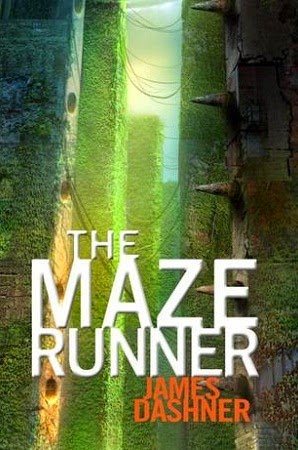
Book Review: The Maze Runner by James Dashner

The Maze Runner

Written by: James Dashner

Published: 2009

Synopsis: When Thomas wakes up in the lift, the only thing he can remember is his name. He’s surrounded by strangers—boys whose memories are also gone.

Nice to meet ya, shank. Welcome to the Glade.

Outside the towering stone walls that surround the Glade is a limitless, ever-changing maze. It’s the only way out—and no one’s ever made it through alive.

Everything is going to change.

Then a girl arrives. The first girl ever. And the message she delivers is terrifying.

Remember. Survive. Run.
___________________________________________________________________________________________________________

“If you ain’t scared… you ain’t human.”

Writing reviews for Young Adult dystopia is hard guys. They're so formulaic that even if they're amazing it's hard to make the review sound like something other than paint-by-numbers. The Maze Runner is yet another in the long line of Young Adult dystopian novels. I wish I could say that it broke the mold and was a completely unique inclusion to the genre, but it's not. That isn't to say that it's not an entirely enjoyable read or that it doesn't do some things differently but there might be big chunks of this review that echo earlier YA reviews I've written.

One of the things I've really enjoyed about this little YA renaissance is the prominence of female characters in the narratives. Are they necessarily three dimensional characters? Eh, that's hard to say. But at least they're there. The Maze Runner is an almost entirely male orientated novel. The protagonist is Thomas, who wakes up in a metal elevator at the start of the novel with no memories except that his name is Thomas. The elevator leads him up into the glade, a large patch of land that's surrounded by immense walls that form a maze. Thomas is thrown head first into a semi-structured society of teenaged boys, not quite Lord of the Flies but there's a feeling that that kind of insanity lingers not too far in their past. After his first day the male-dominated narrative is jarred with the arrival of another newbie which is not only unheard of in the strictly organised Glade but especially so because this newbie is a female. Theresa marks a different direction for the Gladers, not only because her gender represents a shift in dynamics but she literally shows up with a note saying that everything is going to change.

I actually think that the single female in a male dominated environment could have made for a very interesting novel. And it's all there bubbling below the surface, it just doesn't quite make it up. Why does the arrival of a female make such a huge impact? Why haven't there been females before? Is she at risk with all of these testosterone fueled teenage boys? Does she inspire rage or confusion or jealousy? None of this is really addressed, instead she's just an instrument of change. Her gender is ultimately immaterial - apart from the relationship that is (of course) sparked with Thomas. In a way that's kind of fantastic. Hell yeah her being a lady doesn't matter. Except in this environment of course it matters. Some of these boys have been stuck in a maze terrified of being torn apart by monsters for 2 years. Even if they didn't look at her sexually or romantically, her gender would inspire all kinds of other emotions and complications. She could be a reminder of the mothers and sisters they no longer remember, or a painful acknowledgement of a side of their life that's completely shut off from them. And what about from her perspective? This was perhaps my biggest issue with the novel. Sure finding a way out of the maze and the hints at being viewed by some Big Brother force are reminiscent of other YA series, but ultimately the general narrative is a fresh take on a well-mined genre. If this aspect of the novel was better addressed I think I would probably recommend this book more heartily.

What I quite enjoyed was the unfolding mystery of the maze and the action sequences as the book progressed.  It was a little slow to start but once the wheels started to churn it was far more engrossing. Perhaps not engrossing enough to keep me reading on in the series, but engrossing enough that I'm interested in seeing the film this weekend. One thing I'm not looking forward to though is the clunky made-up language used to replace actual swear words. If I actually have to watch an actual person say "you are the shuckiest shuck faced shuck in the world" or "I've been shucked and gone to heaven" with their actual faces I will vomit in the middle of the cinema.


Thursday, August 7, 2014

Book review: Percy Jackson and the Olympians #1-5 by Rick Riordan

#1 Percy Jackson and the Lightning Thief (2005)
#2 Percy Jackson and the Sea of Monsters (2005)
#3 Percy Jackson and the Titan's Curse (2007)
#4 Percy Jackson and the Battle of the Labyrinth. (2008)
#5 Percy Jackson and the Last Olympian (2009)

Written by: Rick Riordan


___________________________________________________________________________________________________

“It's funny how humans can wrap their mind around things and fit them into their version of reality"


A few weekends ago I went home to Cairns for my best friend's hens night. It was my first trip home in two years (WOAH) which unfortunately meant that I completely forgot how much the flight sucks. It's only a little over two hours, so by the time you factor in take-off and landing, you can only have electronic devices on for maybe half the flight. Which is a complete drag, and I always forget to bring a physical book with me to fill the time. Luckily my little brother has a bookshelf full of young adult novels that I probably would never read otherwise. It's how I ended up reading The Hunger Games two years ago and how I ended up reading Percy Jackson and the Olympians.

I get pretty envious of my little brother. Where I had Baby-Sitter's Club and Sweet Valley High*, his shelves are stacked with Divergent, The Hunger Games and Eragon. I had a few iconic female characters (mostly from Harry Potter) but he has a mix of female warriors, reluctant leaders and intelligent strategists. I was basically forced to move up to adult fiction if I wanted to read something that was smart and creative, but my brother has the best of both worlds. He can read classics if he wants to, but he can also read modern young adult fiction that's actually pretty fantastic. I might be slightly outside the intended demographics for most of the books on his shelves, but it's always fun to have a look at the worlds that have been built to get kids excited about reading again.

Enter Percy Jackson and the Lightning Thief. I mostly grabbed this book off the shelf because I vaguely remember catching parts of the movie on TV awhile back and enjoying it and I ended up racing through it on my flight and picking up the rest of the series for a steal on my kindle. The bottom line here, really, is that these books are a heck of a lot of fun. I raced through The Lightning Thielf like I raced through Harry Potter when I was 13. If I had started reading it at night I'm certain I would have stayed up far too late telling myself I'd read "just one more chapter" before coming to the end and closing the book with a happy sigh.

And when it comes to books for kids (and Percy Jackson is probably best recommended for kids 10-13) that's pretty much all that's important. A book that can excite you and entice you and make you utterly exhausted for school the next day?

Is shirtless David Tennant inappropriate for a review of a kids book? DON'T CARE

But like the best children's books, Percy Jackson is also just a really decent series. It weaves ancient Greek mythology with the struggles of the modern school kid. Our protagonist, Percy, has been kicked out of every school he's ever attended. But when he discovers he's actually a demigod, the faults from his mortal life turn out to be the strengths of the godly blood that runs through his veins. His dyslexia is because his brain is tuned to Ancient Greek and his ADHD is because he is required to think 10 steps ahead in a battle scenario. Riordan thought up these books when his son, who has dyslexia and ADHD, asked for bedtime stories that focused on Greek mythology. I love when books take something that is perceived to be a disadvantage and gives another perspective. Does becoming a demigod magically mean Percy's dyslexia vanishes? No, but at least when he's struggling at the regular mortal schools during the year he has something to help him persevere and push through.

There are a lot of similarities to Harry Potter in Percy Jackson, from the young, dark haired 11 year old who discovers he's actually far more special than he ever thought, to the brainy female best friend and the funny, loving best male friend, to the adult mentor that has a slight sad edge to him. But perhaps the only one that's important is that there is a wealth of information behind the rather simple adventure narratives. Sure we've all heard of Hercules** and Zeus and Olympus, but can we all catch the minor references to classical Greek stories and monsters? When we hear the name Calypso do we all know instantly where that story might lead? If we hear about a hero being led through the labyrinth do we know which hero that was, or how that story ended? I went through a major Greek myth phase when I was about 12, but even still I kept my phone next to me so I could Google names or hints about appearances that didn't immediately spring to mind. It's not as full of easter eggs as Harry Potter, but seriously, what is?

All in all, if you have a kid in your life (or you want to treat your inner kid) then you can't really go wrong with this series. So if you're in the mood for an action/adventure with a hint of education and Harry Potter parallels then let me enthusiastically thrust the Percy Jackson series in your general direction, okay?


*Which are both fine, but they aren't exactly great representations of variety and complexity y'know.

**Mentioned in the book as both Heracles and Hercules, for those of you who are rather pedantic.

Thursday, March 20, 2014

Guest Post: All Eyes on Divergent

Today I have a special guest post to share with you all. Spencer Blohm is here to discuss the new film adaptation of Divergent and how it compares to similar YA book-to-film transitions. Enjoy!

As March 21st, the date for the release of Divergent into theaters, rapidly approaches, fans’ excitement for the film is steadily rising. Like many other series, Divergent is being heavily compared to others in its YA lit based genre. The series has fictional elements similar to the Harry Potter, Twilight, and The Hunger Games franchises, but it’s the latter that draws the closest comparison. Both Divergent and Hunger Games are based in the future, contain a fair amount of action, feature female lead characters, and are even set in a dystopian world.

            Perhaps most importantly, these two series show exactly how much dystopian books, movies, and television shows are presently in demand. In fact, these two series have aided in plunging the stake in the dying trend of vampires, a theme which is only just lingering thanks to the much delayed release of Vampire Academy. However, that trend is more or less over, and it looks as if dystopian is the flavor of the moment. So far in 2014, Divergent will be the second dystopian themed film to be released, the first being RoboCop. Throughout the rest of 2014, no less than seven new films with dystopian themes will be premiering, including Sin City: A Dame to Kill For, The Hunger Games: Mockingjay Part 1, The Giver, and Dawn of the Planet of the Apes.

            Despite the crowded arena, Divergent is attempting to set itself apart from the rest of the dystopian films. Director Neil Burger has, logically, gone out of his way to create something drastically different from The Hunger Games. For those who are unfamiliar with Burger and his style, you can stream some of his other films, like The Illusionist and Limitless online through DirecTV (more info available on their web site) or Amazon. Regarding Divergent, Burger told Collider in an interview, 
“I wanted to do something different. We’ve seen a lot of post-apocalyptic movies, we’ve seen these other young adult movies. So I just thought that there was a way to do it in a much more cinematic way, to tell it visually, and also to tell it in a more real way.” 
He went on to explain, 
“Yeah I think some of the violence also is less about seeing a fist smash into a face or blood splatter… There’s a sense of violence emotionally, with people being killed. Again it’s less about how they die. Just the fact that they do die is really disturbing and upsetting, and intense.”
It appears Burger is trying as hard as he can to differentiate his directing and the film’s style from that of their most obvious competitor. It’s worth noting though, that Burger will not be directing the second film, so the style of the sequel could be drastically different from its predecessor.


            While we will have to wait for Divergent’s official box office numbers to see how it stacks up against The Hunger Games, according to The Hollywood Reporter estimates have the film pulling in around $65 million opening weekend. This total would fall significantly short of the $152 million The Hunger Games made its opening weekend, but it’s certainly not a small number. The film definitely has the potential to create mega stars out of main actors Shailene Woodley and Theo James, both largely unknown to the general public. While Woodley scored a Golden Globe nod for her performance in The Descendants, she presently lacks the star power of The Hunger Games’ Jennifer Lawrence. James, meanwhile, has very few acting credits to his name, and those he does have are better known in his native England. If the film is successful, however, the two of them could be kicking R-Patz and K-Stew of Twilight to the curb come this time next year.

Spencer Blohm is a freelance entertainment blogger who lives and works in Chicago. When he’s not busy working he can be found catching up on all his favorite TV shows or checking out the newest movies. His sadly neglected Twitter is @bspencerblohm.

Thursday, January 30, 2014

Movie Trailer:The Fault In Our Stars (2014)


So it was always pretty obvious that John Green's most beloved novel would be made into a film eventually and here's the resulting trailer. It's starring Shailene Woodley (from Divergent and The Descendants - I swear I couldn't pick her out of a line up if my life depended on it), Willem Dafoe (as author Peter Van Houten), Ansel Egort (as Augustus, interestingly also in Divergent) and...Sam from True Blood as Hazel's dad? That's SO not who I was seeing when I read the book.

I didn't hate the book, but I also didn't think it was as good as all of the reviews made it out to be. Did John Green try to do something different? Yeah, sorta. Was it still completely emotionally manipulative? Oh my god yes. And it looks like the film is going to hit the same notes completely. And while these sorts of books usually make me anger-cry, the films just usually make me bored. On the plus side it looks like they found the smarmiest and smuggest actor to play Augustus, I can't even handle his face saying those lines I want to punch it so much, so they're clearly going for accuracy. Also, does anyone else think Woodley and Elgot could be brother and sister? It's kind of weird to see them making out what with them looking IDENTICAL.

But enough trailer-bashing. If you liked/loved the book it looks like it's going to be a pretty true representation of Green's story and it looks like it's decently made so it should be a pretty good (and sobby) cinema experience. It comes out in June pretty much world wide.

For my review of THE FAULT IN OUR STARS click here. 

Wednesday, October 2, 2013

Book Review: Warm Bodies by Isaac Marion

Warm Bodies

Written by: Isaac Marion

Published: 2010

Synopsis: 'R' is a zombie. He has no name, no memories and no pulse, but he has dreams. He is a little different from his fellow Dead.

Amongst the ruins of an abandoned city, R meets a girl. Her name is Julie and she is the opposite of everything he knows - warm and bright and very much alive, she is a blast of colour in a dreary grey landscape. For reasons he can't understand, R chooses to save Julie instead of eating her, and a tense yet strangely tender relationship begins.

This has never happened before. It breaks the rules and defies logic, but R is no longer content with life in the grave. He wants to breathe again, he wants to live, and Julie wants to help him. But their grim, rotting world won't be changed without a fight...

Challenges: RIP VIII
_________________________________________________________________________________________________

"Once you've arrived at the end of the world, it hardly matters what route you took"

So it seems like 2013 is the year of YA reads. It's also the year of swallowing my pride and admitting maybe I was a little quick to judge. When I first heard rumblings of Warm Bodies online a year or so ago, I grumbled to myself about zombies finally being given the Twilight treatment. When favourable reviews started to come out I attributed it to people not really knowing the zombie genre too well, and therefore having pretty minimal expectations. In fact, I just went back to Alley's review (which is brilliant by the way, go read it and give her some love) and I commented saying:
I have this on my 'to read' list but it's definitely going to be a library book, because I still feel like it's going to be a universal joke to make me read a zombie Twilight story.
I was ready to write this one off without giving it a real chance. And considering I've been studying zombies for the past 2.5 years and have been burnt by shitty representations of zombies in literature in the past - I think I had a right to be a little wary. But when my PhD supervisor told me the film was actually pretty brilliant I had to reconsider my stance, because if Australia's best known and respected horror expert thinks it's a nifty take on the genre then maybe there's something to it. He was right, you all were, and I was very, very wrong. Warm Bodies is everything everyone said it was, it was funny and clever and a really solid YA read. It wasn't perfect, and I'll get to that later, but i'm definitely glad everyone wore me down and it was sitting on the "HEY! Read this immediately" shelf at the library.

So a lot of the reviews I've read have said "this isn't like any zombie story you've ever seen before" and that isn't entirely correct. Isaac Marion, who surely must be a pretty big fan of the genre, actually builds on the work of George A Romero. Romero's best known for the first two of his six zombie films, but if you follow the two trilogies there's a clear evolutionary path that the zombie takes. From mindless cannibalism and the reckless spread of their virus (Night of the Living Dead), the zombies slowly start to show recognition of household items (Bub and the telephone in Day of the Dead), to organised attacks against human oppressors (Big Daddy in Land of the Dead), to choosing to eat animals over humans (Survival of the Living Dead). What is new, however, is taking this idea and showing it to us from the zombie point of view. Whether Marion actually intended to build on Romero's work is up for debate (I can't honestly be bothered to see if he's said anything to this effect in an interview), it's clear he needed to take this approach to make the story work, because a story from a traditional zombie's point of view would be terribly boring. But Marion manages the difficult task of balancing this idea of consciousness with well-known zombie conventions. It's true that they think and maintain relationships and families, but they do still attack and eat the living, rot and decompose and can be taken out completely by a blow to the brain. It advances and adapts the genre without slapping die-hard fans in the face - something that Stephenie Meyer never managed to get a hang of.

I intend to throw Twilight under the bus A LOT more
I'm sure you've all heard the basic breakdown of the story, but here's a refresher just in case. Warm Bodies is based on Romeo and Juliet, although beyond the forbidden love angle and a scene on a balcony, it's a pretty loose adaptation. Did it actually need to be based on one of Shakespeare's most famous plays? No, but unlike Twilight it's not just a ham-fisted shout-out screaming "LOOK IT'S JUST LIKE GREAT LITERATURE". Romeo, or R in this case since he can't remember the rest of his name, is different to the other zombies. He seems to have retained more of his humanity and is constantly battling with the existential crisis that is life as a zombie. He goes through the motions, he kills and eats the living, "marries" another zombie and adopts a couple of kids,  rides an escalator around and around - but it never seems like enough. And then one day on a hunt he finds himself drawn to protecting a human, a girl named Julie. He covers her in blood, pretends he turned her into one of them, and takes her back to his home in an aeroplane.

And this is where my favourite part of the novel comes in. The reason R falls for Julie is that he eats her boyfriend. And in Marion's world, when a zombie eats a brain they get a brief flash of the life that their victim lived. Some flashes are stronger than others, and R seems to live (ha! sorry not sorry) for these brief reminders of life. So when he takes a bite of Perry's grey matter he experiences a flash far greater than he's ever experienced, and Perry's love of Julie is passed on to R. It's this initial flash of life and emotion that leads to the development of our two leads' relationship and the unfolding of the narrative. R becomes almost addicted to revisiting Perry's life (he keeps the rest of his brain in his pocket for snacks) and eventually it develops into something...more. And the small flashes of Perry's life and his struggle to find a reason to live in a post-everything, zombie-infested world were brilliant. It's not that R and Julie were bad characters per say, but they are both cut from well-worn YA cloth and didn't really deliver anything new. Perry on the other hand felt more human and less like an archetype, and I shared R's curiosity in unfolding the story of his life.

The zombie life mirrors the life of the living in Warm Bodies. Both groups have banded together into larger groups for protection, they train their young to survive in this apocalyptic world, and they struggle to retain a semblence of pre-zombie normality. There's not a lot of cheer and optimism in the living camps, but there's even less in the zombie hives. They live in groups, but given their inability to truly communicate or physically respond, they're always alone.
"We recognise civilisation - buildings, cars, a general overview -but we have no personal role in it. No history"
Their hunger isn't something they have any control over, and R isn't the only one who seems to detest what they've become. All of their attempts at living life, their marriages, attempts to have sex and fascination with eating brains are so sad and empty that it's hard not to feel sympathy for these people who were once us. And Marion manages to weave these small moments of levity into the greater romance plot in such a way that it never feels overly sad or philosophical, but it's impossible to completely ignore them.

Mild spoilers - Although I liked the book overall, I actually didn't love the central premise, namely that through meeting Julie R begins to transform. The execution felt a little rushed and it was a little overwrought and under-explained. I think it could have been a fascinating book if they had to learn to love and live with each other despite their differences, differences which are impossible to ignore. I understand that Marion is writing a sequel which perhaps will explore the cause of his transformation and the ramifications, and certain hints regarding the boneys give a cursory explanation but I wanted more about the how and why and less about the R&J love story. But then I'm pretty stone-hearted when it comes to YA romance stories. End spoilers.

I don't particularly like being wrong, but when it comes to a book exceeding expectations I'll happily accept it. Warm Bodies is a funny and sweet novel that I'm starting to think might actually be my new favourite zombie novel. And in case you're nervous about it being scary (it isn't) because zombies are always scary (seriously it isn't scary) you can actually read the short story that this was based on, which will 100% prove to you that I'm not lying about it being non-scary.


Friday, September 20, 2013

Book Review: Eleanor and Park by Rainbow Rowell

Eleanor and Park

Written by: Rainbow Rowell

Published in: 2013

Synopsis: Set over the course of one school year in 1986, ELEANOR AND PARK is the story of two star-crossed misfits – smart enough to know that first love almost never lasts, but brave and desperate enough to try. When Eleanor meets Park, you’ll remember your own first love – and just how hard it pulled you under.


__________________________________________________________________________________________________________

“Don't bite his face, Eleanor told herself. It's disturbing and needy and never happens in situation comedies or movies that end with big kisses.”

Ok, it's been two weeks since I read Eleanor and Park and I think maybe I've given myself enough distance to write an actual review. If I'd tried to do this a week ago I'm pretty sure this post would have just been a series of SQUEEE gifs and quotes from the book. I can't guarantee that I'm not going to devolve into that even now, but I think I might be able to get a few lucid thoughts out before I melt into a puddle of book happiness.

This book is every bit as good as you all told me it was. The characters are warm and imperfect, the writing is sharp and the music references made me want to disappear into my room for a day with only my CDs as company. It's a delightful and gorgeous book unlike almost any YA I've ever read, but it's also really, really sad!  By the time everyone started posting their E&P reviews I had read Attachments and knew that I loved Rowell enough to not want any spoilers, small as they may be. So I'm pretty sure I skimmed most of the E&P reviews I came across, either that or none of you expressed just how stab-in-the-heart sad this book is, because I was not expecting it at all.

So I should probably rewind a little for those of you who haven't read the book yet. E&P is all about Eleanor and Park, two high school students who get stuck next to each other on the school bus and slowly begin to like each other. Eleanor is new to the school, a chubby red head who dresses like a washing basket exploded on her. Park is a thin Korean-American who listens to awesome music and reads excellent comics, and is tolerated by the "cool" kids in spite of all of this but not entirely accepted either. Park doesn't like that Eleanor sat next to him because, as we all remember, school buses are political. But as he sits there reading his comics he notices that she's reading them too, and ever so slowly he starts to lend her comics and then music and before you know it they're holding hands and in love.

Which leads to the sad stuff. Eleanor's life is depressing as hell. She's just moved home after having spent a year living with friends of her mother after her step-dad kicked her out of the house. They're dirt poor, living in a tiny house where she has to share a room with her four siblings and the bathroom doesn't have a door. She has to tip-toe around her step-dad, who is a real piece of shit who emotionally and physically abuses Eleanor's mother. Her real dad is remarried and disinterested, she has no other family nearby, and nowhere to turn. She dresses the way she does because they don't have the money to buy her a new pair of jeans, and she doesn't want everyone to see the holes. And then Park arrives, and he's this shining beacon to her representing all the amazing things that exist in the world that are just outside her and her families grasp. His parents are still together and love each other, he lives in a nice home with his grandparents next door and he has a walkman and comics and batteries! And that just makes it so much sadder, because her life seems even more turbulent compared to his idyllic existence and it's the first big hurdle the two have to cover as a couple. There is the most beautiful scene between Park and his mother about Eleanor and life in a large, poor family, and it is the most perfect encapsulation of parental love and it made my heart explode with emotion.


But lest this talk of sadness send you running for the hills, fear not! It is sad, but it's not about the sadness. It's not even about young love, well it is, but not entirely. What it's really about is navigating that turbulent period between 14-20 where you're trying to find out who the hell you are. I think once you hit 23 you start to look back at your mid-teens nostalgically, remembering how easy school was, how enjoyable it was not having bills or a job and getting to spend all of your free time at the beach. Any issues you went through, the bullies or the unrequited love, they just seem trivial and silly when compared to the things you deal with now. But the thing is, no issue is going to be trivial as a teen because you're not really a person yet, you're the sum of your parts. You're still defined by your parents actions (hello Carrie, you know what I'm talking about) and position in life, and that makes finding your own identity really freaking hard. You can try out different styles and sub-cultures - maybe you try out elizabethan blouses, maybe you frolic in fields or you rage against the machine and curse everyone around you - but everything is so unstable and chaotic and it can seem like everything and everyone is working against you. Add in hormones and teenage love, where any love is the love... It's like trying to reach a broken light bulb by balancing books and boxes on a dodgy old chair - it's always just a second from crumbling and taking you down with it.

Park might seem to have the perfect life with the perfect family, and it's true that he doesn't have to deal with the same god-awful shit that threatens Eleanor's entire existence but he never feels like he truly belongs with the kids at school or his family. And so we get to see two very different teenagers stumble around in the dark trying to find the pieces to their own personal puzzle discovering that, oh hey, maybe we're pieces for each other's puzzle too. And that's where it gets sweet and simultaneously heartwarming and heartbreaking. Because how many teenage loves last? I remember dating a guy in year 11 and thinking "I wish I'd met him in my mid-20s because there's no way this can last". Now that I'm in my mid-20s I laugh at how unsuitable that guy would be for me now, but the fact remains, there's something so melancholic about teen love. But it's also entirely engulfing and it's a credit to Rowell that she can completely capture this obsessive side of teenage love and instead of making me roll my eyes, makes me remember my own silly, obsessive teen loves.
“You think I'm cute?" He said thickly, pulling on her hand.
She was glad he couldn't see her face. "I think you're..."
Beautiful. Breathtaking. Like the person in a Greek myth who makes one of the gods stop caring about being a god.” 
See, adorable! And not a single eyeroll from this cynic!
“You can be Han Solo," he said, kissing her throat. "And I'll be Boba Fett. I'll cross the sky for you.”
Adorable AND pop-culture announcements of love?
“The first time he'd held her hand, it felt so good that it crowded out all the bad things. It felt better than anything had ever hurt.”
Wait, no, that's too much, STAAP IT RAINBOW, you're killing me!


 I think Tika really nailed it in her review where she said the book made her heart "sore and soar" because yes, that's exactly what it does.  It's a book that gives you a gorgeous look at young love, the trials of young-adulthood, family life and navigating music and style and self identity. But it's also so much more than just that. I can't imagine how you could read this book and not look back at your own teenage years, your loves and fights and parental dramas. It reconnected 25 year old Kayleigh with 15 year old Kayleigh and it gave me a better appreciation for my journey through those emotional and ridiculous years. I'm always weary to say something is perfect, but damn, if this book isn't perfect it's really freakin' close. It's a definite must-read for everyone.


Friday, September 13, 2013

Book Review: Shadow and Bone by Leigh Bardugo

Shadow and Bone

Written by: Leigh Bardugo

Published: 2012

Synopsis: The Shadow Fold, a swathe of impenetrable darkness, crawling with monsters that feast on human flesh, is slowly destroying the once-great nation of Ravka.

Alina, a pale, lonely orphan, discovers a unique power that thrusts her into the lavish world of the kingdom’s magical elite—the Grisha. Could she be the key to unravelling the dark fabric of the Shadow Fold and setting Ravka free?

The Darkling, a creature of seductive charm and terrifying power, leader of the Grisha. If Alina is to fulfill her destiny, she must discover how to unlock her gift and face up to her dangerous attraction to him.

But what of Mal, Alina’s childhood best friend? As Alina contemplates her dazzling new future, why can’t she ever quite forget him?

Challenges: RIP VIII
_________________________________________________________________________________________________________

I can't remember where I first saw this book, it was probably on a Bout of Books or Top 10 Tuesday post, but I was instantly attracted to the Russian aesthetic of the cover and added it to my Goodreads TBR. On a whim last week I bought the kindle edition. After the giddy highs of Eleanor and Park I felt like I needed some light YA to negate a complete reading crash, so buy it I did and I ended up reading it in about two sittings.*

In a lot of ways it's a very traditional fantasy YA. There's a female protagonist who is strong in constitution, even though she's plain and wimpy looking. She's come up from nothing, so she's not afraid to fight for what she wants, once she works out what that is. She has a male best friend who she secretly loves but they seem to be drifting apart. There's magic, sort of, and a end-of-days type peril that hangs over the community. There's a mysterious and dashing older man, a grumpy trainer guy, and a beautiful girl who has trash for a soul. And yet, even though there were all of these overused tropes and characters crowding into this little book (the first in a trilogy) I actually kind of dug the hell out of it. Sort of.

In this Russian stand-in there exists a shadow fold. What is this shadow fold you ask? Well, dear reader, it is basically a giant black cloud that slashes down the centre of the country, isolating the two sides from each other. You can cross it, but there are creepy bird-like creatures that live inside it that delight in ripping your flesh from your body. So to cross it you need the Grisha. They don't guarantee your survival, but they do weigh the odds a little closer to your favour so that you can get across to do your trade and buy all of the supplies that your side of not-Russia can't produce. The shadow fold is an ever present shadow, literally and figuratively, looming over the country. Nothing can really progress while the country is split like this and much of their time is spent fighting not-China and not-(haven't worked out what this country's stand in is yet).

So who are these Grisha folk who can protect men from scary beasts? The Grisha are basically magicians. Some are healers, some are soldiers, and some are even dressmakers. Their magic is discovered when they're young (say 11...) and they're sent to a training school where they're taught to use their powers and are then enrolled into the army, where they protect the country. Their magic isn't really magic though, it's basically a manipulation of physics.
What looked like magic was really manipulating matter at its most fundamental levels. Marie didn't make fire. She summoned combustible elements in the air around us, and she still needed a flint to make the spark that would burn that fuel.
So maybe they aren't technically magic, but it still looks cool and it's not something just anyone can do. Which is where Alina comes in. When we're introduced to Alina she's a pale, weak map maker for the army who is not pretty. In fact, people seem to have a real issue with her looks, so much that it's like they're enduring some tremendous burden just to speak to her. But as it turns out there's more to our meek mouse of a protagonist, as a botched trip across the fold forces her to reveal a power she didn't know she even had.


Instantly Alina is thrust into the spotlight. As a sun-summoner (the only Grisha of this kind) she holds the power to eliminate the fold, and is therefore very valuable to not-Russia and all the countries who are using the fold for their own advantage. She's taken to the Grisha school, where everyone's treated like royalty - a far cry from her childhood as an orphan and adulthood in the army. She's treated less like a student and more like an equal to the Darking, leader of the Grisha and mysterious man who May Not Be What He Seems. She struggles with her lessons, comes to a realisation and then begins to excel while also starting a relationship with Mr Darkling.

Whether she's called Alina, Katniss, Triss, Lyra or Clary - this is a character you all know pretty well if you've read any YA. But maybe because my childhood was so empty of YA books full of young women coming to terms with their own identity and the world they live in (that weren't based in the 1800s) I'm happy to keep reading these characters for a little while longer. Sure I wish they'd switch things up a little, maybe expand on the whole premise and add some depth to it, but female protagonists were so rare in fantasy/dystopian fiction for so long that I think we're owed this. And while Alina herself is a little forgettable, I did enjoy the journey she went on. From trying to fit in with the fancy Grishas at the school, to coming to terms with her power and letting go of the past. She has a road to follow, and even if it's one that's well-trodden it's a pleasure to follow nonetheless.

There's a predicatable love triangle which I can't even bring myself to discuss because COME ON his name is The freaking Darkling, what do you expect? And a shadowy priest-to-the-king called the Apparat who immediately reminded me of Grima Wormtongue. Even now I can't work out how good or evil he was, but he set off all my creep alarms immediately, mostly thanks to the line about him smelling "faintly of mildew and incense - like a tomb" - so well done there Ms Bardugo. And there's some class war stuff within the Grisha, but also between the Grisha and the regular population which I expect will be covered in the next book. And don't take too much notice of the Russian-esque names, because none of it is based on actual naming conventions in Russia (Alina Skarkov should be Alina Starkova for instance) but who really cares since it isn't actually set in Russia.

Shadow and Bone felt like so many other books out there (HP, LOTR, His Dark Materials, The Chrestomanci series to name a few) but it oddly didn't ever feel derivative to me. Yes there are similarities, and it definitely relied on YA standards for the plot and character types, but it felt more like a book by a woman who has read and learnt from these books rather than someone just converting fanfic to a manuscript. This might work against it since it isn't really anything new, but it also adds a certain warm familiarity to the characters, or a natural weariness to others. The writing and pacing is tight, the world is colourfully described and the shadow fold is a thing of nightmares. It's unlikely to become your favourite book, but if you're looking for some light YA fantasy to pull you out of a reading funk then this might be the book for you.


*Partly because it was so short/easy to read, part because I enjoyed it.

Thursday, August 22, 2013

Movie Trailer: The Book Thief (2013)


The Book Thief is one of those books that seems to divide readers, but I think since a lot of the typical complaints (the prose, the narration, maybe even Death?) are obviously absent in the film it might end up liked more than the book. Assuming of course that they don't make a complete ass of the story. But also, can I just say how impressed I am that they're using German accents? I don't know enough Germans to know if they're actually good accents, but it's better than the generic English accent most films pass off as European right?

Tuesday, August 20, 2013

Movie Trailer: How I Live Now (2013)


I had heard they were planning on making a film out of Meg Rosoff's How I Live Now but I somehow missed all the casting news and production details until the trailer came out (as usual). Anyway, it's been awhile since I read the book but it looks like it's remaining pretty close to the text and Saoirse Ronan is always a good casting choice so it could be a decent little YA film.

Has anyone else read the book? I remember not loving the narration (first person, no punctuation, occasional txt speak) so maybe making it a film will actually improve it!

Monday, July 1, 2013

Monday Links


*^ It is ridiculous how funny I find this video. Seriously bonkers. ^

*14 books to read before they hit the cinema this year, LOTS of YA. (also, when was it announced that The Fault in Our Stars was being made into a film?) (also, FUCK YES HORNS IN OCTOBER) (via Buzzfeed)

*The first of the Game of Thrones season 4 casting news is out. The Red Viper has been cast! (Via Uproxx)

*Michael over at Literary Exploration shared his favourite 5 bookish podcasts. Got any other recommendations? (Via Literary Exploration)

*Authors in love on their wedding day? Yes please, I would like to see those pictures! (Via Flavorwire)

*Buzzfeed collated some of the "harsh realities" about the HP world. I have an issue with #6 (and, well, most of them), because I know we discussed this during the readalong and since there are only 2 people in the misuse of muggle artifacts office I don't think it's Mr Weasley's political affiliations which affected his pay grade. Or at least not fully. Anyway, read it more for the comments. (Via Buzzfeed)

*Speaking of Harry Potter, Book Riot have the antidote to our Readalong pains! Apparently the Grisha Trilogy is where it is at. (Via Book Riot)

*Richard Matheson, author of I Am Legend (one of my absolute favourite books), died last week. I've been hunting for the perfect obituary to share but I don't feel like any of them did a great job summarising the life of this man, ugh, and so maybe "he was legend" pun titles. But the NY Times write up wasn't too bad nor was the one in The Guardian.

Saturday, June 1, 2013

Armchair BEA (day 5): Children's Literature- Reppin' Australia

Sorry for my absence yesterday folks, I had a full up schedule and didn't get a chance to write about non-fiction and ethics but wowzers you all did really well covering it all, so I don't know that I could have actually added anything new anyway!

So children's literature! I LOVE children's lit and it's such an important genre because 9 times out of 10 it's the writing that informs whether someone becomes a reader or not. I was a reader from a young age (I doubt there are many of you who don't share that claim) and I always loved fairytales. I had these two huge compediums of fairytales and nursery rhymes. Both were filled will really beautiful and detailed illustrations to accompany the stories and rhymes from the 16th to the 19th centuries and both are now locked away awaiting the birth of my children, whenever that will be. I loved pouring over the story of Rose Red and the Oranges and Lemons nursery rhyme was my absolute favourite. A couple of years later I was given a book of stories about British and Irish sprites and fairies and pixies. I'd like to say it was this book that lead to me loving to research the subject of my reads and to examining the subtext that is hidden to all but those of us obsessive enough to dig a little deeper.

But the most wonderful books I read as a kid were all Australian. When it comes to Australian children's lit my mum is a book-pusher, I read my fair share of Hungry Caterpillers and Baby-Sitter's Clubs, but it was the books written by Australian authors set (mostly) in our very own country that I read the most often and loved the hardest. And since I know there aren't a huge selection of Australians taking part here I figured I'd introduce you all to some BRILLIANT reads. There are classics stories written by our bush poets (Mulga Bill's Bicycle), books which challenged gender stereotypes at a time when that was unheard of (Seven Little Australians), series that forced ordinary Australian teens to become guerilla fighters (Tomorrow when the War Began) and series which were just delighfully absurd (collections by Paul Jennings). It's an absolute pleasure to present you with my lists of favourite picture, children's and YA Australian books.

Get reading!

Picture Books 
My selection is perhaps a little dated since I don't have anyone to buy picture books for, but I know for a fact that most of these books are still just as popular today as they were when I was a little gal. All are uniquely Australian, and though not listed you should also hunt out the many, many picture books which tell the dream-time stories of the Indigenous Australians.

Wombat Stew by Marcia Kay Vaughn
Mulga Bill's Bicycle by Banjo Paterson, Deborah and Kilmeny Niland
Possum Magic by Mem Fox
Animalia by Graeme Base
The Lost Thing by Shaun Tan
John Brown, Rose and the Midnight Cat by Jenny Wagner and Ron Brooks

Children's Books 
Since this is an Australian list I can't really include Roald Dahl, but I'm going to pimp him out anyway because ALL of his books should be read, Matilda, George's Marvellous Medicine, James and the Giant Peach, The Magic Finger, The Witches....so on and so forth. Similarly if you don't read The Magic Faraway Tree or The Wishing Chair, both series by Enid Blyton, to your kids then I consider you to have failed in your parental responsibilities. But on to the Aussie contemporaries and classics!

Seven Little Australians by Ethel Turner
Playing Beatie Bow by Ruth Park
Unreal/Unbelievable/Quirky Tales (or any other short story collection) by Paul Jennings
Two Weeks With the Queen by Morris Gleitzman
Snugglepot and Cuddlepie by May Gibbs
Rowan of Rin by Emily Rodda (a series)
Storm Boy by Colin Theile

Young Adult
If you've run out of Harry Potter, Hunger Games or Divergent books to read then why not turn to Australian YA? This is the bracket I have the least to suggest, but head to this Goodreads list if you're interested in the many, many YA Australian books and series I haven't read. These should be enough to get started though!

The Infernal Optimist by Linda Jaivin
The Book Thief by Marcus Zusak
Tomorrow when the War Began by John Marsden (a series)
Looking for Alibrandi by Melina Marchetta
Jasper Jones by Craig Silvey
Deadly Unna by Phillip Gwynne


Tuesday, May 7, 2013

Book Review: Anna and the French Kiss by Stephanie Perkins

Anna and the French Kiss

Written by: Stephanie Perkins

Published: 2010

Synopsis: Anna is looking forward to her senior year in Atlanta, where she has a great job, a loyal best friend, and a crush on the verge of becoming more. Which is why she is less than thrilled about being shipped off to boarding school in Paris--until she meets Étienne St. Clair. Smart, charming, beautiful, Étienne has it all...including a serious girlfriend.

But in the City of Light, wishes have a way of coming true. Will a year of romantic near-misses end with their long-awaited French kiss?

___________________________________________________________________________________________________

Don't judge a book by it's cover they say. A book's more than it's title and cover art, they say. Did I believe them? Nope. Were they right? Yeah, actually they pretty much were.

Contrary to what that horrible title and cover suggests, this isn't your average YA love story. It almost is, but decent writing, characters and that "it factor" pushes it over the line into something that's fun, a little bit touching and will 100% make you yearn for a trip to Paris.

If I'm being honest (when am I not?) I thought everyone had lost their mind when I finally started this book. I downloaded it as an ebook to avoid that god-damn cover, and I struggled my way through the first chapter. Similar to Hazel in The Fault In Our Stars I wasn't crazy about Anna. She seems like the worst kind of ungrateful teenager, whinging and whining about everything under the sun, just a complete wet blanket. Not that she's upset about nothing, I think I'd have been pretty rank at my parents if they'd decided to send me away for my final year of high school. But it also seemed like too much. Too dramatic for the first chapter, too much hate towards her dad (and not enough towards her mother), too much teenager-y angst. This was partially the construction of Anna's character but also the writing style. I groaned out loud and nearly gave up completely when I got to this line;
"Ever since he sold out and started writing lame books that were turned into lamer movies, he's been trying to impress his big-shot New York friends with how cultured and rich he is. 
All I could see was her stamping her foot on the ground and making the "myeh" tantrum face. Ugh, teenage angst, how I loathe you. But I persevered and Anna mellowed out a little. She remained my least favourite character throughout the book but she was a great vehicle for exploring the story. She's the new girl in a school of people who have been closer than close for the last four years, she's homesick and she is terrified of going out and exploring the foreign world at her new doorstep. It was fun to watch her struggle ordering off a menu, or to see her trip around the classmates she considers far more glamorous than herself. It's through her terrified eyes that we see the sporty Mer, the exotic Rashmi, the arty burn-out Josh and the oh so handsome Étienne. They're built up almost like celebrities when she first gets to know them. They're all so intelligent  and witty and good looking, but of course as the book continues we learn that they're just normal teenagers struggling with normal teenage angst...they're just doing it against the background of Notre Dame and the Pantheon.

Much of the book follows the standard YA formula. Girl likes boy, boy has girlfriend, girl realises other girl in group also likes boy, girl looks for other boy, girl actually gets close to first boy, tangled messy mess ensues. It's a better love story than Twilight, but it's also far from the best. It's a little predicable, but it still warmed my heart in all the right places and made me go "awwww" several hundred times.


What I actually really liked, and I'm probably in the minority here, is the exploration of family in the book. Anna has a very turbulent relationship with her father, turbulent in that she blames him for everything and considers him the worst person alive. It usually comes out as vitriol directed at his writing career, in which he decided to forgo the search for the Great American Novel and instead settled for a Nicholas Sparks level of quality and success. As the book continues you realise the reason she hates her dad is not because he's a "sell-out"* but because she feels left behind. I don't think Anna ever actually makes this connection in the book (her lack of self-reflection and growth is ridiculous) but in every interaction with her father, he's trying to make a connection, to make a joke, to check she's OK  or to offer some advice. Meanwhile the one time we meet her sainted mother she's an absolute bitch who chides Anna for trivial matters and never lives up to the close relationship that Anna suggests they share. But she's the one who stayed. She didn't run off and find a better career, or a better life. Therefore she's immune to the wrath that Anna has saved for the person who did run, who did leave and who only shows up at special occasions.

Along with the relationship with her parents, Anna's distrust of men and inability to accept that they'd keep their word of not running off is a constant theme in this book. Every time Étienne or someone else "runs off" Anna see's her dad leaving 7+ years ago and relives the heartbreak, and the cycle of mistrust continues. It bleeds into her female relationships too, ultimately resulting in Anna being way too harsh on people for simple mistakes or small betrayals because of the weighty betrayal that began it all. And to throw some context on Anna's "problems," real parental grievances are cast next to hers, such as Étienne s father's refusal to let him visit his mum when she's diagnosed with cancer. This isn't to suggest that Anna doesn't have any real problems, and she's well within her right to hate a man who left her family 6 months after her brother was born, but she fails to acknowledge the true source of her hate, and instead comes across as petty and a little ridiculous. "Oh your dad writes crappy books? Yeah that must be really hard, mine won't let me visit my sick mother or leave the country".

Every book we read we come at from our own perspective, and considering I spent a great deal of time between the ages of 15-17 dealing with my own father issues, I'm not surprised that I seem to be the only person who seemed to have taken this view on the family relations in the book. I think it adds a lot of weight to what is otherwise a fairly traditional YA story, but there's plenty of other things to love if the idea of a family drama bums you out. Anna's discovery of Paris, Étienne and his pretty hair, the RA Nate who seemed like a bit of a babe to me, the roller-coaster that is teenage love and friendship, girl scout cookies and films in French cinemas. Plus you get lines that are equal part daggy and adorable like this one;
"I love that the accent over his first name is called an acute accent and that he has a cute accent"
Anna and the French Kiss isn't likely to be in the collection of classic texts blasted into space when the Earth finally explodes or melts down but if you're looking for a fun and enjoyable YA with witty dialogue, cute accents and (mostly) likeable characters then you can't go wrong with Anna and the French Kiss. Just look for a different edition because UGHHHH, that cover is the worst.


*Anna condemns her dad for writing books with sad endings when she prefers to read happy endings which I think is weak sauce. Who wants a happy ending that isn't earned? Although if they're only sad for sad's sake, i.e. emotional manipulation, then I stand by her in her condemnation.

LinkWithin

Related Posts Plugin for WordPress, Blogger...