Showing posts with label short stories. Show all posts

Monday, January 20, 2014

My Holiday Reads: A Bunch of Mini-Reviews (part 2)


Straining my brain to remember enough details for reviews turned out to be harder than I thought. Plus I'm lazy. Okay, maybe it was just the lazy thing that made me decide to split this post up. But I've taken two days and I'm ready to write a few more reviews. Aren't you lucky!


*NOS4R2 by Joe Hill*
(audiobook)

Tom and I listened to the audiobook edition of this book on our way between LA, San Fran and New York. We'd finish up our nights with 30-60 minutes of Kate Mulgrew navigating this story of Christmas, mysterious pathways, broken lives and familial love. I have a physical copy of this book which I'm going to read and review at some point this year, so I'm going to keep this short and mainly focus on the audiobook experience. I really liked Kate Mulgrew as the narrator. I may be a little biased since I know her as Captain Janeway from Star Trek Voyager and Red in OiTNB and love her in those roles but I do think the voices she used for the central cast were excellent. Her Charlie Manx was breathy and sinister, Vic was broken and desperate but strong, Maggie is scared but brave simultaneously, and Bing/The Gasmask Man was thick-headed and aggressive. She absolutely brought the characters to life, which more than made up for the few smaller characters that she butchered the accents of, like poor Dr Patel who must have taken a hit to the head because he swayed between Indian and Irish every other sentence. But seriously, if the size of the book is daunting you maybe give this audiobook a shot.


*The Circle by Dave Eggers

Of all of these books I'm reviewing this is probably the one I wish I could review full length, because it was amazing. Unfortunately I took zero notes so it'd probably end up a pretty vague review. I had never read any Dave Eggers before, I think I'd dismissed him as being too art-literature and not something I would enjoy, but I completely misjudged him. This book is terrifying, absolutely captivating but terrifying. It really effectively examines the modern obsession with technology and the influential role some tech brands have on the way we live our lives. There were some bits that were a little sloppy or obvious (such as the identity of the mysterious young man) but the overall affect of the book is so intense and creepy that they were teeny blips on the whole.

For an alternate (and hilarious) review for The Circle click through this link.


*We Have Always Lived in the Castle by Shirley Jackson*

I've been meaning to read some of Shirley Jackson's stories since everyone seemed to read The Haunting of Hill House last year, and even though I bought a bunch of digital editions I never got around to reading them. I was flipping through my Kindle one night when I couldn't sleep and something about this title drew me in. I clicked on it and didn't click out until I had finished it. That may sound more impressive than it actually is since this is it's only a novella (160 pages), but I still found it completely un-putdownable. It's a story about two sisters and their uncle who live in a grand house but keep completely to themselves. Why? Because several years earlier most of the family died of arsenic poisoning and even though eldest sister Constance was acquitted of murder the town doesn't trust them one bit. They may keep to themselves but they are completely content with their solitary lives. The younger sister Merricat, who narrates the story, protects the house and the family with talismans and magical charms, Constance has a green thumb that keeps the family fed and happy and uncle Julian, alive but damaged by the arsenic poisoning, relives that day constantly but is beloved by the sisters. The arrival of a cousin, Charles, shifts the family dynamic into chaos and Merricat struggles to right the status quo that they strove so hard to find. This is a gorgeous novella, the writing is beautiful and Merricat is a fascinating, if completely unreliable, narrator. 


*Neverwhere by Neil Gaiman*
(BBC radio-play)

I honestly have no idea if this audio version is even remotely like the actual book (Goodreads suggests...maybe?) but when it advertises a cast of Benedict Cumberbatch, Anthony Head, Natalie Dormer and Christopher Lee what am I supposed to do? Not buy it? Not likely. Regardless of whether the actual story is the same, the setting is the one and the same in both. Underneath London there exists another London, London Below, and this darker London is full of angels and monsters and secret doorways and marketplaces. The radio-play is purely dialogue with absolutely no narration, which does make it difficult to follow the action at times and given it is so short (approximately 3 hours) the pacing does feel off at times. I imagine if it is telling the same story ( in this story normal Londoner Richard Mayhew helps a young lady which leads him to an adventure with her and some others in London Below) there are some details missing that link sections or develop characters and add to that slightly off-kilter feel. But seriously, James McEvoy, Sophie Okonedo, Romola Garai and CHRISTOPHER LEE. Who cares if it's not perfect with a cast that perfect?

Wednesday, October 23, 2013

Short story Reviews: UR by Stephen King, In the Tall Grass by Stephen King and Joe Hill, The Legend of Sleepy Hollow

A few months ago I read Stephen King and Joe Hill's short story In the Tall Grass and had no idea how to review it. Short stories are always hard to review, because there isn't a lot to discuss without giving away some of the critical elements, but they usually (or the ones I read anyway) come in an anthology so you can bluff your way through by writing a couple of lines or paragraphs about each story and make up a full review that way. This was a singular story, something I found when I was searching the Stephen King tag on Amazon, and I just couldn't review it in any way that seemed worth it. Lucky for me RIP VIII came along and gave me the perfect platform to write about it and a couple of other short stories I'd been considering reading. So here you go, reviews to In the Tall Grass, The Legend of Sleepy Hollow and UR.

Advertisement:  "I use Grammarly to correct grammar because 'ain't nobody got time for that*' 
~~~~~~~~~~~~~~~~~~~~~~~~~~~~~~~~~~~~~~~~~~~~~~~~~~~~~~~~~~~~~~~~~~~~~~~~~~~~~~~~~~~~~~

In the Tall Grass

Written by: Joe Hill and Stephen King

Published: 2012

Synopsis: In the Tall Grass begins with a sister and brother who pull off to the side of the road after hearing a young boy crying for help from beyond the tall grass. Within minutes they are disoriented, in deeper than seems possible, and they’ve lost one another. The boy’s cries are more and more desperate.

My thoughts: About a year ago I read a comic based on a Joe Hill and Stephen King novella titled Throttle. I really enjoyed seeing their different styles clash and meld, so when I came across this short story I snapped it up immediately.

I really love Stephen King's short stories. I think it's because they tend to be really experimental, either he's playing around with ideas that will later become full time novels or they're something so completely different to what I'm used to from him. At the time of reading this short story, the only Joe Hill I'd read was his comic series Locke and Key (which is a MUST read) and I had loved how much Joe seemed to pay homage to his father while never seeming like he was simply riding that wave of nepotism and fame (his obvious talent also helps immensely).

This story is very short and very quick. Brother and sister duo Becky and Cal DeMuth are driving through Kansas when they hear someone calling for help. They park on the side of a road near a church and look into the field of tall, tall grass and hear a child and his terrified mother calling out. Once they make their way in though, they get lost and no matter how hard they try, they can't get their bearings back.

The premise is all King. It's a quiet story, one that teeters on that thin line between panic and supernatural. Is the grass actually working against them, hiding a killer who is coming to get them? Or are they just overtaken by their own fears of getting lost and it seems like everything is working against them? Joe Hill, I would guess, brings the darker and more gruesome elements. It's not that King often shies away from these sorts of details, but it was, for want of a better phrase, more in your face than he typically writes. The blend of the quiet with the aggressive, the subtle with the dark makes for something of a schizophrenic narrative. It never felt like two people passing the keyboard from one to another as they wrote the story, but if you're as familiar with King as I am, the influence of his son is instantly recognisable. And I loved it.

~~~~~~~~~~~~~~~~~~~~~~~~~~~~~~~~~~~~~~~~~~~~~~~~~~~~~~~~~~~~~~~~~~~~~~~~~~~~~

The Legend of Sleepy Hollow

Written by: Washington Irving

Published: 1820

Synopsis: Sleepy Hollow is a strange little place...some say bewitched. Some talk of its haunted valleys and streams, the ghostly woman in white, eerie midnight shrieks and howls, but most of all they talk of the Headless Horseman. A huge, shadowy soldier who rides headless through the night, terrifying unlucky travellers.

Schoolteacher Ichabod Crane is fascinated by these stories....Until late one night, walking home through Wiley's swamp, he finds that maybe they're not just stories.

My thoughts: I decided to pick up this novella when I watched the first episode of the new TV series Sleepy Hollow. As I watched it I was like "wait, wait, wait, the headless horseman was one of the four horses of the apocalypse?" and "Ichabod's wife was a witch, I didn't think he even had a wife" and I realised that while I know a bit about the Washington Irving story, I didn't know enough (and what I do know maybe came from the Johnny Depp film). I really enjoyed this read, although I'm a little embarrassed to say it took me awhile to get back into the rhythm of pre-20th century writing. There are so many adjectives and lengthy descriptions about absolutely everything, that tree over there, the school hall, the shape of Ichabod's face and when it's been as long between classic texts as it has been for me it's hard not to just be like "why Washington WHY". But once I fell back into the style, I enjoyed the hell out of it, even though it was nothing like I thought it would be.

Ichabod Crane is not the delightfully weird fellow I expected him to be. He's actually kind of despicable, not a bad guy per say, but he's hardly the person you root for in a love triangle. His "love" is basically motivated by Katrina Van Tassel's father's wealth and standing in Sleepy Hollow, which is made beautifully aware in a scene where Ichabod imagines all the farm animals as tasty meals that Katrina would cook him. The entire story seems to have been written by Washington with his tongue pressed firmly in his cheek, so while quotes like;
"Spare the rod and spoil the child - Ichabod Crane's scholars certainly were not spoiled"
and;
"Balt Van Tassel was an easy indulgent soul; he loved his daughter better even than his pipe"
Are a little "oh right, 1820 was really different," they're also kind of hilarious.

But It's the descriptions that Washington Irving writes about Mr Crane, or the town of Sleepy Hollow and the town's penchant for supernatural goings-on that really makes this story worth reading. They do border on the laborious from time to time, but the people are so wonderfully drawn and the setting so gorgeously painted that it's easy to motivate yourself to keep going past the bits that drag. I mean, tell me this isn't a wonderful description of Ichabod;
"...for he was a huge feeder, and though lank, had the dilating powers of an anaconda" 
See, it's great. So come for the ghost story about a headless horseman and a stuck up school teacher and stay for the gorgeous descriptions. And then recommend other Washington Irving stories to me, because I want more.

~~~~~~~~~~~~~~~~~~~~~~~~~~~~~~~~~~~~~~~~~~~~~~~~~~~~~~~~~~~~~~~~~~~~~~~~~~~~~~~~~~~~

UR

Written by: Stephen King

Published: 2009

Synopsis: Following a nasty break-up, lovelorn college English instructor Wesley Smith can't seem to get his ex-girlfriend's parting shot out of his head: "Why can't you just read off the computer like the rest of us?" Egged on by her question and piqued by a student's suggestion, Wesley places an order for Amazon.com's Kindle eReader. The [pink?] device that arrives in a box stamped with the smile logo -via one-day delivery that he hadn't requested - unlocks a literary world that even the most avid of book lovers could never imagine. But once the door is open, there are those things that one hopes we'll never read or live through.

My Thoughts: This was a spontaneous purchase on my phone's kindle app when I was waiting for the bus and had nothing else to read. It was, if wikipedia is correct, a short story King wrote exclusively for sale for Kindle, and that really shows. It hovers somewhere between being a long ad for Kindle and a cute little way of tying an exclusive deal into the narrative. When lines like "Wesley went to the Kindle shop and bought X" comes up a gazillion times I started to wonder if Amazon had written into the contract a minimum of references that needed to be in the story, and considering the whole story hinges on the Kindle, it grew a little tiring. If you've read Mr Penumbra's 24 Hour Bookstore it sort of felt like the Google references which almost overshadowed the story by the end. But all that aside, it was still an enjoyable little short story.

Basically, the kindle that Wesley buys to spite his sports coach ex-girlfriend -they broke up after a fight where he called her illiterate (oof) and she said he was out of touch with the world - turns out not to be a real kindle. It has the regular buy and read functions, but it's also pink and has some experimental functions. These functions allow him to search the multiverse for books that his favourite authors may have written elsewhere, and with a student and co-worker, Wesley spends a long night exploring the works of Hemingway, Shakespeare etc that don't exist in his particular world. While the three men have an uncomfortable feeling that they're peeking through a doorway they shouldn't, it mostly just seems like a harmless - albeit addictive - activity. However, things shift suddenly when Wesley explores other UR functions, one of which allows him to read news headlines from the future. It's here that Wesley finds out that Ellen, his ex, and her busload of college girls are going to die when a drunk driver runs them off the road. Wesley's faced with the decision, does he act on this knowledge and try and save his ex (who he still loves) and break the paradox laws, or does he respect those laws and let his girlfriend and a group of students die?

The story isn't particularly tense or scary, but it is fun and there are a couple of neat references to other King books (primarily Dark Tower references, because duh). There's a few interesting looks at the physical vs digital debate that take place during one of Wesley's class, and it's refreshing to have the students be like "who cares if it has binding, books are about ideas and emotions" rather than the typical garbage about us Millennials** only liking digital whatevers. So if you're a fan of King or looking for a fun short story about books that don't exist (but we wish did) then this could be for you. Also, if you're one of the The Corrections readalongers, Wesley is like a breath of fresh air compared to Chip's pretentious teaching style, so have at.

*I may have had this meme stuck in my head when writing this post.

**When did Millennials become a thing btw? What happened with being Gen Y?


Wednesday, October 16, 2013

Book Review: Skeleton Crew by Stephen King

Skeleton Crew

Written by: Stephen King

Published: 1985

Synopsis: In a bumper collection of tales guaranteed to chill the spine and freeze the blood, we meet GRAMMA - who only wanted to hug little George, even after she was dead; THE RAFT - a primeval sea creature with an insatiable appetite; THE MONKEY - an innocent-looking toy with sinister powers; the unspeakable horror of THE MIST. And there is a grusome host of other stories, each with th distinctive blend of unimaginable terror and realism that typifies King's writing.

Challenges: RIP VIII

_________________________________________________________________________________________________

“Grab onto my arm now. Hold tight. We are going into a number of dark places, but I think I know the way. Just don't let go of my arm. And if I should kiss you in the dark, it's no big deal; it's only because you are my love.”

When it comes to Stephen King I'm pretty well-read*, but I'm not sure if I can say the same when it comes to his short story collections. I've reviewed two (Full Dark, No Stars and Night Shift) but I honestly can't remember if I read any in my pre-blog days. The silly thing is, I LOVE King's short stories, and in some cases I actually love them more than his full length books. King might be known for his horror, but the beauty of his short story collections are their eclectic mash of sci-fi, horror, family drama, fantasy, hard-boiled crime and nostalgic love story. I love finishing a story about a mysterious fog that seems to be hiding all kinds of prehistoric or inter-dimensional monsters and embarking on a bitter-sweet story of a man's love for a woman and that woman's love for finding short cuts. I guess some people would find this jarring, but I really enjoy seeing Stephen King's skill demonstrated in 20+ different stories that he wrote at different times in his life. I love to see him wrangle a supernatural sub-genre he hasn't tried before, or wrestle with his own addictions or express his love for his wife in abstract stories. They don't all work, but that's the luck of the draw with short story collections. You win some, and lose others.

Skeleton Crew is made up of 22 stories of varying lengths. The longest is The Mist, a novella 150-ish pages long, while Paranoid: A Chant is probably the shortest at a teensy 5 pages. But the majority of them probably hover around the 15 to 30 page length. Not every short story collection has an overarching theme, and considering this collection is made up of stories he'd had published in magazines at various stages in his career (from the mid-1960s to mid-1980s) perhaps it was silly of me to try and find one here. But as I read I couldn't help but notice how prominent relationships were in every story. Relationships between father and son, broken relationships that left people feeling hurt and abandoned, strained relationships between daughter and sick mother. But it wasn't simply a repetition of relationships that I noticed, each story seemed to be bathed in a nostalgic light, a mourning for relationships that were or could have been, for a childhood that had been bright and happy before shuddering to an end with the death of a parent. Some of the stories did take place in the future, with a narrator recalling the events of the narrative, but even the ones that took place in the present tense - this nostalgia or sadness for what was or couldn't be again lingered on.

I took a month to read Skeleton Crew, and broke it up with plenty of other books, and I think that this was the best way to approach it. Sometimes reading short stories feels like a chore, liking one doesn't mean you'll love the next, and sometimes you just want a narrative you know you're going to like from start to finish. But I've been warming to short stories more and more over the past few years and I've decided that I agree wholeheartedly with King that;
“a short story is like a kiss in the dark from a stranger.”
But since I took so long to read it, my memory is a little fuzzy of some of the earlier stories and my notes don't make complete sense to me anymore (let alone trying to decipher my shocking handwriting). So I'll just write up about a couple of the ones that I liked the most and are clearest in my memory.

The Mist
I really loved this novella. I saw the film adaptation a few months ago and I've come to the conclusion that films should only be adapted from short stories. The film was so close to the book, and because the story is just over 150 pages there was no need to crop out anything that was extraneous to the A-story. The one thing they did change though was the ending, and while I liked the ambiguous ending of the short story, I actually dug the hell out of the film's ending - it was so bleak and unflinching and even King has admitted it's perhaps a better conclusion. Regardless of the ending, I loved the subtle nod to Lovecraft with the tentacled inter-dimensional monsters and the whole story -which spans about 3 days in total - was infused with so much claustrophobic tension and memorable characters.

The Jaunt
This story is a really interesting - and really fantastic - sci-fi short story. Mark Oates and his family are heading up to Jupiter for his new job, and are using the teleportation "Jaunt" technology which leaves from a very bland bus-terminal waiting room. In order to stop his kids from panicking, he tells them how the Jaunt was invented and it's brief history, hoping that armed with knowledge they'll be much calmer when their turn comes around. It's a really clever narrative device to deliver the hard science fiction, and the ending... Dude, the ending is GREAT.

Mrs. Todd's Shortcut
This story took awhile for me to get into, but it was perhaps the first where that feeling of nostalgia really hooked into me. It's slow to build but there's a haunting quality to the writing which kept me interested even when I thought that maybe I should just skip it.
“I sit on the bench in front of Bell's Market and think about Homer Buckland and about the beautiful girl who leaned over to open his door when he come down that path with the full red gasoline can in his right hand - she looked like a girl of no more than sixteen, a girl on her learner's permit, and her beauty was terrible, but I believe it would no longer kill the man it turned itself on; for a moment her eyes lit on me, I was not killed, although a part of me died at her feet." 
Word Processor of the Gods
This was a fun little story about a man who is unhappy with his lot in life. He doesn't like his wife, his son or his career (he's still waiting to write the book that'll make him a millionaire) and he detests that his brother has everything he wants. So when the gift his recently-dead nephew had planned to give him is passed to him, and it turns out to be a word processor (Frankenstein'ed from a bunch of electrical junk) that has the power to delete and rewrite life, he does exactly that. It's a bit silly, and when you think about what he does it's a little sociopathic, but I liked it all the same.

Survivor Type
I didn't love the way this story was written, but the narrative was interesting enough to make up for that. A doctor-turned-drug-smuggler washes up on a desert island when the boat he was on goes down, and with no natural vegetation and very little living animals, the doctor turns to the only meat he has readily available. it was fascinating to read the disintegration of his rationality as time and hunger picked away at it. It gets a little gross, but nothing too graphic.

Gramma
NOPE. I don't even think I can talk about this one. I had heard it was terrifying so I went and sat outside in the bright midday sun next to a pretty creek with plenty of people walking their dogs around me and even then my hair stood up in fright! Poor little George is stuck at home with his ailing bedridden grandmother while his mum and brother head to the hospital. What begins with the active imagination of an 8 year old devolves into a terrifying story about witches and the Necronomicon** and a grandmother that wants to hug her grandson. *shudders*

There weren't really any stories in this collection I didn't like, although I did struggle a little with The Reach, Beachworld, and Morning Deliveries (Milkman #1). They weren't bad in any sense of the word, but they just weren't for me. But who knows, perhaps you'll hate the stories I loved and desperately love the stories that I couldn't connect with. You know, I often wonder if Stephen King short stories are more for well versed King fans than King neophytes, but I think this might be a collection I'd recommend for both.


*Not Laura well-read, but that's a given.

**I really love when Lovecraftian mythos is incorporated without direct reference to it. Stephen King, Joe Hill and Neil Gaiman do this a lot, and I really appreciate how well they do it without jumping around with signs saying "CTHULU WAS HERE". All you need is a neatly place "Hastur degryon Yos-soth-oth" and you're immediately taken into Lovecraft's world.

Tuesday, October 23, 2012

Review: Full Dark, No Stars by Stephen King

Full Dark, No Stars

Written by: Stephen King

Published: 2010

Synopsis: Is it possible to fully know anyone? Even those we love the most? What tips someone over the edge to commit a crime?
For a Nebraska farmer, the turning point comes when his wife threatens to sell off the family homestead.
A cozy mystery writer plots a savage revenge after a brutal encounter with a stranger.
Dave Streeter gets the chance to cure himself from illness - if he agrees to impose misery on an old rival.
And Darcy Anderson discovers a box containing her husband's dark and terrifying secrets - he's not the man who keeps his nails short and collects coins. And now he's heading home . . .
________________________________________________________________________________

Prior to heading overseas, I decided to save myself suitcase space and only bring digital books to read, this turned out to be a terrible idea but I'll save that for another post, another day. Full Dark, No Stars was one of the books I decided to read on my trip, and was a fantastic way to pass the time on the 6 hour train from Shanghai to Beijing...while my battery lasted.

Full Dark, No Stars is a collection of four short stories/novellas. Tapping directly into what Stephen King is good at, all four stories take a look at the human reality of a variety of crimes and situations. What happens when a wife of 30 years discovers her husband is a serial killer. Is it actually as simple as going to the cops? What about her son who has just put all of his money, energy and heart into starting a new advertising company, how would this news impact on him and his career? And who would actually believe that she had no idea, for 30 years, that her husband was routinely raping and savagely murdering young women? This is the crux of the fourth story, A Good Marriage, and the other three stories explore similar twists on common stories. As King says in the afterword,
"I have tried my best in Full Dark, No Stars to record what people might do, and how they might behave, under certain dire circumstances. The people in these stories are not without hope, but they acknowledge that even our fondest hopes, (and our fondest wishes for our fellowmen and the society in which we live) might sometimes be in vain. Often, even."   
And this is definitely the beauty of this collection. Each are very, very different stories, and each character handles their particular situation uniquely and encourage a variety of results, but you can't help but see the similarities which tie all four stories together. The hope that King speaks of, but also a certain power that comes from accepting the events they've been straddled with and resolving it in their own (not always conventional) way.

1922
The first story takes place, surprise surprise, in 1922. After his wife inherits 100 acres from her father and decides she wants to sell up and move the family to the city, Wilfred James decides the only option available is to kill his wife. And the only way he can kill her is with his 14 year old son, Henry's, help.  That's a pretty dark story in and of itself, but what this story is about is how this single event, disturbing and despicable as it is, tears the family (and other families) apart. Writing the full story out as a confession 8 years after the murder of his wife Arlette, Wilfred no longer lives on the farm and is convinced that his wife is haunting him and trying to run his life into the ground. Because it's all taking place in the past, Wilfred has a level of self-awareness to his storytelling which adds rich dimensions of shame, sadness, and wisdom that would have been absent if it had been told as it happened. The ending is especially grisly, but perfectly concludes a long and turbulent story.

Big Driver 
Tess is a mystery writer with a distaste for flying and a penchant for short-cuts. When she's offered a short-cut home from a speaking arrangement, she takes it immediately and hits the road. Unfortunately for her, a serial rapist and murderer regularly traps the road and Tess finds herself the latest victim of 'Big Driver'. Miraculously managing to survive, Tess scrambles home but flips backwards and forward over what to do next. If she goes to the hospital and the police, her name will hit the headlines in a big way and her life and career will never be the same again. Interviews about her books will always come back to the question of her rape, news sites will question whether she was 'asking for it' (just look at her promo pic - where she has bare-skinned shoulders and come-hither eyes) and she'll never be able to escape the events that happened the night before. Basically, Tess goes through the trauma that countless women who have been sexually abused go through every day. If you report the rape, will they believe you, will your friends treat you differently, what if the guy finds you again, what if they dredge up that night in college where you had a threesome and use it against you... In some ways the after events (or at least the fear and confusion of the after events) are as terrifying as the rape itself.

Fair Extension
Dave Streeter is riddled with cancer and has very little time left. When he dies he'll be leaving his solid, decent job, loving wife and two children behind - and it isn't fair. A chance meeting on a street behind the Derry Airport introduces Dave to Mr Elvid (care to rearrange that?) who offers Dave a life extension, he is in the business of extensions after all. The catch is that the 'badness' has to go somewhere, and if it isn't contaminating Dave's body he needs to direct it to someone he hates. The person Dave hates most in the world though? His best friend, Tom Goodhugh. Dave spent high school studying for the two of them, only to have Tom steal his girlfriend and go on to have a much more successful life in every single way. The story doesn't travel the way you'd expect it to, in fact the ending is kind of sudden and strange...but also satisfying. It's a much more straightforward story than the rest in this book, it's lighter (although still pretty dark), funnier and almost feels at odds with the rest of the book, yet also blends perfectly with the overall tone of the book.

A Good Marriage
As mentioned above, this story is about a wife and mother who discovers that her kind, quiet and loving accountant husband has been a serial killer for 40 years. And not just any serial killer, this is a man who hunts down women, rapes, mutilates and murders them and then taunts the police about the crimes. Partially inspired by Paula Rader (wife of the BTK serial killer -Dennis Rader) who instilled disbelief when she claimed to have had no idea about her husband's other life, this story charts an aspect I've never thought of before. Even after she's found out the truth, she's amazed to still feel love for the man when he speaks or smiles a certain way, because she's spent 30 years loving that particularly mannerism. While she knows he needs to be turned in, she has to wrestle with what this says about her, her children, and the life she's lead. How could she not know, and what does it say when she still feels love for a man who has destroyed the lives of countless women and their families? She feels like one woman split into two, and the story filled me with an incredible empathy for what she was going through, and now I can't help but think about the woman or the families behind the countless criminals I've read about or watched on the news.

Each story is a unique view on a common story, and the result of four such dynamic tales is a book that forces you to consider the wider ramifications of crime, justice, revenge and murder. Add Stephen King writing at his best and you have a must-read book that really...must be read. Each story is pretty dark and harsh in the telling, but they are mostly free from supernatural horror elements, so if you've been waiting for something a little different from King which will still perfectly demonstrate whether you'll like his style, this book will fit the bill.


Tuesday, May 29, 2012

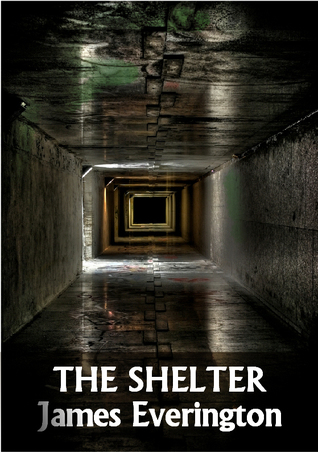
Review: The Shelter by James Everington

The Shelter
Written by James Everington

Published: 2011

Synopsis: It’s a long, drowsy summer at the end of the 1980s, and Alan Dean and three of his friends cross the fields behind their village to look for a rumoured WW2 air raid shelter. Only half believing that it even exists beyond schoolboy gossip, the four boys nevertheless feel an odd tension and unease. And when they do find the shelter, and go down inside it, the strange and horrifying events that follow will test their adolescent friendships to breaking point, and affect the rest of their lives...

After submitting a draft to my supervisor I decided to celebrate by finally picking up something that wasn't a graphic novel or text book! A couple of months back James Everington approached me about reading his new novella, The Shelter, and now seemed the perfect time to dive into his claustrophobic and moody horror. I really need to congratulate myself for making this choice, because not only did I love the book, but I am now incredibly eager to really kick start my reading...even if it means reducing my sleep to 2 hours a day!

The Shelter is quite a small book (hence referring to it as a novella previously), which works incredibly in its favour. This is a very immersive book, and I think it will resonate to readers much more distinctly if they read it from cover to cover in one go. Which is where the length comes in as a real benefit, obviously. I found myself stuck right in amongst the claustrophobic fear that builds and builds to oppressive heights as we follow Alan Dean's story, and I honestly think if I had tuned out and come back to it the next day it might not have impacted me quite as heavily. That isn't to say it relies on this, and I'm sure there are people out there who have read it in shorter bursts and still enjoy it. But if I can offer one piece of advice, it'd be find a comfortable spot, dig yourself in and read, read, read until The Shelter is complete. You can thank me later.

The Shelter is reminiscent of a Stephen King short story. In fact, James Everington mentions in his Author's Note that he was heavily influenced by the work of King at the time. It shows. Like King, Everington has a fantastic ability for painting the characters for you in great detail that captivates every sense. I could smell the sweat steaming off Tom's body, I could see the glint of Mark's earring under his long hair, and I could hear the ever present "thud-thud" of Alan's heart as he grew closer to the ominous shelter. Also like King, the book manages to balance that precarious line between real and supernatural horror. The story is, for the most part, grounded in the real, but there is that ever present "what if"  that you simply can't ignore. The real focus of the story are these four boys, Alan in particular, and this one day in their life, a hot summer day where everything changed. What happened doesn't really matter, what matters is the interactions and the reactions of these boys and the oppressive tension that builds because of it. Like Stephen King, James Everington manages to hit all these highs and produce a dark and moody horror that stays with you because of the possibility of its reality.

The Shelter is a great book that manages to wind itself tight around you until you find yourself struggling to catch you breath. This is definitely a "stayer" and I imagine parts of the book will continue to haunt me for weeks to come. So for any fans of Stephen King, atmospheric horror or short, unique reads then consider reading The Shelter, I think it'll be right up your alley!

Saturday, March 24, 2012

Review: Ugly to Start With by John Michael Cummings

Ugly to Start With 
By John Michael Cummings

Published: 2011

Synopsis: Jason Stevens is growing up in picturesque, historic Harpers Ferry, West Virginia in the 1970s. Back when the roads are smaller, the cars slower, the people more colorful, and Washington, D.C. is way across the mountains—a winding sixty-five miles away. Jason dreams of going to art school in the city, but he must first survive his teenage years. He witnesses a street artist from Italy charm his mother from the backseat of the family car. He stands up to an abusive husband—and then feels sorry for the jerk. He puts up with his father’s hard-skulled backwoods ways, his grandfather’s showy younger wife, and the fist-throwing schoolmates and eccentric mountain characters that make up Harpers Ferry—all topped off by a basement art project with a girl from the poor side of town. Ugly to Start With punctuates the exuberant highs, bewildering midpoints, and painful lows of growing up, and affirms that adolescent dreams and desires are often fulfilled in surprising ways.

I have enjoyed all of the books that have been sent to me for review, but Ugly to Start With is in a league of its own. From the content, to the format, to the quality of writing...John Michael Cummings delivers a high quality and emotive novel that is potentially my favourite read of 2012.

Ugly to Start With is a patchwork quilt style narrative. It unites thirteen short stories in a general chronological order that delve into the life of teenager Jason Stevens. Each story is self-contained and delivers an insightful look into all the elements that help a teenage become the person they need/want to be. While Jason battles with the difficulty of desiring to be an artist in a small historical town, and of not conforming to the very traditional and conservative ideals of the town and his family, the book also looks at the issues a community of this type encounter. The book touches on a myriad of themes and issues, race, class, family and community hierarchy, sexuality, pedaphilia, abusive relationships…however it successfully manages to convey these issues without every coming off preachy or one-sided, or losing sight of its young protagonist. If anything, this book shows the complexity every issue contains, how un-black and white these problems are, and how this can affect a growing and impressionable teenager.

 I’m finding it hard to express exactly how wonderfully intricate this book is. It is so encompassing, yet so specific at the same time, I don’t think there are many writers who can manage this. By the time I finished this book, I felt like I knew Harper's Ferry, I understood the people who lived there and the way they thought and the motives behind their actions. At the same time, I completely empathised with Jason, he's a fish out of water, he's vulnerable and caught in a moment of flux. From the first story we know what he wants, to move to Washington (or any city really) and become an artist, but each story throws up another roadblock in the shape of his family, his personal history, the towns prejudices, which could not only halt his progress but actually manipulate him into the typical townperson he should be but doesn’t want to become.

I loved all of the stories for what they brought to the greater story, but there were three in particular that stood out.

The Wallet – ( In which Jason discovers there is more to the turbulant relationship of his mother’s friend than what is shown on the surface.)

This story is beautifully told, and takes a scenario which typically has everyone on the one side, and provides something that, although it doesn't excuse his actions, it makes you realise judgement is far too easy. In essence, this story really made clear the overarching theme that I identified in the story, and really highlighted the internal struggle that Jason had to overcome.

Rusty Clackford – (In which Jason meets an old man and begins to spend time at his house)

This was one of the shorter stories but just a really sweet example of the kid Jason was/is. It’s perhaps more melancholic than any of the other stories, but there is a real beauty in the static action of the story and an overwhelming feeling of hope and calm. Jason seems truly content in this story, just free and happy in the moment.

Generations – (In which Jason tags along on one of his father’s mail runs)

This was the perfect way to close the book. Generations mirrors and book ends the opening story which had Jason driving with his mother and discovering how hard it was going to be for him to move from Harper’s Ferry and become the artist and man he wants to become. There is no definite closure, but this story hints at a further progression for Jason in his desire to become an artist, as well as an intriguing look at the relationship between Jason and his father.

When I was 12 The Dangerous Lives of Altar Boys changed my life with its frank detailing of young teenage boys who loved art and anarchy and were experimenting with love, identity and religion. 10 years later I’ve found its spiritual counterpart. Ugly to Start With is earnest and unflinching and doesn’t steer away from discussing every element that jigsaws together to form a teenager’s adult personality. Regardless of where you are in your own life, I think this is a book that everyone can connect with and find parallels to their own adolescence.

Wednesday, September 7, 2011

Review: Under Stones by Bob Franklin

Under Stones
By Bob Franklin

Published: 2010

Synopsis: Dip into the world of Bob Franklin‘s fiction at your own risk. The calm surface belies a swift undertow and snags galore. These are not horror stories in the traditional sense; they are more unsettling than that. Under Stones are uneasy tales, set in familiar surrounds. They are journeys into the human psyche and powerful critiques of contemporary Australian society. Bob Franklin pokes and prods at human fears and foibles, revealing with forensic glee truths that you might prefer were, well, left under stones.


Bob Franklin is a Welsh comedian who has been based over here in Australia since the late 1980s. I've never seen his stand-up but I've long been a fan of his work on the Shaun Micallef show (if you've never seen it, seriously, look it up. Quality off-beat humour) and have always enjoyed when he popped up in other TV shows and films. Under Stones is his first attempt at writing fiction (at least first published attempt) and what he delivers is an odd collection of short stories sure to leave you feel a little...off.

The synopsis really does a great job of summarising these stories, they're not horror in the sense that vampires, zombies or men with chainsaws chase down unsuspecting men and women. Instead they look at real world horrors that people face...with a twist. While the crux of a story may be the ravaging effects of consumerism, or the crippling fear a beaten wife feels it tackles these stories by introducing a mild supernatural element to emphasise it. Most of the stories are written in a way that suggests that the supernatural manifestation may simply be a psychological effect of the character's break-down but others are driven by the supernatural element but contain a real life concern as well.

The length of the stories really vary. Some are quite long, at around 25 pages, while some are a mere page and a half. Personally I find this method extremely effective. I'm not a huge reader of short stories and I find that the variety this provides kept my interest for longer than it perhaps would have been if they were all longer or all shorter. After reading a particularly long and grueling story, it was nice to have a couple of teeny stories that whacked a punch of absurd horror and refreshed my 'palate' after the previous read.

A common complaint I've had with short story collections is that the quality can fluctuate a fair bit. I'd say this is probably true with this book. Some stories were really great but some just felt lacking. If I had to summarise my complaints for this book it'd be a lack of editing. Not in the sense that there were a lot of spelling or grammar errors but that I felt like a few more sessions rewriting could have tightened up some of the prose and perhaps developed a couple of the stories a little better. I mentioned that I enjoyed the variety in story lengths, and while I did for the most part I also felt like some of the short stories were thrown in to add content at the last minute. The writing style was very 'literary' and at some points it felt like reading the prose of a third year creative writing student. Which isn't to criticise either the author or student writers but to try and give you an idea of what I mean. From the young writing I've read in our uni magazines I feel like sometimes a student puts pen to paper, writes what's haunting their head and then, once finished, leaves it. I feel like if another few months was put into this book it could have been phenomenal because the way Franklin writes, when done to his full potential, is quite haunting and his stories lend an interesting eye to areas that concern most people at some time or another.

So I thought I'd list a couple of my favourite stories:

Plans - In a town of perfectly coiffed men and women, home made jams and clean streets a young misfit computer virus creator (does that make her a hacker?) sets the wheels in motion to take down the centre of the town's organisation team. (12 pages)

Traitors Bay - A battered wife retreats to a small town with her husband and son after an indiscretion by her husband puts them at risk. She starts to see enemies on every corner. A really interesting and psychologically driven story. (26 pages)

Take the Free Tour - A less than desirable journalist decides to take the 'free tour' of a porn site and begins to obsess over the naughty site until things take a twist for the worse. A kooky and bizarre look at porn addiction. (32 pages)

Children's Story - Told from the perspective of a five year old this story looks at a holiday taken by his family and some family friends. Turns gruesome, but stupendously done. (5 pages)

Hell Hath No Fury - A husband and wife quarrel over whether or not they should have kids. The wife takes revenge. Wacky-that's truly the best word I can think to describe it! My favourite short, short story. (2 pages)

The Snow Globe - Lee was always second best. His brother was clearly his parent's favourite and far exceeded Lee's more modest career and life but not he's dead from a tumour in his brain. Lee takes up residence in his brother's house but on his way there he keeps seeing something out of the corner of his eye. (14 pages)

The Rock Lobster Club - Joel wants to be one of the rich and famous. When he met Beth he thought he'd found his way there. The best twist ending, absolutely hilarious! (9 pages)

So as the synopsis says, this isn't your typical horror story. Many of the stories seem bizarre, funny or even absurd, and some have extremely ambiguous endings. This isn't the sort of book that smacks you in the face with it's content, instead it sneaks in under the guise of humour or familiarity and only then starts to let the horror sink in. At it's best it's a scathing and poetic view of our world and society, and at it's worst it falls short of being anything other than strange. Not always the most engaging, but an interesting read nonetheless.

My rating: 3.5/5

LinkWithin

Related Posts Plugin for WordPress, Blogger...